
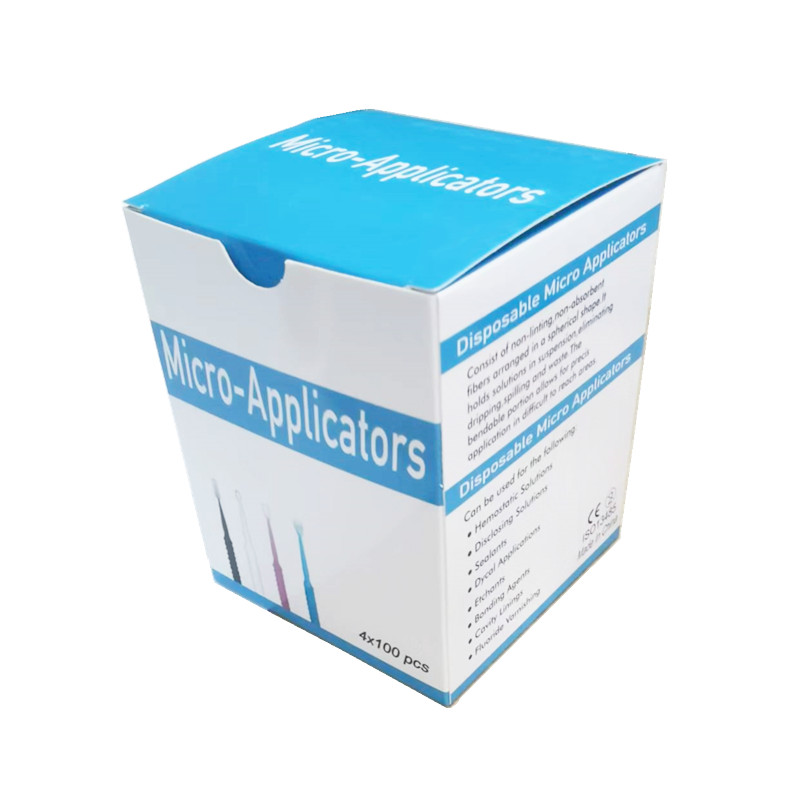
Disposable Micro Brush Applicator — Dental & Medical Liquid Application Tip (MB1001)
描述
Disposable Micro Brush Applicator — Dental & Medical Liquid Application Tip (MB1001)
- Single-use micro applicator with non-absorbent, non-linting nylon fiber tip for precise liquid application in dental and medical procedures
- Available in four tip sizes: Regular, Fine, Superfine, and Extra Fine — covering the full range of clinical access requirements from posterior occlusal surfaces to narrow preparation margins
- PP (polypropylene) handle with flexible bendable neck for directed access to restricted intraoral locations without repositioning the patient or instrument
- Non-absorbent fiber tip holds liquids in suspension without dripping, enabling controlled, metered application of adhesives, sealants, etchants, bonding agents, hemostatic solutions, and other clinical liquids
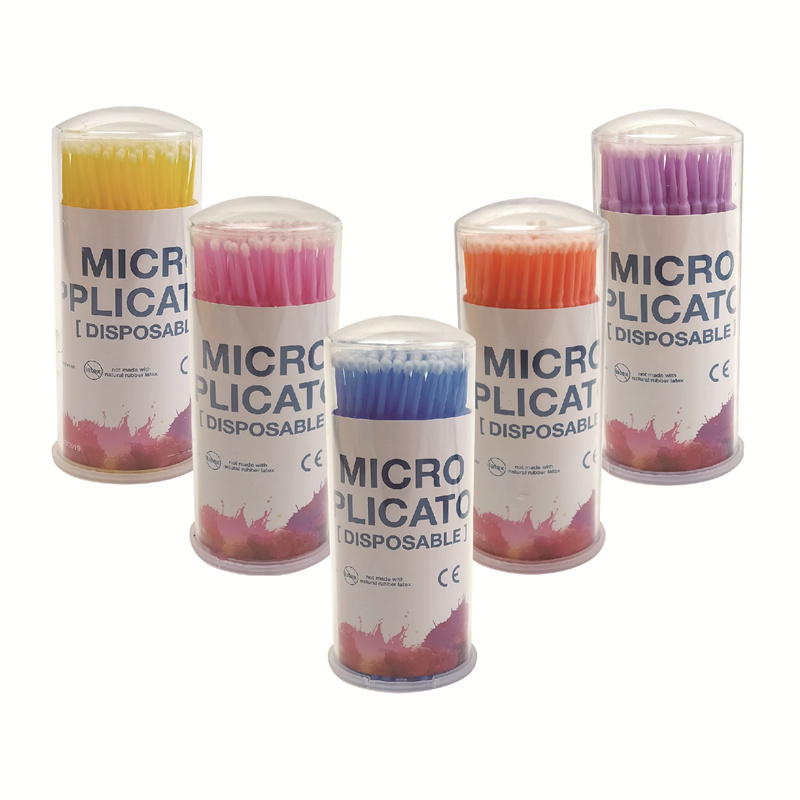
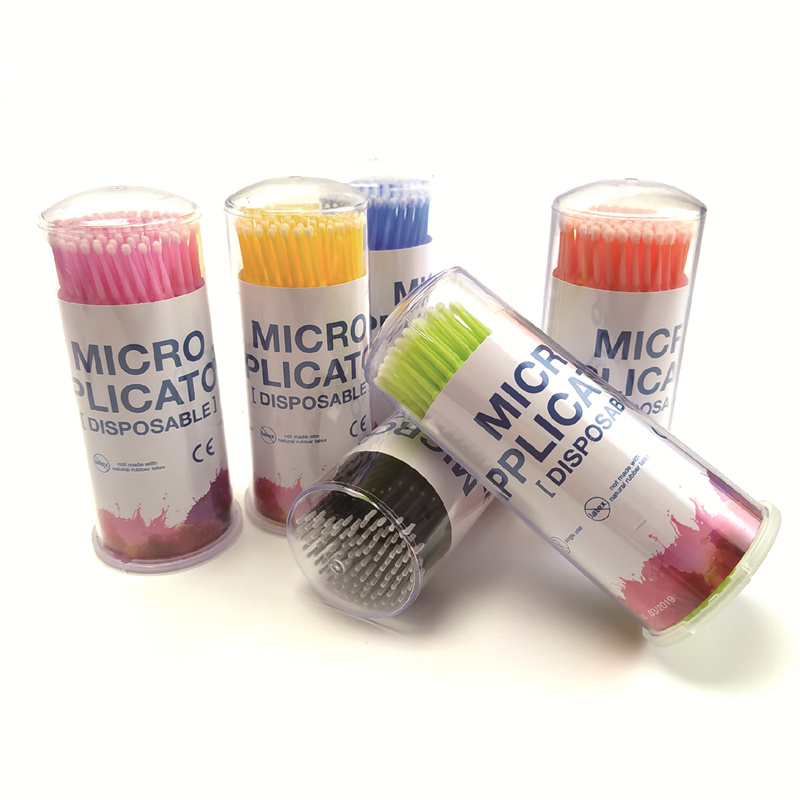
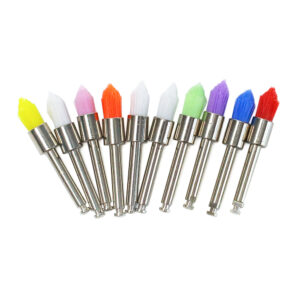
- Available in multiple colors including pink, orange, yellow, green, blue, purple, gray, and white for size and procedure differentiation
- Latex-free construction; safe for use with latex-sensitive patients
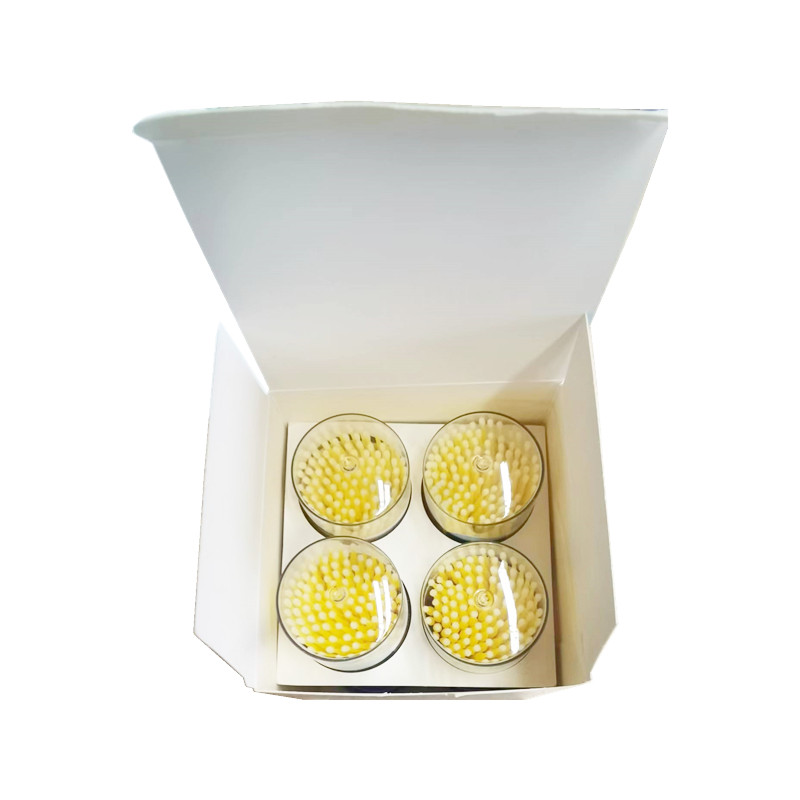
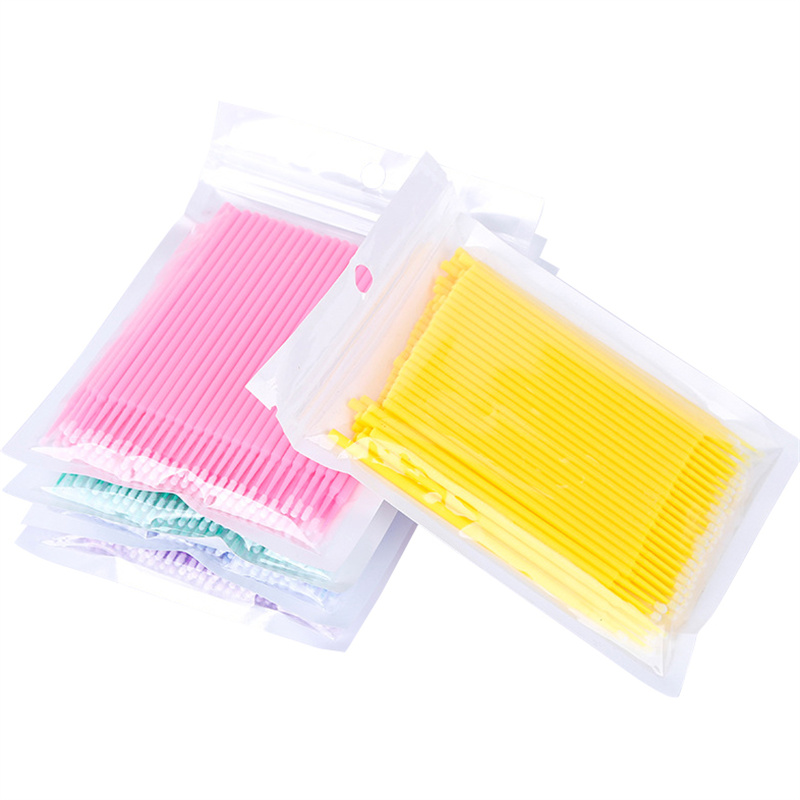
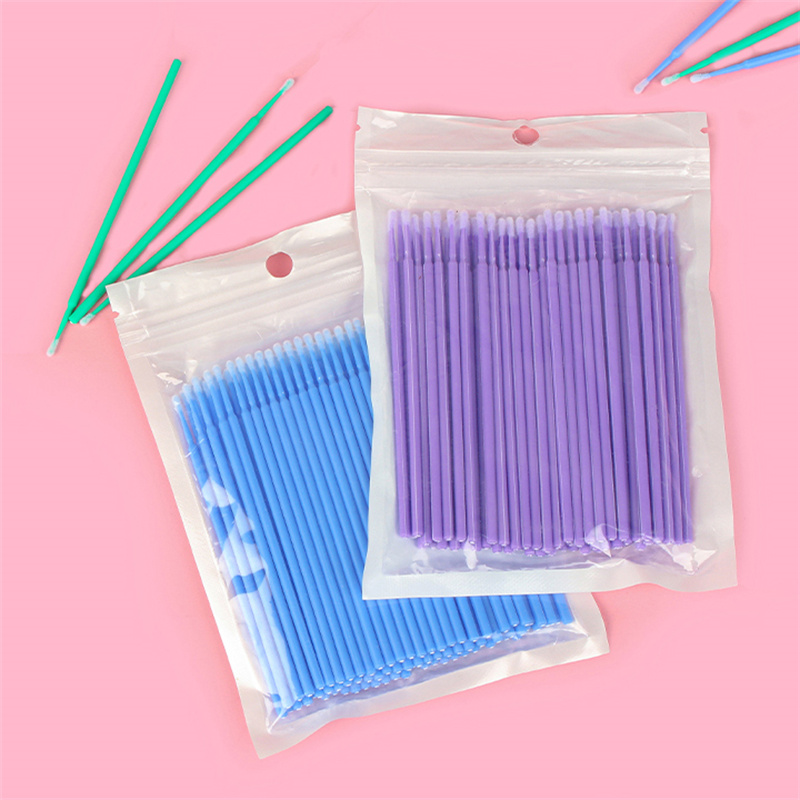
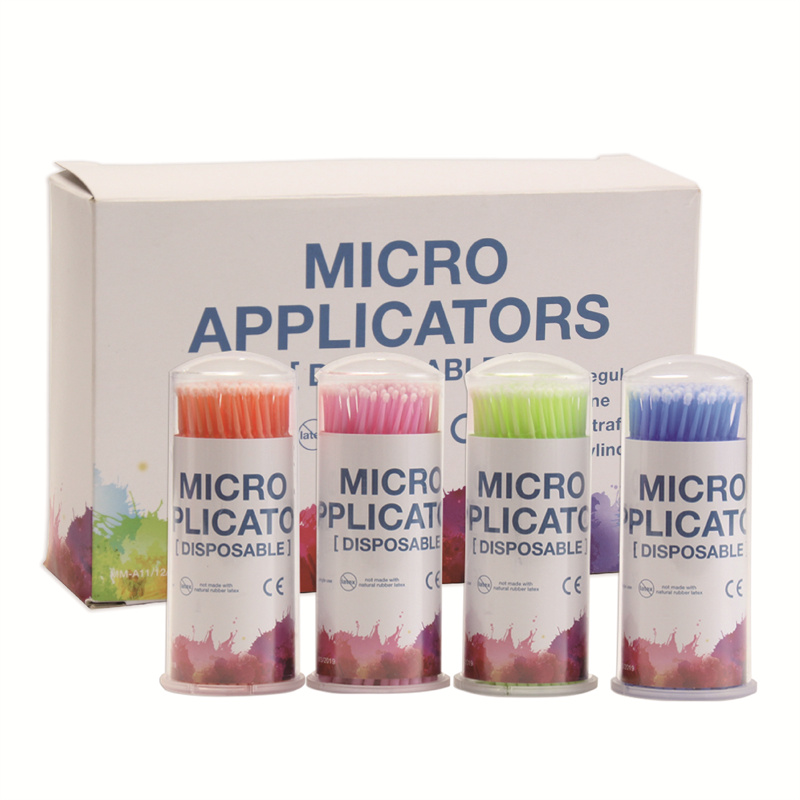
- Supplied in dispensing tubes (100 pcs) or bulk bags; also available in 4×100 pcs box sets
- Shelf life: 5 years
 Description
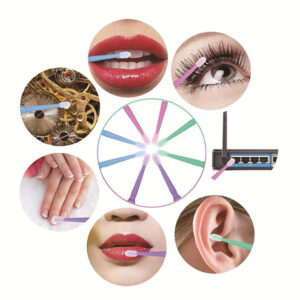
The Disposable Micro Brush Applicator (Model MB1001) is a hand-held, single-use liquid application device consisting of a PP plastic handle approximately 10 cm in length and a nylon fiber tip bonded to the distal end. It is used in dental and medical settings for the precise, controlled application of liquid agents — including bonding agents, sealants, etchants, hemostatic solutions, disclosing solutions, fluoride varnishes, and cavity laminate — to specific target areas during clinical procedures.
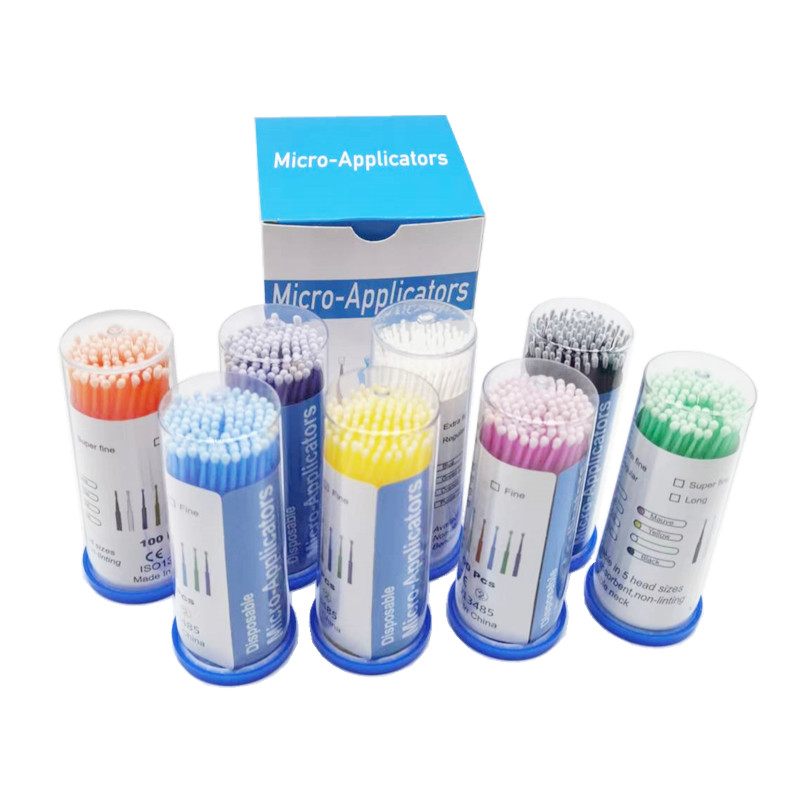
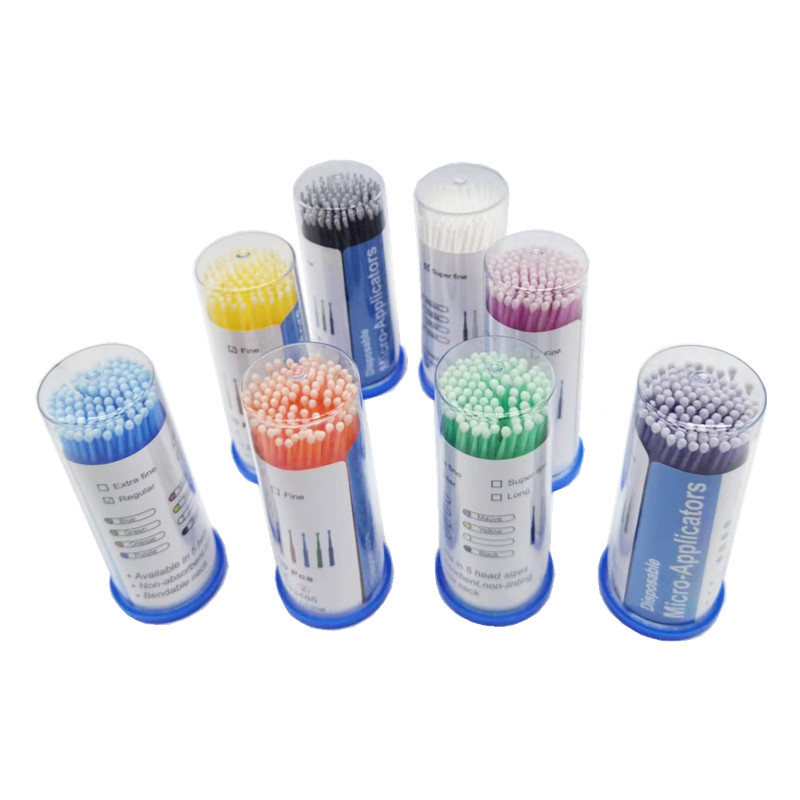
The nylon fiber tip is constructed from non-absorbent, non-linting fibers arranged in a spherical or tapered cluster at the tip end, as visible across the product image range. This fiber architecture holds liquid agents in suspension by surface tension between the fibers rather than absorbing them into a porous substrate, allowing the clinician to pick up a controlled volume of liquid and transfer it precisely to the application site without dripping, pooling, or uncontrolled spread. The flexible PP neck between the handle and the tip head can be bent to the required angle for access to restricted preparation areas — posterior sealant application, narrow proximal box surfaces, and deep cavity preparations — without requiring awkward instrument approach angles that compromise control. The product is supplied in clear cylindrical dispensing tubes of 100 pieces per tube, as well as in resealable polybags, and is available in a broad range of handle colors that correspond to tip size for rapid chairside size selection.
Feature
- The non-absorbent nylon fiber tip holds liquid agents in suspension between the fibers by surface tension rather than absorbing them into the tip material — eliminating drip and uncontrolled spread during transfer from the liquid reservoir to the application site, and enabling the clinician to apply a precisely metered volume of liquid with each contact rather than releasing an uncontrolled absorbed charge.
- Four tip sizes — Regular, Fine, Superfine, and Extra Fine — provide a complete size range for clinical liquid application: Regular for larger surface areas such as posterior occlusal sealants and broad bonding applications; Fine and Superfine for preparation margins, proximal box surfaces, and narrow cavity access; Extra Fine for the most restricted access points including deep preparations, pit and fissure sealant application in pediatric patients, and precision etching of individual margin areas.
- The flexible bendable neck allows the tip head to be angled relative to the handle before intraoral insertion, enabling directed access to posterior and distal surfaces that would require compromise of handle grip or patient head position if approached with a straight instrument — maintaining full control throughout the application stroke regardless of the access angle required.
- The non-linting nylon fiber construction ensures that no fiber fragments are deposited at the application site during use — a critical requirement when applying bonding agents, sealants, and adhesives where fiber contamination at the bonding surface would compromise adhesive layer integrity and final restoration bond strength.
- Latex-free PP handle and nylon tip construction eliminates the latex allergy risk associated with natural rubber-based applicators, making the product safe for use with latex-sensitive patients without requiring protocol modification or alternative product sourcing.
- Available in multiple handle colors — including pink, orange, yellow, lime green, blue, purple, gray, black, and white — with color corresponding to tip size across the product range, enabling rapid chairside identification of the correct tip size without reading individual labels during the procedure.
- Supplied in clear cylindrical dispensing tubes of 100 pieces, allowing single-handed tip extraction from the dispenser without contaminating the remaining tips in the tube — the tube functions as a contained tip dispenser rather than an open tray, reducing airborne contamination exposure between tip uses.
Micro Brush Applicator — Specifications
| Parameter | Specification |
|---|---|
| Product Name | Disposable Micro Brush Applicator |
| Model | MB1001 |
| Handle Material | PP (Polypropylene) |
| Tip Material | Nylon Fiber (Non-Absorbent, Non-Linting) |
| Handle Length | 10 cm |
| Tip Sizes | Regular, Fine, Superfine, Extra Fine |
| Neck | Flexible / Bendable |
| Latex Content | Latex-Free |
| Available Colors | Pink, Orange, Yellow, Lime Green, Blue, Purple, Gray, Black, White |
| Packaging | 100 pcs / dispensing tube; 4×100 pcs / box; bulk polybag |
| Use | Single-Use |
| Storage | Dry, well-ventilated; away from acid, heat, and direct sunlight |
| Shelf Life | 5 Years |
Working Principle
The Micro Brush Applicator transfers liquid agents from a reservoir to a clinical target site through the surface tension retention properties of its nylon fiber tip. When the tip is briefly contacted with a liquid surface — such as the surface of an adhesive or sealant well — the liquid is drawn between the non-absorbent nylon fibers by capillary surface tension and held in suspension within the fiber matrix without being absorbed into the tip body. The volume of liquid retained is governed by the surface area of the fiber cluster: larger tip sizes (Regular) retain and transfer greater liquid volumes per contact; smaller sizes (Superfine, Extra Fine) retain and transfer minimal volumes with correspondingly greater precision.
When the loaded tip is contacted with the clinical target surface — a preparation margin, cavity floor, or tooth surface — the liquid is released from the fiber matrix onto the target surface by the contact pressure of the application stroke. The non-linting fiber construction ensures that the fiber matrix remains intact through this transfer cycle, with no fiber fragments deposited at the application site. The flexible neck, when pre-bent to the required approach angle, maintains that angle throughout the application stroke without spring-back, ensuring that the force applied at the handle is transmitted to the tip at the intended contact angle rather than being partially dissipated by neck flex during the stroke.
Clinical Practice of the Disposable Micro Brush Applicator
1. Pre-Procedure Setup
- Select the appropriate tip size based on the procedure and target surface: Regular for broad surface bonding and posterior sealant application; Fine for preparation margins and standard cavity bonding; Superfine for narrow proximal access and pit-and-fissure sealant application; Extra Fine for the most restricted access points and precision margin etching.
- Remove a single applicator from the dispensing tube by inverting the tube over the palm or work surface and dispensing one tip without touching the remaining tips in the tube; replace the tube cap immediately after dispensing.
- If the access angle to the target site requires bending the neck, pre-bend the flexible neck to the required approach angle before loading the tip with liquid — bending a loaded tip may cause uncontrolled liquid release from the fiber matrix.
- Prepare the liquid agent in a clean dappen dish or mixing well immediately before use; do not load the applicator tip from the original product container to avoid contaminating the bulk liquid supply.
2. Intraoperative Application
- Load the tip by briefly contacting the fiber head with the surface of the liquid in the dappen dish; do not submerge the full fiber head or apply pressure against the dish bottom — surface contact is sufficient to load the tip with the working volume of liquid.
- Confirm that the loaded tip is not dripping before moving it to the application site; a correctly loaded non-absorbent tip holds liquid without dripping under normal handling. If dripping occurs, the liquid viscosity may be lower than expected — use a smaller tip size or reduce contact time with the liquid surface.
- Apply the liquid to the target surface with light, controlled strokes; the non-absorbent tip releases liquid progressively with each contact stroke, allowing the clinician to build coverage incrementally rather than depositing the full tip charge in a single contact.
- For bonding agent and adhesive application, use the tip to actively scrub the liquid into the preparation surface with light circular or back-and-forth strokes throughout the manufacturer’s recommended application time — the fiber tip is designed to withstand application stroke pressure without fiber loss or tip deformation.
- Use a separate fresh applicator for each different liquid agent applied during the procedure; do not dip a used applicator back into the liquid supply well, as this introduces procedure-site contamination into the liquid reservoir.
3. Post-Procedure Disposal
- Discard each micro applicator immediately after use; single-use only.
- Do not re-sterilize, re-disinfect, or reuse; the nylon fiber tip cannot be reliably decontaminated after clinical use, and reuse risks material cross-contamination between patients and between liquid agents.
- Replace the dispensing tube cap after each tip dispensing to maintain the remaining tips in a clean, protected condition until next use.
- Store partially used dispensing tubes in a dry, well-ventilated location away from heat, acids, and direct sunlight; reseal polybag packaging between uses.
The Function of the Disposable Micro Brush Applicator
The Disposable Micro Brush Applicator addresses the precision liquid application requirement present across a wide range of dental clinical procedures: the need to deliver a controlled, metered volume of adhesive, sealant, etchant, bonding agent, or other clinical liquid to a specific, often small and restricted target area, without contaminating adjacent surfaces, depositing applicator debris at the bonding site, or introducing uncontrolled liquid volume that would require removal before the next procedural step.
The four-size range — Regular, Fine, Superfine, and Extra Fine — is the functional core of the product’s clinical utility. A single applicator size cannot optimally serve the full range of access requirements encountered across different dental procedures and different areas of the mouth: the posterior occlusal surface of a maxillary molar and the mesial margin of a mandibular premolar preparation require different tip sizes to achieve the same quality of liquid application. By offering four distinct tip sizes within a single product line, the applicator range allows the clinician to match tip size to application target precisely, applying liquid with the appropriate coverage area and volume per stroke for each specific procedure step.
The non-absorbent, non-linting fiber tip distinguishes the micro applicator from cotton pellets, foam tips, and other absorbent applicator formats. Absorbent tips retain liquid within their substrate and release it unevenly under contact pressure, making controlled metered application difficult and increasing the risk of excess liquid pooling at the application site. The non-absorbent nylon fiber tip holds liquid by surface tension and releases it progressively and controllably, providing the precision application behavior required for clinical liquid agents where application volume and distribution directly affect final clinical outcomes — including adhesive layer thickness, sealant flow, and etchant contact time uniformity.
Important Notes for Using the Disposable Micro Brush Applicator
- Single-use only. Destroy after use. Do not reuse, re-sterilize, or re-disinfect. The nylon fiber tip cannot be reliably decontaminated after clinical liquid contact, and reuse risks both material cross-contamination between patients and chemical cross-contamination between different liquid agents.
- Select tip size before beginning the procedure, not during it. Changing tip size mid-procedure while handling liquid agents increases the risk of contaminating the new tip or the liquid supply. Confirm that the selected size provides adequate access to the full target area before loading the tip.
- Pre-bend the flexible neck before loading the tip with liquid. Bending the neck after loading may cause uncontrolled release of liquid from the fiber matrix before the tip reaches the application site, contaminating adjacent surfaces or depositing excess liquid at the wrong location.
- Never dip a used applicator back into the liquid supply container or dappen dish. Used tips carry procedure-site material — including saliva, blood, debris, and previously applied liquid agent — that will contaminate the liquid supply and compromise the quality of the remaining liquid for subsequent application steps.
- Do not apply excessive pressure during liquid loading or application. The nylon fiber tip is designed for light contact application; excessive pressure during loading may force liquid absorption into areas of the handle or neck where it cannot be controlled, and excessive pressure during application may deform the tip head and alter coverage distribution.
- Store in a dry, well-ventilated location away from acids, heat sources, and direct sunlight. Acid vapors in the storage environment can degrade the nylon fiber tip over time; heat and UV exposure can affect the PP handle material and the fiber-to-handle bond before the product reaches clinical use.
- Check the expiration date before use. Do not use applicators beyond the 5-year shelf life; material properties of both the PP handle and the nylon fiber tip cannot be assured after the shelf life period.
- If a patient is known to have sensitivities to PP or nylon materials, consult the patient’s medical history and clinic protocol before use. Although the product is latex-free, individual sensitivities to synthetic polymer materials should be evaluated on a case-by-case basis.
评价
目前还没有评价