
Disposable Air-Water Syringe Tip — Dental Three-Way Syringe Tip for Oral Treatment
描述
Disposable Air-Water Syringe Tip — Dental Three-Way Syringe Tip for Oral Treatment
- Single-use disposable tip designed for attachment to the air-water syringe (three-way syringe) of standard dental treatment units
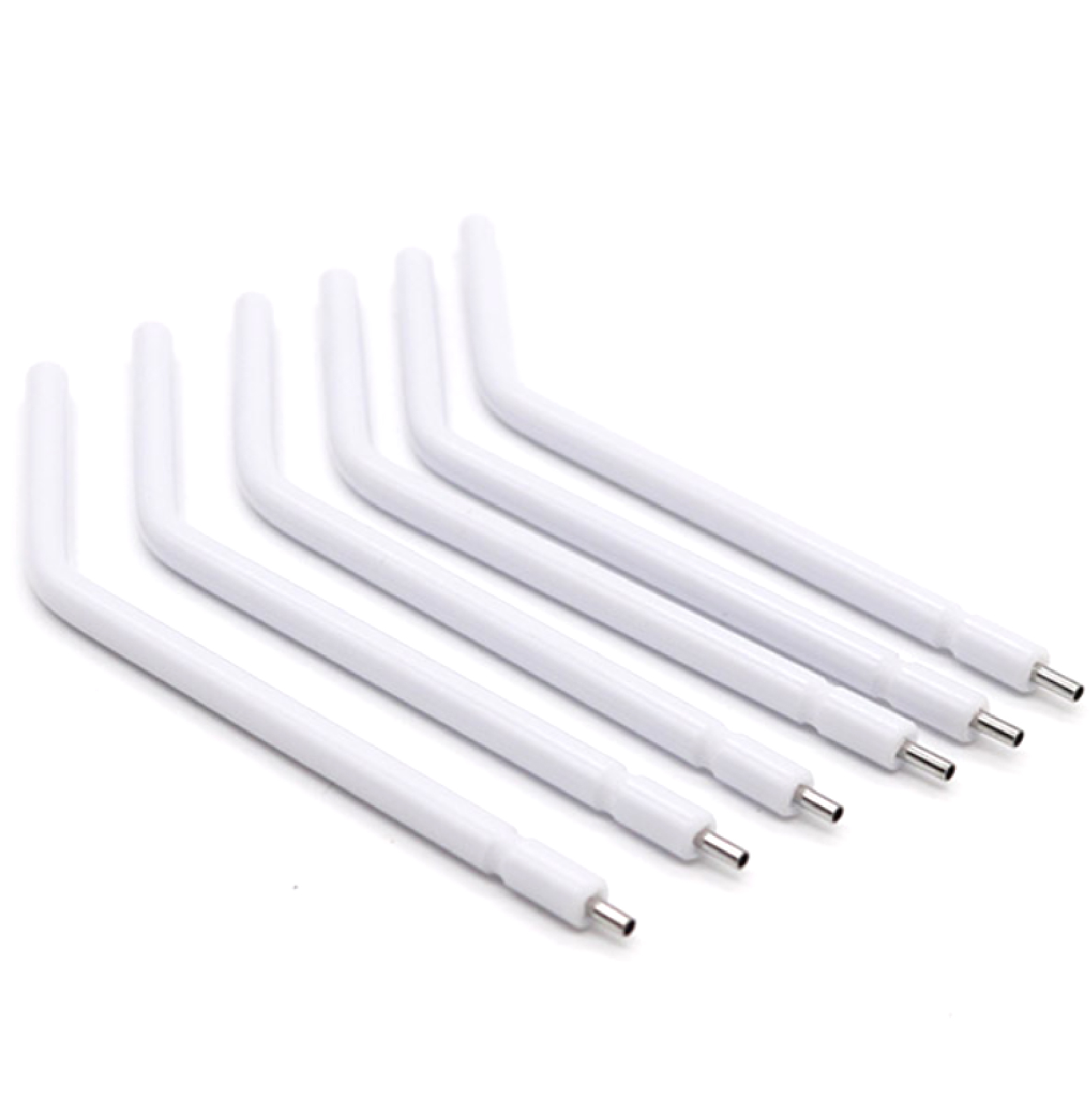
- Pre-angled body with smooth rounded distal tip for comfortable intraoral placement and directed air, water, and spray delivery to the operative field
- Grooved proximal end for secure snap-fit insertion into the syringe handle without tools
- Stainless steel or plastic distal nozzle for controlled, focused output of air, water, or combined spray at the target site
- Available in two body formats: straight tip and pre-angled/bent tip for posterior and restricted access applications
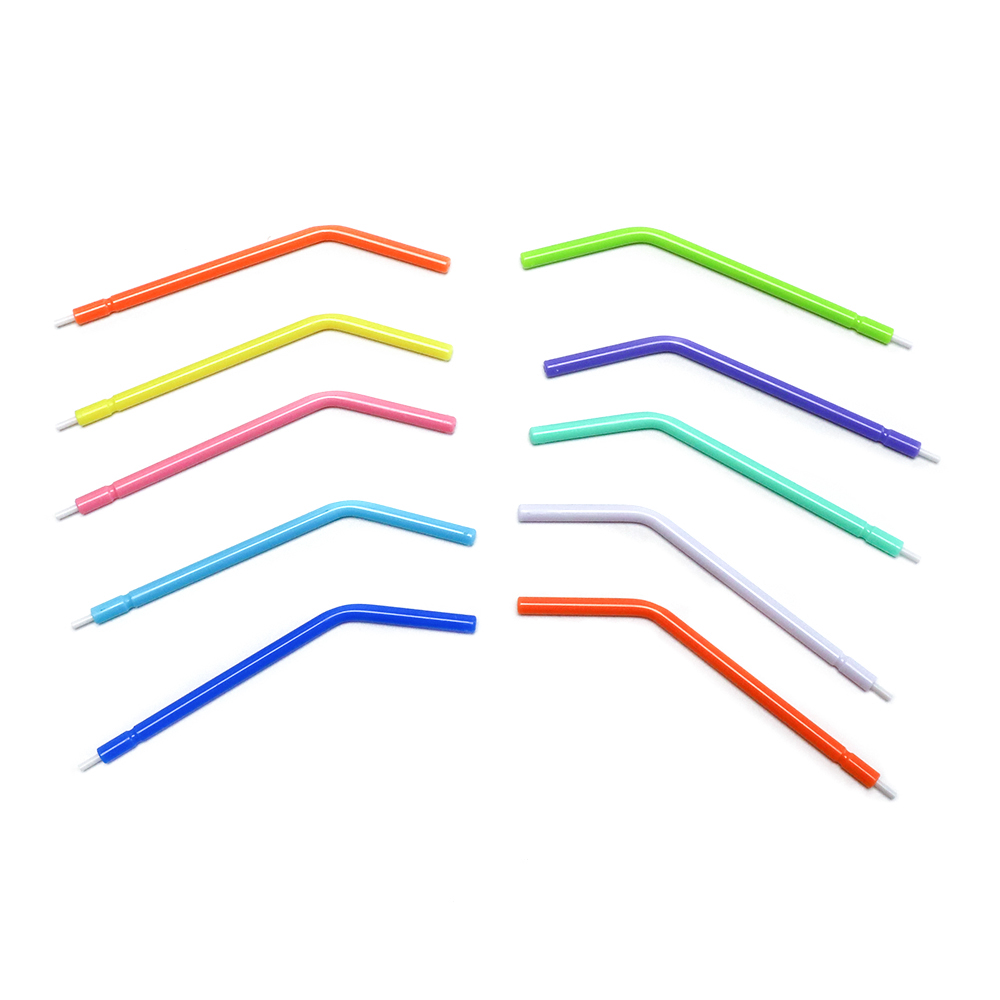
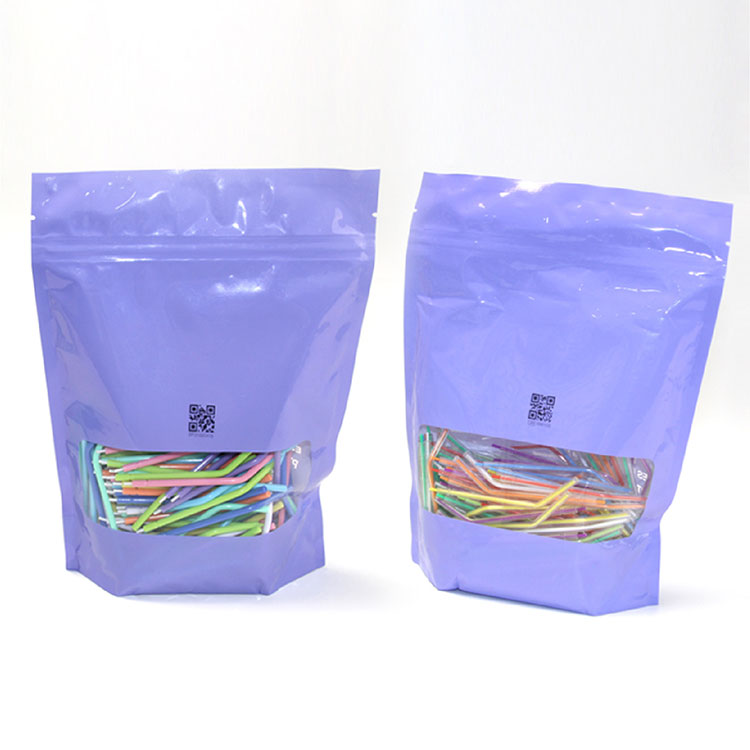
- Available in a wide range of colors including white, transparent, red, blue, green, orange, yellow, purple, teal, pink, and lime green for color-coded clinical protocols
- Latex-free construction; safe for use with latex-sensitive patients
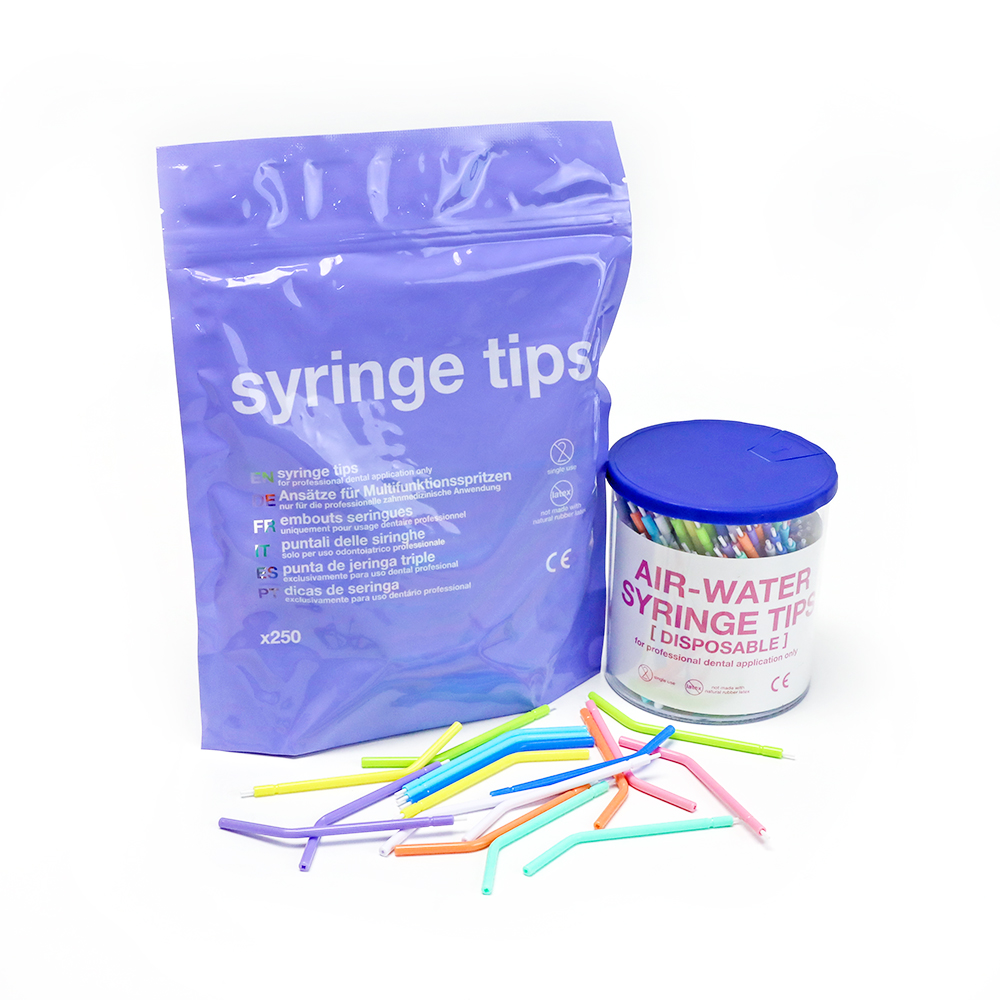
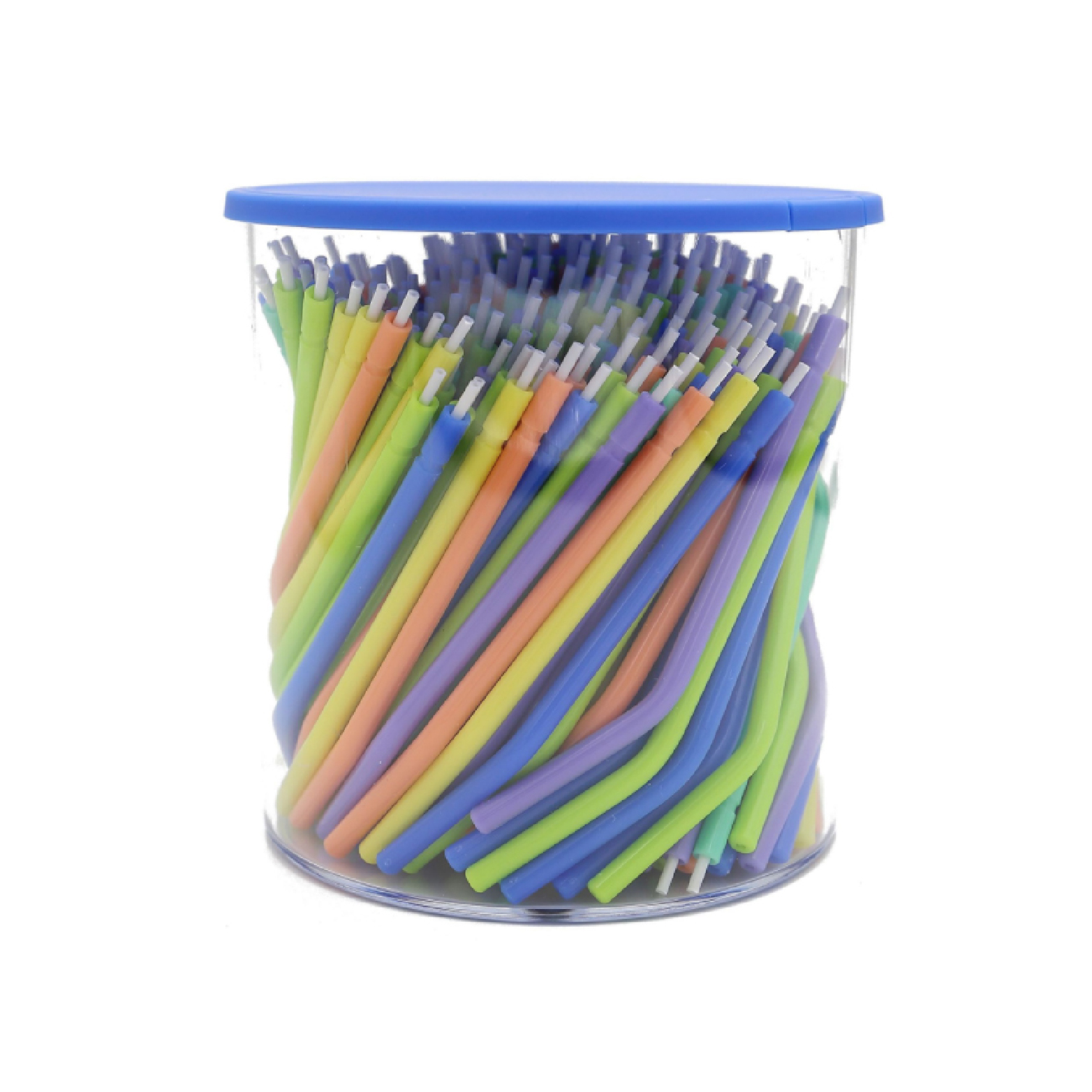
- Supplied in bulk resealable bags (250 pcs) and clear dispensing cylinders for organized chairside access
- Shelf life: 5 years
Description
The Disposable Air-Water Syringe Tip is a single-use plastic tip designed for attachment to the air-water (three-way) syringe of a standard dental treatment unit. It is used during dental examinations, restorative procedures, surgical appointments, and all other intraoral treatment sessions to wash, rinse, clean, and dry specific areas of the patient’s oral cavity — directing air, water, or a combined air-water spray to the target site under the clinician’s control throughout the procedure.
The tip consists of a plastic body with a grooved proximal connector end that inserts and locks into the handle of the dental treatment syringe, and a nozzle at the distal end — either stainless steel or plastic depending on the variant — through which air, water, or spray is directed to the operative field. As visible across the product images, the tip is available in both straight and pre-angled body formats: the straight format provides direct anterior access, while the pre-angled bent format directs the nozzle toward posterior quadrants and restricted access zones without requiring extreme syringe handle positioning that would compromise clinician control. The product is supplied in resealable bulk bags of 250 pieces and in clear cylindrical dispensing containers with snap-fit lids, in a broad color range spanning white, transparent, red, blue, green, orange, yellow, purple, teal, pink, lime green, and additional colors — enabling color-coded tip management protocols across different clinical settings and procedure types. The product is latex-free and intended for professional dental application only.
Feature
- The pre-angled body geometry of the bent-tip format directs the nozzle output toward the target surface at a clinically appropriate approach angle without requiring the syringe handle to be held at an extreme or uncomfortable position — reducing clinician wrist strain during extended procedure sequences requiring repeated rinsing and drying steps across multiple quadrants.
- The grooved proximal connector end engages the handle fitting of the dental treatment syringe with a secure snap-fit insertion requiring no tools — the groove profile creates a positive mechanical lock against axial withdrawal during use, preventing tip displacement during syringe activation while still allowing fast, one-handed tip changes between patients.
- The stainless steel or plastic distal nozzle at the tip end produces a focused, directed output stream — whether air, water, or combined spray — that reaches the specific target area within the operative field without broad diffusion, enabling the clinician to direct the output precisely to the preparation margin, wound site, or surface zone being cleaned or dried without saturating adjacent soft tissue areas.
- Available in straight and pre-angled formats within a single product line, providing the clinician with the appropriate tip geometry for all access zones encountered during a complete dental appointment — anterior direct-view surfaces with the straight tip, and posterior or lingually-inclined surfaces with the bent tip — without requiring a different product source for each format.
- Available in a broad color range — including white, transparent, red, blue, green, orange, yellow, purple, teal, pink, and lime green — enabling color-coded tip protocols by quadrant, procedure type, or provider within the clinical workflow, and providing immediate visual confirmation that a fresh tip has been installed before each patient use.
- Latex-free plastic body construction eliminates the latex allergy risk associated with natural rubber-containing dental consumables, making the tip safe for use in latex-sensitive patient protocols without modification to the clinical workflow.
- The single-use design eliminates cross-contamination risk between patients at the syringe tip — the most direct patient contact point of the air-water syringe — without requiring sterilization of the tip between patients, removing a reprocessing step that the plastic tip material would not withstand.
Air-Water Syringe Tip — Specifications
| Parameter | Specification |
|---|---|
| Product Name | Disposable Air-Water Syringe Tip |
| Material | Plastic (PP / PE); Stainless Steel or Plastic Nozzle |
| Body Format | Straight / Pre-Angled (Bent) |
| Connector Type | Grooved Snap-Fit Proximal End |
| Nozzle Output | Air / Water / Combined Air-Water Spray |
| Available Colors | White, Transparent, Red, Blue, Green, Orange, Yellow, Purple, Teal, Pink, Lime Green |
| Latex Content | Latex-Free |
| Compatibility | Standard Dental Treatment Unit Air-Water Syringe Handle |
| Packaging | 250 pcs / resealable bulk bag; dispensing cylinder |
| Use | Single-Use |
| Application | Oral cavity washing, rinsing, cleaning, and drying during dental treatment |
| Storage | Clean, dry place |
| Shelf Life | 5 Years |
Working Principle
The Disposable Air-Water Syringe Tip connects to the air-water syringe handle of the dental treatment unit via its grooved proximal connector, which engages the handle’s internal tip fitting and creates a sealed interface that directs air pressure, water pressure, or both simultaneously through the internal channel of the tip body to the nozzle at the distal end.
When the clinician activates the air button on the syringe handle, compressed air from the dental unit supply line passes through the syringe body and tip channel to the nozzle, producing a directed air stream at the tip output. When the water button is activated, water from the unit supply passes through the same pathway and exits as a directed water stream. When both buttons are activated simultaneously, the air and water streams combine within the syringe body and are delivered as a fine spray at the nozzle — the air-water mist format that provides simultaneous rinsing and debris removal across a broader target area than the water stream alone.
The angled body geometry of the pre-bent tip variant redirects the output nozzle relative to the handle axis, enabling the clinician to direct air, water, or spray to posterior, lingual, and palatal surfaces that a straight tip would require the handle to be inverted or severely angled to reach. The nozzle diameter and geometry produce a focused output that travels as a coherent stream or spray to the target site, rather than diffusing broadly at the exit point, allowing precise direction of the output to specific preparation margins, bleeding points, surface deposits, or restoration margins requiring irrigation or drying during the procedure.
Clinical Practice of the Disposable Air-Water Syringe Tip
1. Pre-Procedure Setup
- Select the appropriate tip format before seating the patient: straight tip for anterior direct-access procedures; pre-angled bent tip for posterior quadrant work, lingual surface access, and restricted access zones where the straight tip would require an uncomfortable syringe handle angle.
- Select tip color in accordance with the clinic’s color-coding protocol if applicable.
- Insert the tip proximal connector into the syringe handle fitting by aligning the grooved side with the handle slot and pressing axially until the connector engages with a positive snap; confirm secure engagement by applying gentle axial withdrawal force — a correctly seated tip should not pull free under light traction.
- Test the tip before intraoral use by briefly activating the air and water functions outside the patient’s mouth; confirm air output, water output, and combined spray output are all producing directed streams through the nozzle before beginning intraoral use.
- Do not use the syringe tip on wounds or open surgical sites; the tip is intended for washing, rinsing, cleaning, and drying of the oral cavity during treatment and is not indicated for direct wound irrigation.
2. Intraoperative Management
- Direct the nozzle to the target area before activating the air or water output; do not activate air or water before the tip is positioned within the oral cavity and directed away from the patient’s airway, eyes, and soft tissue areas adjacent to the target zone.
- Use water output for rinsing debris and material from the preparation area, tooth surface, or soft tissue; use air output to dry the surface for bonding agent application, etching confirmation, or visual inspection of the preparation; use combined spray for general oral cavity rinsing between procedure steps.
- Control output duration with brief activations during intraoral use; sustained water output in a restricted posterior area can accumulate fluid faster than the saliva ejector can evacuate it, increasing the risk of patient discomfort from fluid pooling.
- Coordinate tip use with the dental assistant managing the saliva ejector or high-volume evacuator: alert the assistant before activating sustained water output so the suction position can be adjusted to manage the output volume.
- When using the pre-angled tip in posterior access positions, confirm the nozzle direction before activating output; the angled geometry redirects the output relative to the handle orientation and the nozzle direction may not be immediately intuitive when the handle is in an unfamiliar approach angle.
3. Post-Procedure Tip Removal and Disposal
- Remove the tip from the syringe handle immediately after the procedure is complete and before removing gloves; grasp the tip body and pull axially to disengage the groove connector from the handle fitting.
- Discard the tip immediately after each patient use; single-use only. Do not reuse, re-sterilize, or re-disinfect.
- After removing the used tip, run the syringe briefly to flush the handle water and air channels before installing the next patient’s tip.
- Store unused tips in the original resealable bag or dispensing cylinder in a clean, dry location; reseal the bag or replace the cylinder lid after each tip removal to prevent contamination of the remaining tips.
The Function of the Disposable Air-Water Syringe Tip
The Disposable Air-Water Syringe Tip serves the oral cavity management requirement that is present throughout every dental procedure from examination through restoration completion: the continuous need to rinse debris and material from the operative field, dry surfaces for clinical inspection and material application, and remove blood, saliva, and irrigant from the working zone to maintain operative visibility and surface quality for each successive procedure step.
The three-function capability — air, water, and combined spray — addresses the full range of fluid management tasks encountered during a dental appointment within a single disposable tip. Air drying of etched surfaces before bonding agent application, water rinsing of preparation debris between bur changes, and combined spray rinsing of the full oral cavity between procedure steps all require different output modes, and the air-water syringe delivers all three through the same tip without requiring instrument changes. The disposable tip format ensures that this multi-function syringe — which contacts the patient’s oral cavity during every procedure — presents a fresh, uncontaminated surface to each patient, eliminating the cross-contamination risk that would be present if a non-disposable metal tip were used without autoclave sterilization between patients.
The availability of both straight and pre-angled tip formats within a single product line ensures that the three-function capability of the air-water syringe is accessible across all areas of the mouth without ergonomic compromise. The straight tip delivers direct, efficient access to anterior surfaces and broad oral cavity rinsing; the pre-angled tip redirects the nozzle output toward posterior and lingual surfaces that the straight tip cannot reach without forcing the clinician into an uncomfortable handle position that reduces output control accuracy and increases the procedural time required to achieve complete surface coverage in each treatment zone.
Important Notes for Using the Disposable Air-Water Syringe Tip
- For professional dental use only. Operators using this product must be qualified dental medical personnel with the appropriate clinical credentials; the air-water syringe tip is a clinical instrument intended for use by or under the direct supervision of licensed dental professionals.
- Confirm tip connector engagement before intraoral use. A tip that is not fully seated in the syringe handle may disengage during activation, creating a foreign body risk and losing directed output control intraorally. Test the connection before each use.
- Do not use on open wounds or active bleeding sites without clinical direction. The tip is intended for washing, rinsing, cleaning, and drying the oral cavity during treatment — not for direct wound irrigation, which requires sterile irrigant and specific wound management protocols.
- Do not activate air or water output before the tip is positioned within the oral cavity and directed away from the patient’s airway. Unintended activation of the air function outside the mouth near the patient’s face creates an aerosol and spray risk; activation of the water function away from the operative field produces uncontrolled fluid volume in the oral cavity that may compromise patient comfort and operative field visibility.
- Single-use only. Destroy after use. Do not reuse, re-sterilize, or re-disinfect. The tip contacts patient oral fluid and tissue during use; reuse creates a direct cross-contamination pathway between patients and is strictly prohibited.
- Do not use if packaging is damaged, parts have detached, or foreign objects are present inside the package. Compromised packaging may indicate conditions that have affected the material integrity or cleanliness of the tip before opening.
- Check the expiration date before use. Do not use tips beyond the 5-year shelf life; material properties of the plastic body and nozzle cannot be assured after the shelf life period has elapsed.
- Store in a clean, dry location. Do not store opened tip packages in areas exposed to moisture, chemical vapors, or direct sunlight; reseal the package between uses to maintain the cleanliness of the remaining tips until next use.
评价
目前还没有评价