How to Source Dental High-Speed Handpieces Directly from Chinese Manunfacturers— Using Dentalink as an example Study to Map Out a Reliable Direct-Sourcing Strategy
The dental high-speed air turbine handpiece is undoubtedly the most frequently used and most frequently replaced device in any dental practice. Because it’s a “daily-use” item, it gives many importers, distributors, and hospital procurement leads a real headache – to buy it properly. It isn’t hard to find—it’s everywhere—but it’s hard to get properly. There’s no shortage of high speed handpiece on the market, but finding units with fully traceable production batches, complete certificate, an quality that holds up under random inspection, trust me, it takes real legwork.
This isn’t a vague “shopping guide.” It’s a walk-through, grounded in the actual practices of one manufacturer I know fairly well—DentaLink—that breaks down handpiece sourcing from the usual “ out looks” level all the way to what really matters: cartridge design, bearings, certifications, and batch traceability. Meanwhile, Dentalink cover OEM customization, cost structure, and the customs pitfalls to watch for in different markets.
Why Do Handpieces That Look Almost Similar, but price Vary in Threefolds?
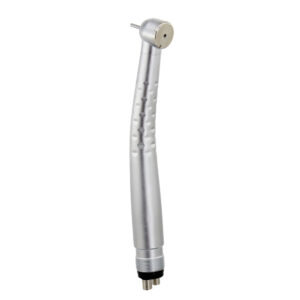
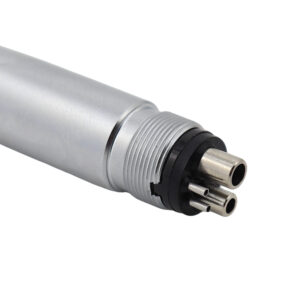
Plenty of buyers get confused the first time they pick up samples: two handpieces sitting side by side, nearly indistinguishable to the eye—one quoted at $28, the other at $92. Open them and you still can’t tell much. But after you use them for a couple of months, and the difference becomes obviously.
The real difference comes from three invisible places: bearings, rotor balance, and seal design.
High-speed handpieces typically run at 350,000–420,000 rpm no-load, with the bur tip reaching linear speeds over the sonic speed. Under those conditions, bearings are the single biggest consumable. Cheap handpiece use stainless steel bearings—after a few hundred sterilization cycles, noise become bigger and bur will swing. Good quality handpiece use ceramic bearings made by silicon nitride material, with far better wear resistance and thermal stability. But a single set of imported ceramic bearings already costs close to the entire EXW price of a low-end handpiece.
Another point is rotor balance. When the turbine blades spin at 400,000 rpm, even 0.01 mm of imbalance turns into centrifugal force like a tiny hammer hitting the bearings over and over again—it leads bearings use life short in a half directly. You can’t test it without a dynamic balancing machine, and many smaller suppliers skip that step entirely.
Except this, don’t forget the O-rings and seal materials. Silicone that withstands high-temperature steam aging costs are several times more than ordinary rubber price—but in clinical use, the former lasts two to three years, while the latter one hardens and leaks water within six months.
So the price gap isn’t brand difference, it’s a solid reflection of component costs and process discipline. One detail the engineering team at DentaLink shared with me: they 100% inspect every batch of cartridges for dynamic balance, choosing out any one that don’t work meet standard—and this single step occupy about 15% of total production cost.
What Gold Specs Should a “Compliant” High-Speed Handpiece Meet?
A handpiece spins doesn’t mean it’s good for use. According to ISO 14457 and China’s YY 1045-2021, the following are basic requirements— you must ask your supplier for test reports on:
No-load speed: no lower than 160,000 rpm; some models require 420,000 rpm or above.
Braking torque: at least 0.05 N·cm, to ensure it has adequate cutting power.
Noise: A-weighted sound pressure level ≤80 dB; top-quality units can stay under 65 dB
Sterilization tolerance: withstands 134°C / 0.22 MPa steam autoclaving—at least 200 cycles without performance down.
Water/air flow: at 200 kPa supply pressure, water flow ≥50 mL/min and air flow ≥1.5 L/min to ensure cooling and drive.
A specific guidance for pneumatic dental handpieces is published by the U.S. FDA in Sep. 2024, adding more detail request on noise, vibration, and chucking force. The Europe, requires CE-MDR certificate when the factory export them also. Dentalink’s handpiece models now fully comply with ISO 14457, the FDA guidance, and CE-MDR certifcate all at once. And they export over five hundred thousands units every year with complete test reports in every order.
Critical Technical Parameters B2B Purchaser should Keep an Eye On
If you’re handling bulk purchase order of high speed and low speed handpiece, don’t focus on “rpm” only. The following parameters have a more important impact on real-world performance and after-sales costs.
- Bearing types
Ask dental handpiece factory directly: “Are these bearing typeceramic or stainless steel?” If they hesitate or says “hybrid,” you should turn on a warning alarm in your mind. Dentalink’s sales team will tell you exactly which brand of bearings (e.g., imported from NSK, or from Kavo, or it is high-end domestic customized) goes into each model, and supply batch numbers for full traceability. - Coupling standard
Although most dental handpieces follows the ISO 3964 four-hole standard, different chair brands have slight variations in install positions. Best practical way: require a sample from factory and back to test-fit, or ask the factory for a exactly dimension drawing. Dentalink offers both four-hole and two-hole models, with optional fit optimization for major dental chair brands like KaVo, Sirona, NSK, and others. - Bur change mechanism
Push-button is now the main stream of bur change, it is safer and faster than screw-type, and with bur anti-ejection design. When you sourcing, check the rated use life of the push-button mechanism; good quality ones can work over 50,000 cycles without sticking. - Fiber-optic illumination
For LED fiber light in dental handpieces, light output should be ≥200 lumens, with a color temperature of 5,000–6,000K, this values close to daylight for good color rendering. Manylow-cost dental handpieces suffer rapid LED degradation, dimming remarkably within short months. Dentalink uses imported LED chips and guarantees luminous decay under 10% within the warranty period.
How to Find a Reliable dental handpiece Manufacturers in China
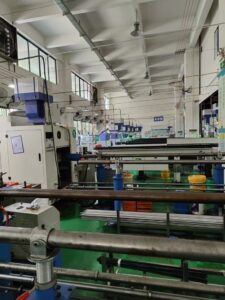
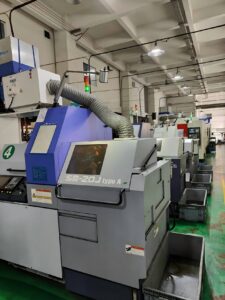
China’s dental handpiece factories group is concentrated in Foshan and Guangzhou, Guangdong Province, with over a hundred factories of various scales. But be honest, with vertically produce ability’s manufacturers who with in-house R&D, machining, assembly, and testing capabilities are not so many. You can choose supplier according to the following steps:
Deepness of Vertical produce process
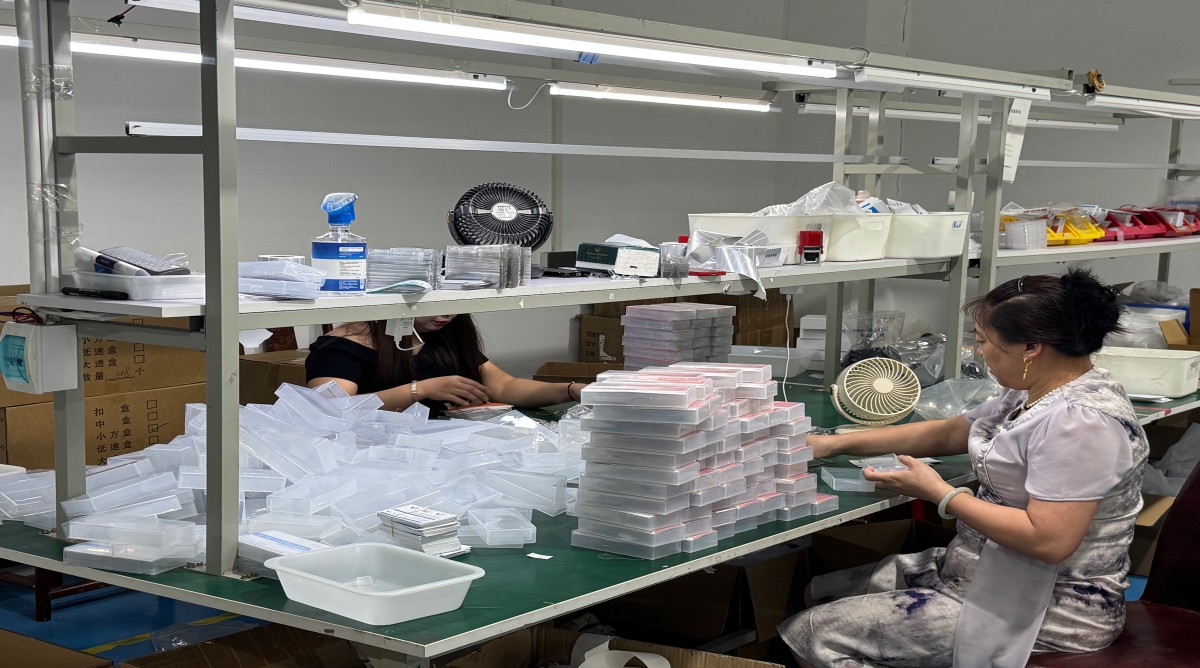
Dentalink’s deepness of veritcal produce process covers five major aspects: precision machining of the turbine cartridge, dynamic balancing, seal assembly, fiber-optic soldering, and final product testing. That means they control quality at every step and can respond quickly to custom requests.
A Two-Step Supplier choosing Process
- Request samples—you can ask at least two pieces samples, run them on your own chair, listen to noise, check spray pattern, measure speed, and re-test after one sterilization cycle.
- Demand batch records—you can ask if the factory can supply production records and QC sheet for specific batch. If they can supply, that’s means their management systems are solid.
Dentalink delivers routine sample orders within five work days and includes an actual test report for those samples—not only a generic spec sheet.
OEM Customization: The Real Value of factory Supply Direct
Many importers turn to Chinese factories not only for cost savings, but also want to build their own brands and create product differentiation.
Dentalink’s OEM services can meet these requirements:
Laser engraving service on the handpiece body—your logo, model number, serial number, all above can be done by Dentalink.
Custom body finishes—adapted to regional aesthetic preferences according to your request. It can meet different country and market’s request.
Head size adjustments—normally Dentalink supply mini-head or standard-head options, also plus larger-head variants.
Packaging solutions—bulk hospital cartons, or retail-ready individual color boxes with multilingual instruction leaflets, or retail plastic PVC box.
Normally MOQ for full OEM is 1,000 units, but for neutral plastic-box packaging, the MOQ drops to 200 units. Custom packaging increase about 5–10% to cost, but compared to First-Tier international brands, the overall price remains significantly competitive.
How is the Price composed—A Realistic Estimation
The EXW price of a high-speed handpiece is composed of several aspects:
Bearings—ceramic material price runs 3–5times more expensive than stainless steel material.
Cartridge precision—100% dynamic balance inspection vs. sample-based inspection makes a bigger cost difference.
Materials and surface finish—aerospace-grade aluminum with hard anodizing vs. ordinary aluminum with spray coating—price gap of at least two times.
Certification amortization—factories with CE and FDA approvals need spread annual maintenance fees across each unit shipped. The price will be higher than factory who don’t have certificate.
Quantity—price for 500 units vs. 2,000 units at least shows a 10–15% difference.
Dentalink offers transparent pricing for different markets, breaking down the FOB Guangzhou cost line by line—no vague “all-inclusive certification” talk. Ask them to quote both “without certification fees” and “with full certification fees” so you can compare them and see difference.
At the end
Sourcing dental high-speed handpieces isn’t really about buying “something that spins.” It’s about buying into a traceable, certifiable, long-term-stable supply chain service.
If all you want is cheap, the market is full of cheap options. But if you care about clinical safety, patient experience, and minimal after-sales troubles, then you need to invest the time to distinguish a factory’s true capabilities.
Vertically integrated manufacturers like DentaLink who with complete certifications and a willingness to share data aren’t everywhere in China. The key point is knowing what you really want: if you want ceramic bearings, don’t persuade by any anyone who talk you into “stainless is good enough.” If you want your own label branding, don’t shy away from the MOQ.
A serious factory won’t mind you asking plenty of questions—in fact, they’ll welcome detailed technical discussions. If a supplier gets evasive when you drill into specs, the most possibilities are they don’t have clear answers themselves.
This article isn’t endorsing any particular brand, but if you happen to be looking for a manufacturer that will sit down with you and talk cartridge precision and bearing life in detail, Dentalink is a good supplier you can talk with. When you send an inquiry, be sure to state your target market, estimated annual volume, and required certification level, like this way, the quote you get back will actually be worth something.