
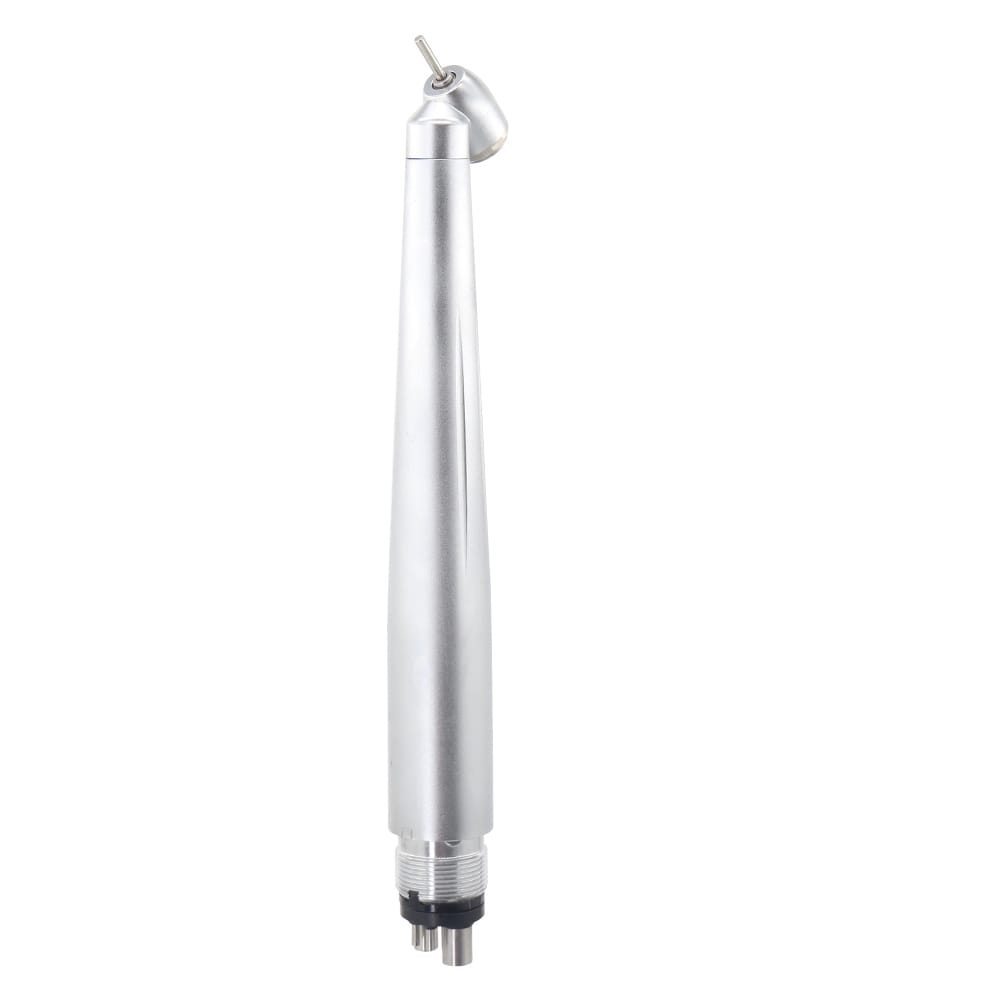
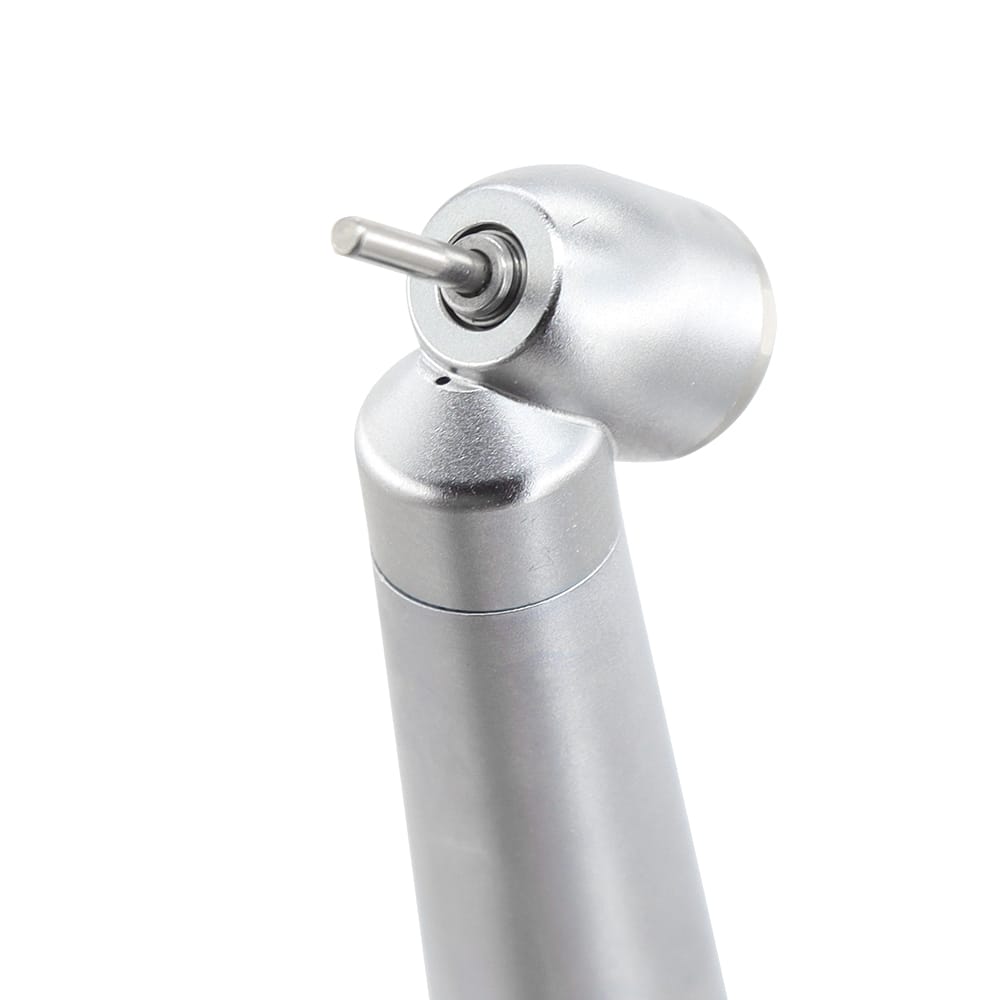
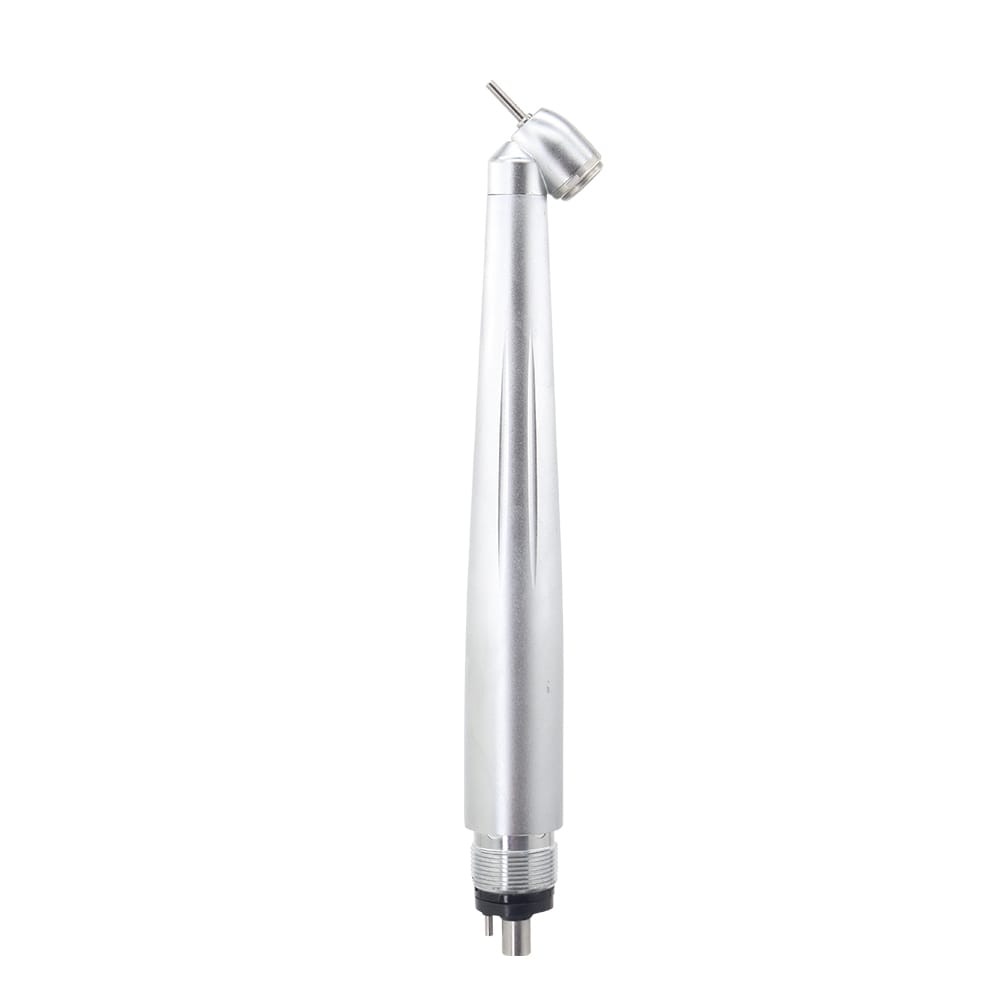
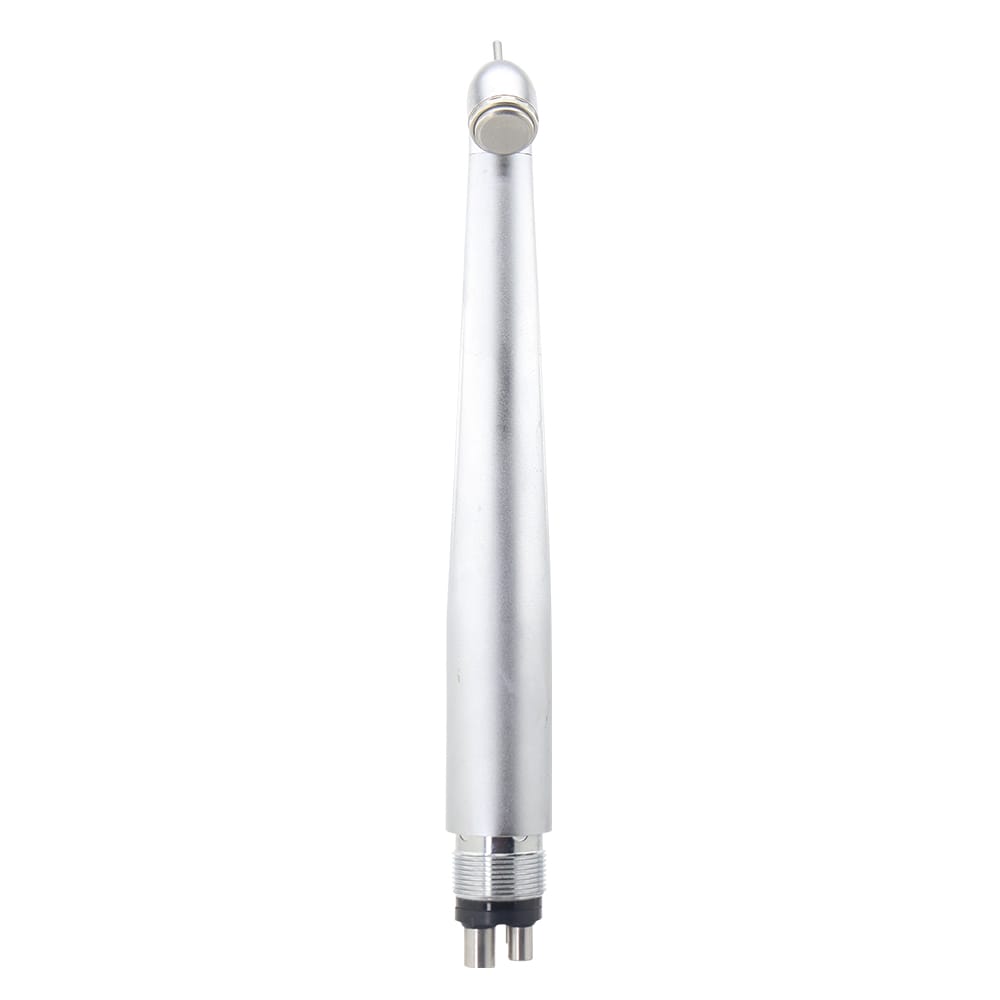
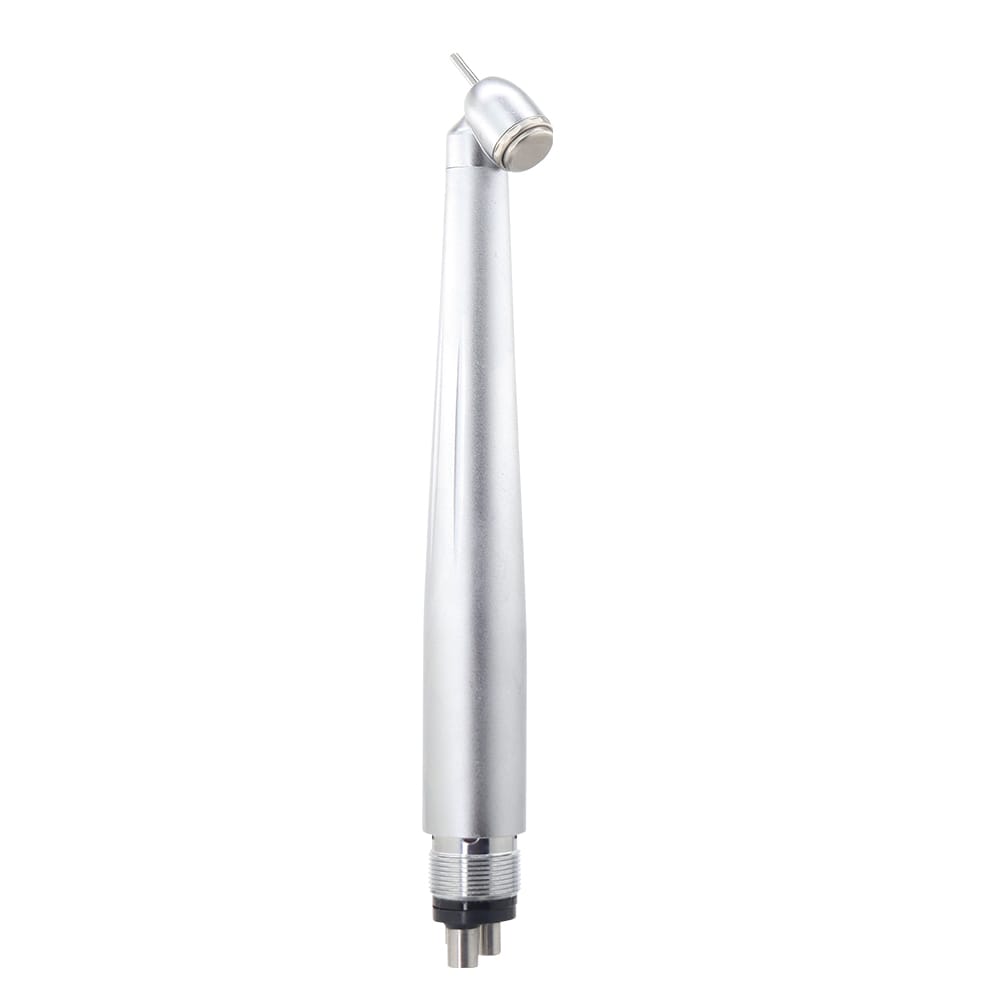
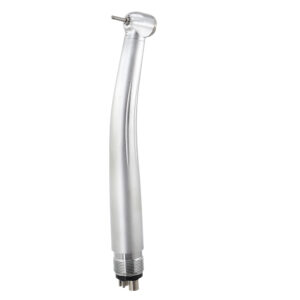
45° MAX High-Speed Handpiece
描述
45° MAX High-Speed Handpiece
- Double arc-line grip pattern for superior ergonomic control
- Metal body construction for durability and long-term reliability
- Single-jet water cooling with rear exhaust design
- Push-button bur release for fast and easy bur changes
- Available in 2-hole and 4-hole connection interfaces
- Compatible with autoclave sterilization at 135°C
Description
The 45° MAX High-Speed Handpiece is a precision-engineered dental instrument designed to deliver exceptional performance in posterior and hard-to-reach areas of the oral cavity. The distinctive 45-degree head angle provides clinicians with an optimized line of sight and greater access to the posterior region, making it especially valuable for procedures involving the upper and lower molars.
Constructed with a full metal body, the handpiece offers outstanding durability and a premium feel in hand. Its double arc-line surface pattern enhances grip stability, reducing clinician fatigue during extended procedures. With a rotational speed of 320,000–350,000 RPM and a working air pressure of 0.22–0.25 MPa, it delivers consistent, high-power cutting performance in every clinical scenario.
Feature
- The 45-degree angled head design significantly improves access to posterior teeth, enabling more precise preparation with enhanced visibility and reduced wrist strain for the clinician.
- Single-jet water spray cooling combined with a rear exhaust system effectively dissipates heat at the bur tip, protecting both the dental pulp and surrounding tissues during high-speed cutting.
- The push-button bur release mechanism allows for quick, one-handed bur changes, minimizing chairside downtime and improving overall procedural efficiency.
- The full metal body shell provides exceptional resistance to deformation and wear, ensuring a longer service life and consistent performance across hundreds of sterilization cycles.
- Compatible with both 2-hole and 4-hole connection standards, offering broad compatibility with mainstream dental unit interfaces on the market.
45° MAX High-Speed Handpiece — Specifications
| Parameter | Specification |
|---|---|
| Head Angle | 45° |
| Body Pattern | Double Arc-Line |
| Connection | 2-Hole / 4-Hole |
| Body Material | Metal |
| Cooling System | Single-Jet Water Spray, Rear Exhaust |
| Bur Chuck | Push-Button Release |
| Working Air Pressure | 0.22 – 0.25 MPa |
| Speed | 320,000 – 350,000 RPM |
| Noise Level | ≤ 60 dB |
| Bur Shank Diameter | Φ 1.595 – 1.600 mm |
| Sterilization | 135°C High-Temperature Autoclave |
Working Principle
The 45° MAX High-Speed Handpiece operates on a pneumatic turbine principle. Compressed air enters the handpiece through the connection interface at a working pressure of 0.22–0.25 MPa, driving the internal turbine rotor to achieve rotational speeds between 320,000 and 350,000 RPM. This high-speed rotation generates the cutting force required for efficient tooth preparation.
The integrated single-jet water spray cooling system delivers a targeted stream of water directly to the bur-tooth contact point, effectively controlling thermal buildup and protecting pulp vitality during cutting. The rear exhaust design channels spent air away from the surgical field, preventing aerosol contamination from blowing toward the patient or the operative area. The push-button chuck mechanism locks and releases burs of Φ1.595–1.600 mm shank diameter securely and instantly, maintaining concentricity and vibration control at maximum RPM.
Clinical Practice of the 45° MAX High-Speed Handpiece
1. Pre-Operative Setup
- Inspect the handpiece packaging for integrity before opening.
- Connect the handpiece to the dental unit via the 2-hole or 4-hole interface and verify air pressure is set to 0.22–0.25 MPa.
- Install the appropriate bur using the push-button release mechanism and confirm secure seating before activation.
- Run the handpiece unloaded for 5–10 seconds to verify smooth rotation, cooling water output, and exhaust function.
2. Intraoperative Management
- Use the 45-degree head angle to its full advantage when accessing second and third molars; adjust patient head position and mouth opening accordingly.
- Maintain light, intermittent contact between the bur and the tooth surface — avoid sustained pressure that can overheat the pulp or stall the turbine.
- Ensure the single-jet cooling spray is properly aimed at the cutting site throughout the procedure.
- Keep noise levels in check: operating noise should remain ≤60 dB; unusual vibration or sound may indicate bur damage or bearing wear, requiring immediate handpiece replacement.
3. Post-Operative Maintenance
- Remove the bur immediately after the procedure using the push-button release.
- Lubricate the handpiece internally according to the manufacturer’s protocol before sterilization.
- Sterilize in a Class B autoclave at 135°C high-temperature high-pressure cycle.
- Store in a clean, dry environment after sterilization is complete.
The Function of the 45° MAX High-Speed Handpiece
The defining advantage of the 45° MAX High-Speed Handpiece over standard straight or conventional contra-angle handpieces lies in its angled head geometry. The 45-degree offset allows dentists to align the bur axis more naturally with the long axis of posterior teeth, reducing the need for extreme wrist pronation or patient hyperextension. This translates directly into more controlled preparations, reduced operator fatigue, and improved patient comfort during lengthy restorative or endodontic access procedures.
Unlike standard high-speed handpieces that require significant angulation of the wrist to reach distal surfaces of molars, the 45° MAX achieves the same reach with a more neutral hand position. The metal body further differentiates it from plastic-shell alternatives by providing superior heat dissipation, greater torque transmission stability, and a tactile density that helps clinicians sense bur engagement with the tooth structure more accurately.
Important Notes for Using the 45° MAX High-Speed Handpiece
- Always verify that the air supply pressure is within the specified range of 0.22–0.25 MPa before operation. Pressure below this range will result in insufficient cutting speed; pressure above it risks premature bearing wear and turbine damage.
- Only use burs with a shank diameter of Φ1.595–1.600 mm. Burs outside this tolerance can cause excessive vibration, poor concentricity, and potential chuck damage.
- Do not activate the handpiece without a bur installed — running the turbine unloaded at maximum RPM without a bur can cause rotor imbalance and accelerated bearing wear.
- The push-button bur release should be operated only when the handpiece is at a complete standstill. Never attempt to change a bur while the turbine is still spinning.
- Lubricate the handpiece before every sterilization cycle. Failure to lubricate before autoclaving is the most common cause of premature turbine failure in high-speed handpieces.
- The handpiece is rated for autoclave sterilization at 135°C. Do not use chemical cold sterilization solutions, as they may corrode internal metal components and degrade seals.
- Inspect the handpiece head and body after each sterilization cycle for signs of corrosion, crack, or seal deterioration. Retire the handpiece from clinical use if any structural compromise is detected.
评价
目前还没有评价