
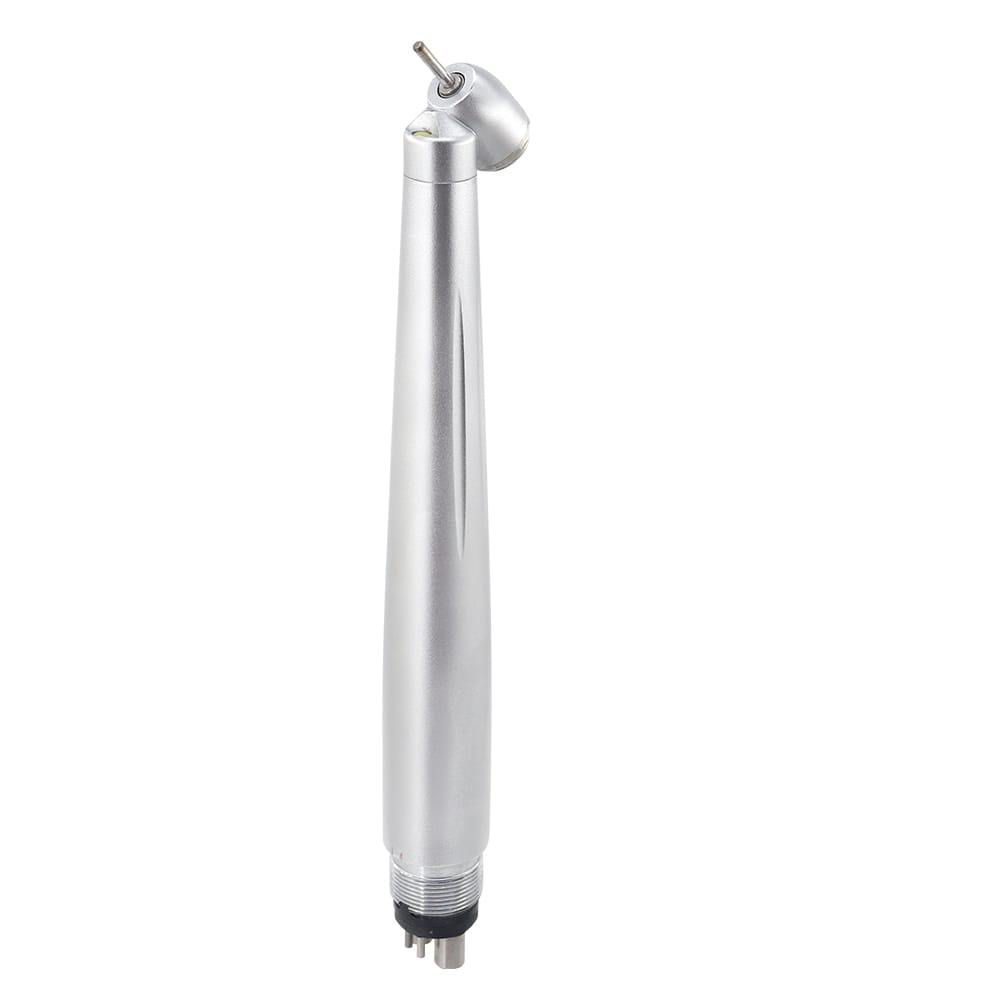
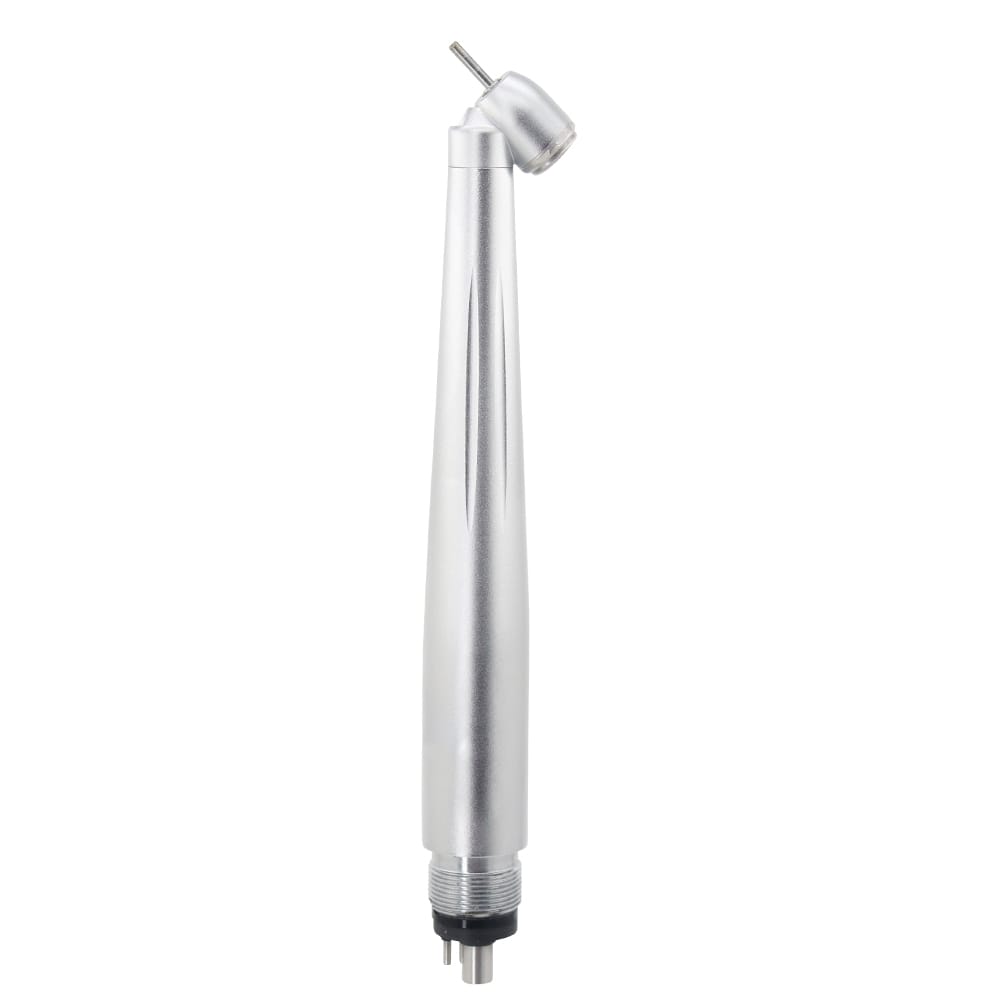
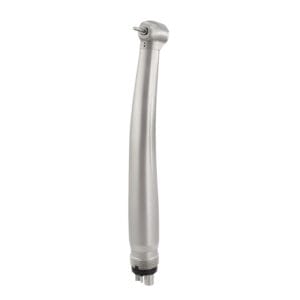
45° MAX LED High-Speed Handpiece
描述
45° MAX LED High-Speed Handpiece
- Double arc-line grip pattern for superior ergonomic control
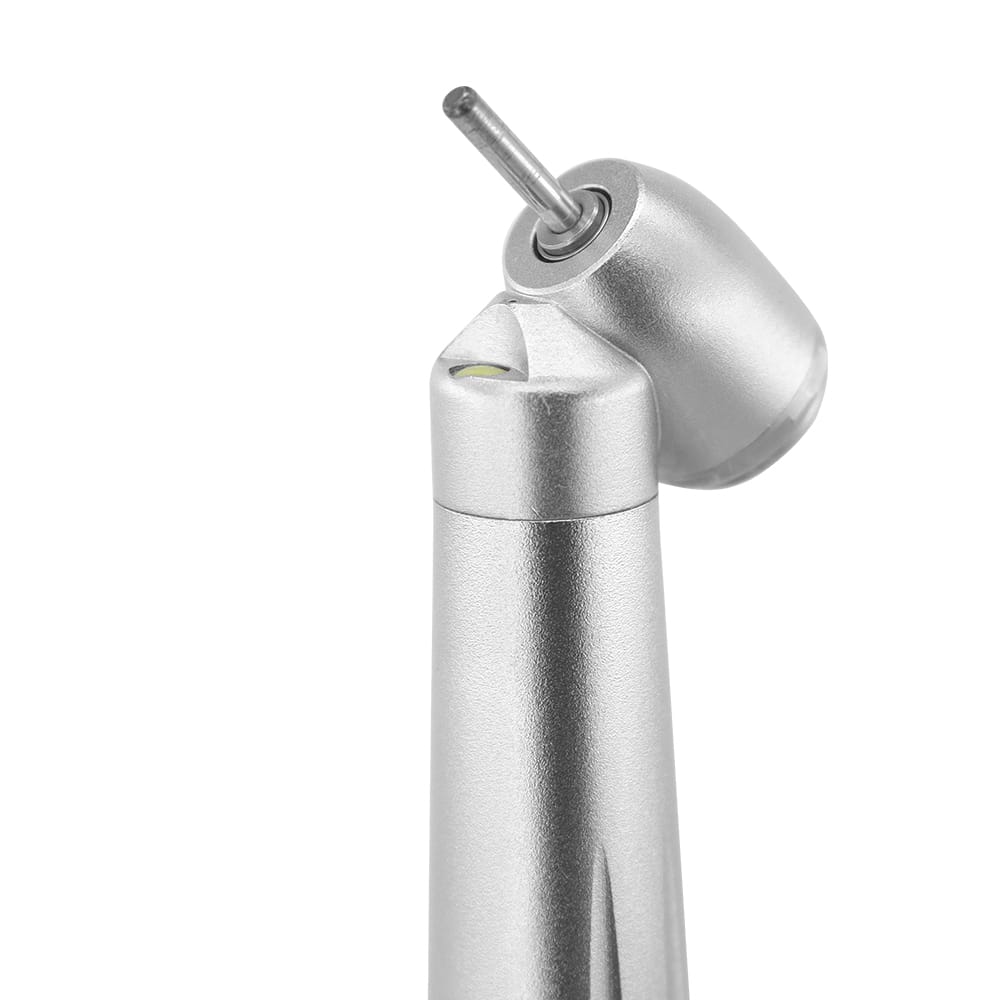
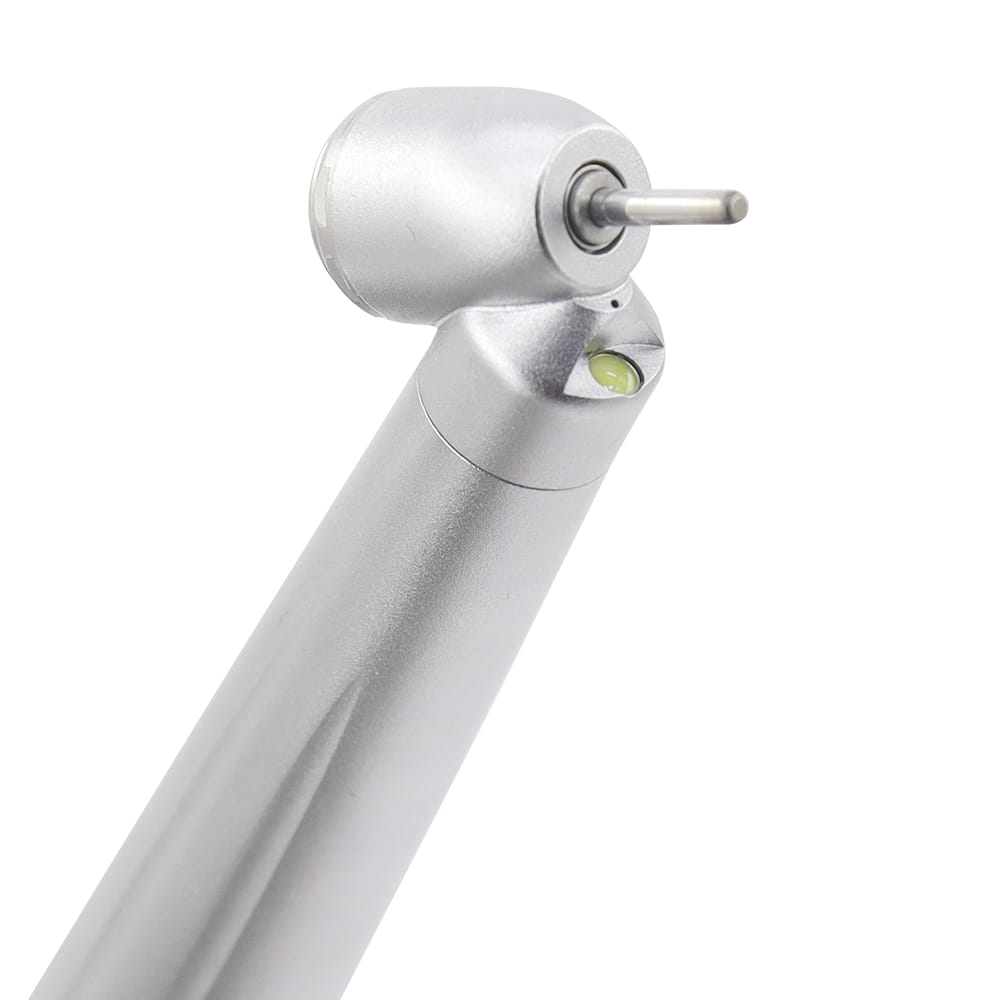
- Built-in LED illumination for a bright, shadow-free surgical field
- Metal body construction for durability and long-term reliability
- Single-jet water cooling with rear exhaust design
- Push-button bur release for fast and easy bur changes
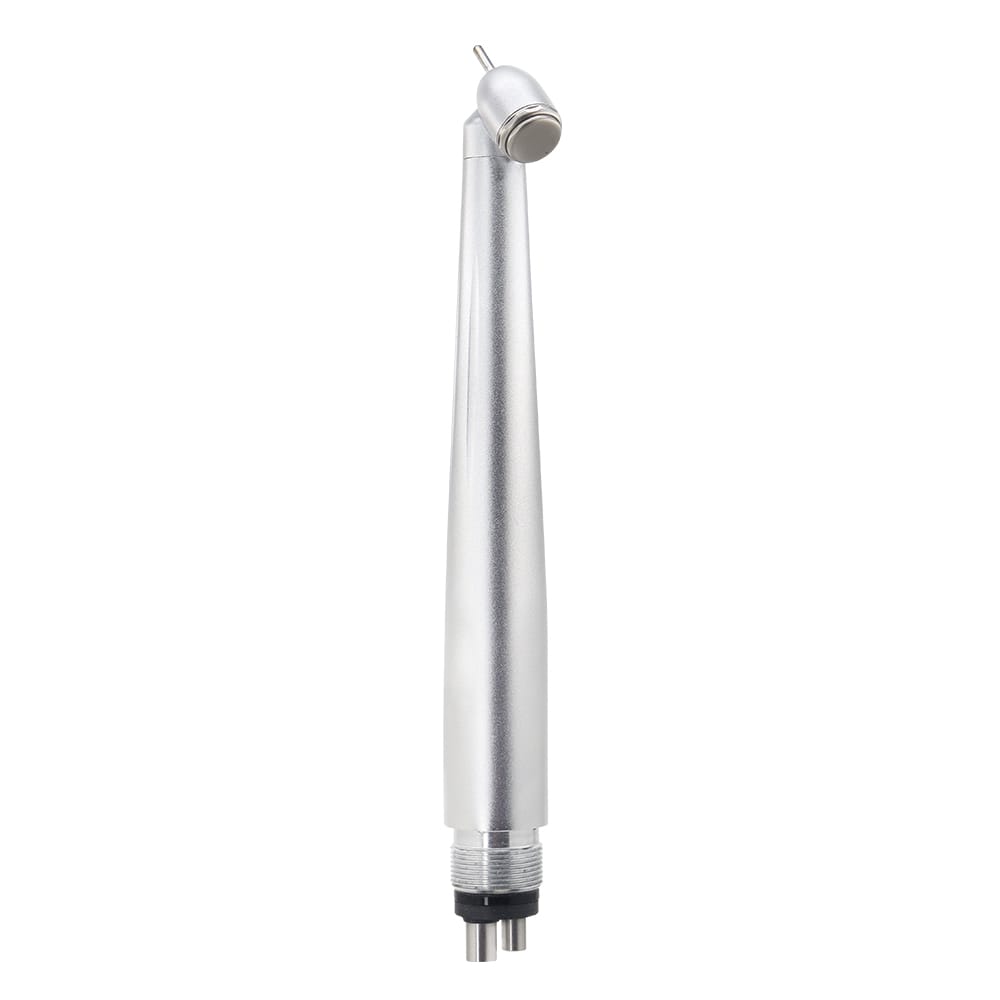
- Available in 2-hole and 4-hole connection interfaces
- Compatible with autoclave sterilization at 135°C
Description
The 45° MAX LED High-Speed Handpiece combines the clinical advantages of a 45-degree angled head with integrated LED illumination, delivering both superior access and exceptional visibility in a single instrument. Designed for demanding restorative and preparation procedures, the 45-degree head angle allows clinicians to reach posterior regions of the oral cavity with minimal wrist strain, while the built-in LED light source eliminates shadows at the operative site — a critical advantage when working deep in the oral cavity.
Constructed with a full metal body and featuring a distinctive double arc-line surface pattern, the handpiece offers outstanding durability, a secure grip, and a premium tactile feel. Operating at 320,000–350,000 RPM with a working air pressure of 0.22–0.25 MPa, it provides consistent, high-torque cutting performance across a wide range of clinical applications.
Feature
- The 45-degree angled head design significantly improves access to posterior teeth, enabling more precise tooth preparation with enhanced visibility and reduced wrist strain for the clinician.
- The integrated LED light source delivers bright, consistent illumination directly at the bur tip, eliminating shadows caused by overhead operatory lights and improving clinical precision in deep or restricted operative fields.
- Single-jet water spray cooling combined with a rear exhaust system effectively dissipates heat at the bur-tooth interface, protecting pulp vitality and surrounding tissues during high-speed cutting.
- The push-button bur release mechanism enables quick, one-handed bur changes, minimizing chairside downtime and improving procedural efficiency.
- The full metal body provides exceptional resistance to deformation and wear, ensuring consistent performance and structural integrity across hundreds of sterilization cycles.
- Compatible with both 2-hole and 4-hole connection standards, offering broad compatibility with mainstream dental unit interfaces.
45° MAX LED High-Speed Handpiece — Specifications
| Parameter | Specification |
|---|---|
| Head Angle | 45° |
| Body Pattern | Double Arc-Line |
| Connection | 2-Hole / 4-Hole |
| Body Material | Metal |
| Cooling System | Single-Jet Water Spray, Rear Exhaust |
| Illumination | Built-in LED |
| Bur Chuck | Push-Button Release |
| Working Air Pressure | 0.22 – 0.25 MPa |
| Speed | 320,000 – 350,000 RPM |
| Noise Level | ≤ 60 dB |
| Bur Shank Diameter | Φ 1.595 – 1.600 mm |
| Sterilization | 135°C High-Temperature Autoclave |
Working Principle
The 45° MAX LED High-Speed Handpiece operates on a pneumatic turbine principle. Compressed air enters through the connection interface at 0.22–0.25 MPa, driving the internal turbine rotor to reach rotational speeds of 320,000–350,000 RPM. This sustained high-speed rotation provides the cutting force required for efficient tooth preparation across enamel, dentin, and restorative materials.
The LED illumination system is powered by a fiber-optic or direct LED circuit integrated into the handpiece neck, activated automatically when the air supply is engaged. Light is directed precisely toward the bur tip, casting a bright, focused beam onto the operative field without the shadow artifacts common with overhead operatory lighting alone. The single-jet water spray system delivers targeted cooling directly to the cutting zone, while the rear exhaust design channels spent air away from the patient and the field. The push-button chuck locks and releases burs of Φ1.595–1.600 mm shank diameter with consistent concentricity at maximum RPM.
Clinical Practice of the 45° MAX LED High-Speed Handpiece
1. Pre-Operative Setup
- Inspect the handpiece packaging for integrity before opening.
- Connect the handpiece to the dental unit via the 2-hole or 4-hole interface and confirm air pressure is within 0.22–0.25 MPa.
- Install the appropriate bur using the push-button release and confirm secure seating before activation.
- Run the handpiece unloaded for 5–10 seconds to verify smooth rotation, LED output, cooling water flow, and rear exhaust function.
2. Intraoperative Management
- Leverage the LED illumination to assess cavity depth, margin clarity, and remaining tooth structure in real time — particularly valuable when working on distal surfaces of molars or in deep preparations.
- Use the 45-degree head angle to approach posterior teeth with a more neutral wrist position; adjust patient head tilt as needed for optimal access.
- Maintain light, intermittent contact between the bur and tooth surface to prevent pulp overheating; the cooling spray should remain active and visible throughout cutting.
- Monitor operating noise — it should remain ≤60 dB during normal use. Unusual vibration or increased sound may indicate bur wear or bearing degradation; replace immediately.
3. Post-Operative Maintenance
- Remove the bur immediately after the procedure using the push-button release.
- Lubricate the handpiece internally per the manufacturer’s protocol before sterilization.
- Sterilize in a Class B autoclave at 135°C high-temperature high-pressure cycle.
- After sterilization, inspect the LED lens for discoloration or residue and clean gently if necessary before storage.
The Function of the 45° MAX LED High-Speed Handpiece
The 45° MAX LED High-Speed Handpiece addresses two of the most persistent challenges in posterior dentistry: access and visibility. The 45-degree head angle reduces the need for extreme wrist pronation when reaching second and third molars, allowing clinicians to maintain a more ergonomic posture throughout the procedure and reducing the risk of repetitive strain injury over time.
The addition of integrated LED illumination takes this a step further by solving the shadow problem inherent to standard operatory lighting. Overhead lights, regardless of positioning, inevitably cast shadows into the oral cavity as the handpiece itself blocks the light path. The built-in LED eliminates this issue by placing the light source at the point of use — directly adjacent to the bur tip — ensuring that the operative field remains fully illuminated regardless of handpiece orientation. This is especially significant for preparations requiring close evaluation of cavity walls, margin integrity, or residual caries at depth, where inadequate lighting directly increases the risk of clinical error.
Important Notes for Using the 45° MAX LED High-Speed Handpiece
- Always confirm air supply pressure is within 0.22–0.25 MPa before operation. Insufficient pressure reduces cutting efficiency and turbine speed; excessive pressure accelerates bearing wear and shortens handpiece service life.
- Use only burs with a shank diameter of Φ1.595–1.600 mm. Out-of-tolerance burs compromise concentricity, generate excessive vibration, and risk damage to the chuck mechanism.
- Never activate the handpiece without a bur properly installed. Running the turbine unloaded at full RPM accelerates rotor imbalance and bearing wear.
- Operate the push-button bur release only when the turbine has come to a complete stop. Attempting a bur change during spin-down can damage the chuck and may cause the bur to eject unexpectedly.
- Lubricate the handpiece before every sterilization cycle. Skipping lubrication is the leading cause of premature turbine failure in high-speed handpieces and will void most manufacturer warranties.
- The handpiece is rated for autoclave sterilization at 135°C only. Chemical cold sterilization agents are not compatible and may corrode internal components, degrade seals, and damage the LED assembly.
- Periodically inspect the LED lens area for scale buildup, residue, or discoloration that may reduce light output. Clean gently with a soft cloth after sterilization; do not use abrasive materials on the lens surface.
- Inspect the handpiece body, head, and connection interface after each sterilization cycle. Retire the handpiece from clinical use if cracks, corrosion, or seal failure are detected.
评价
目前还没有评价