
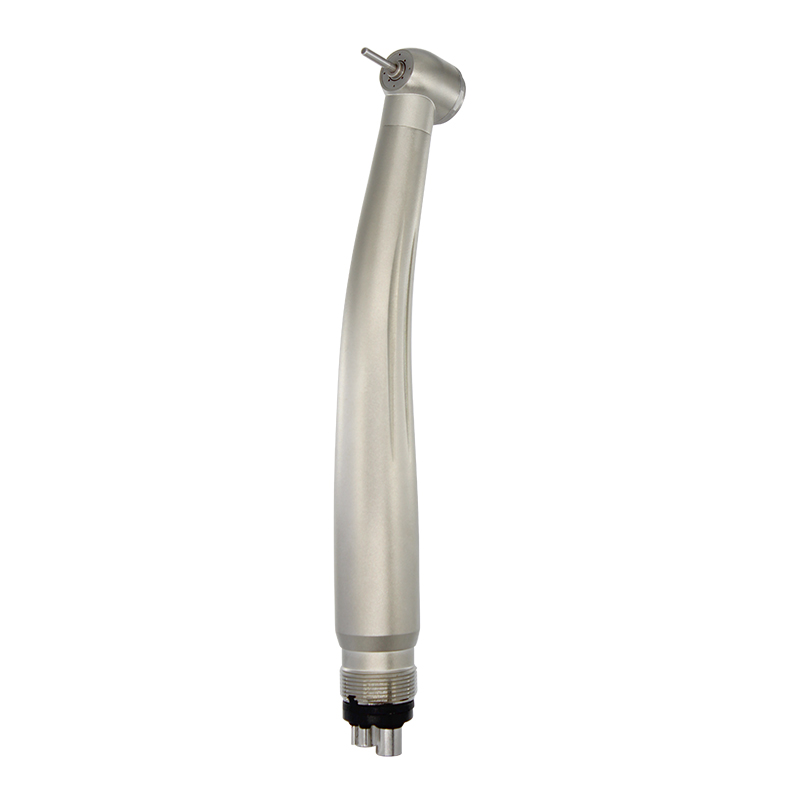
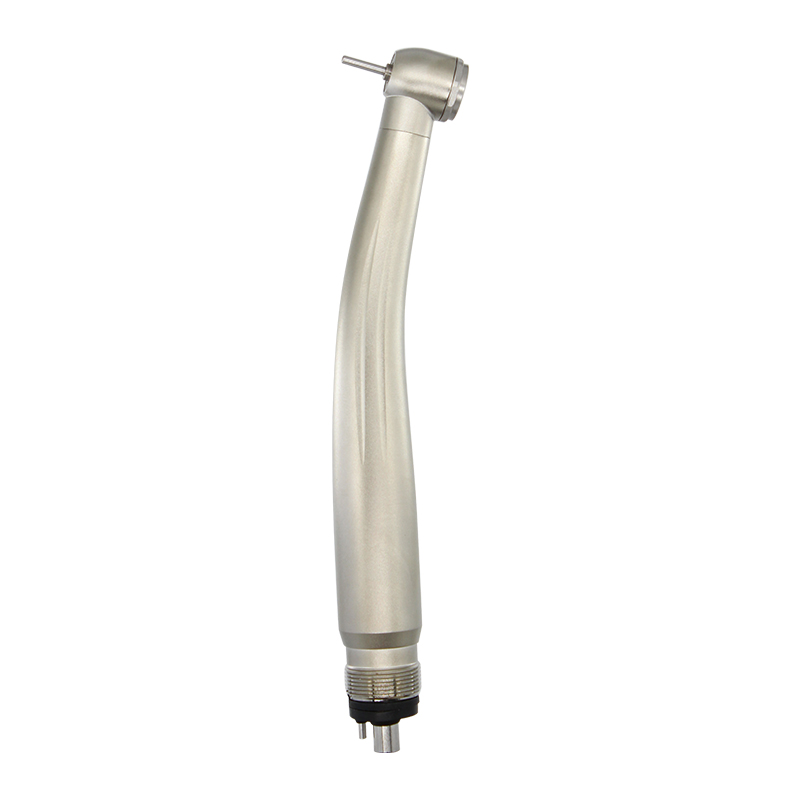
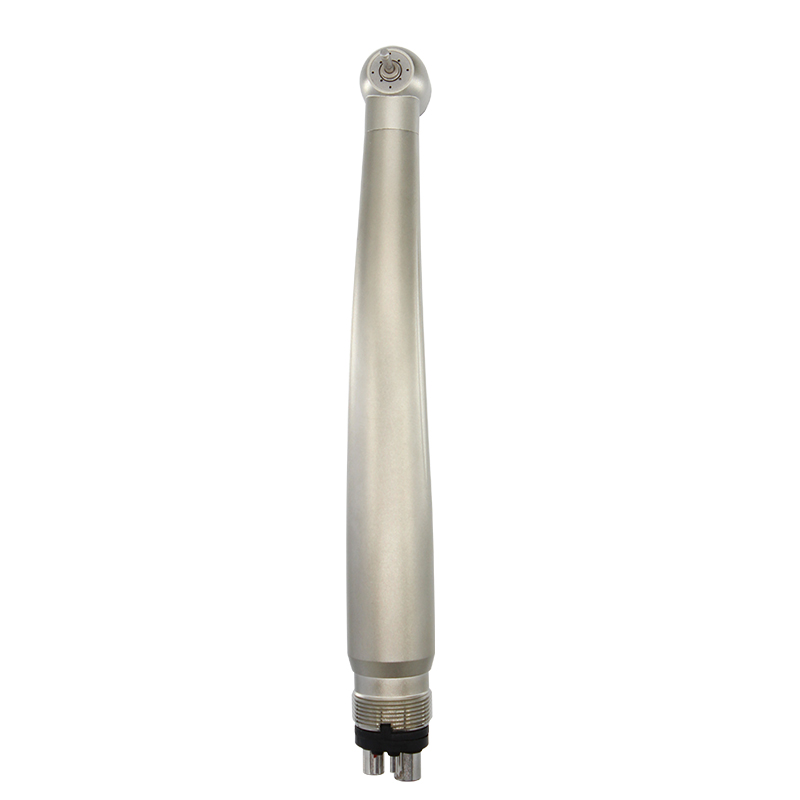
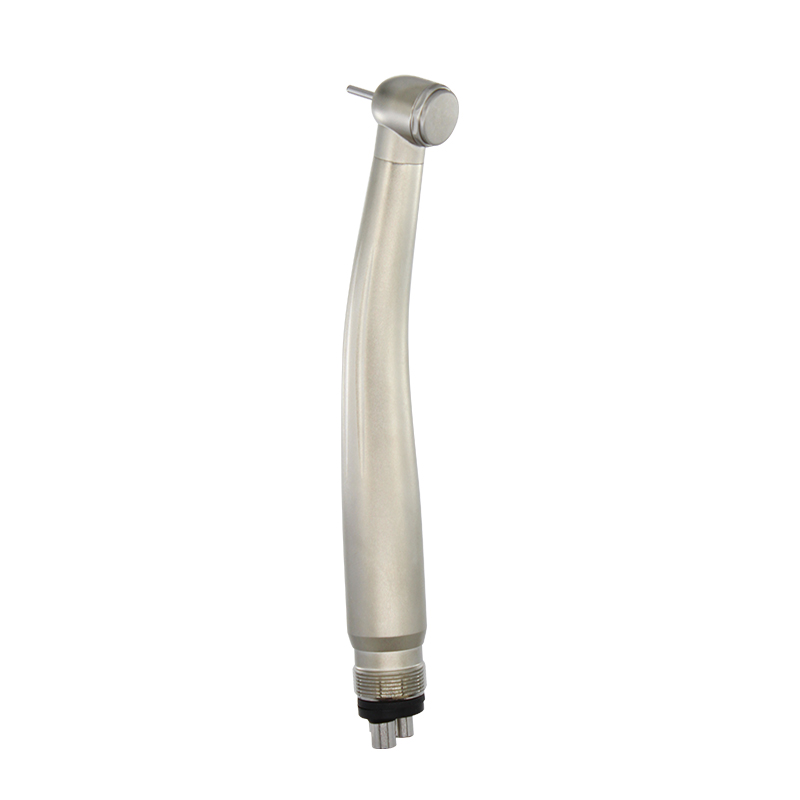
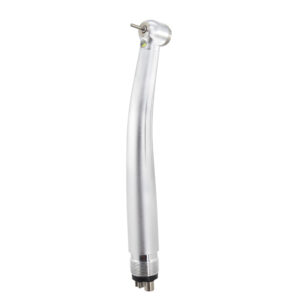
MAX3 High-Speed Handpiece
描述
MAX3 High-Speed Handpiece
- Double arc-line grip pattern for secure ergonomic control
- Full titanium-coated body for superior corrosion resistance and premium finish
- 4-point water spray cooling for comprehensive, orientation-independent heat dissipation
- 4-point anti-suckback system for industry-leading infection control
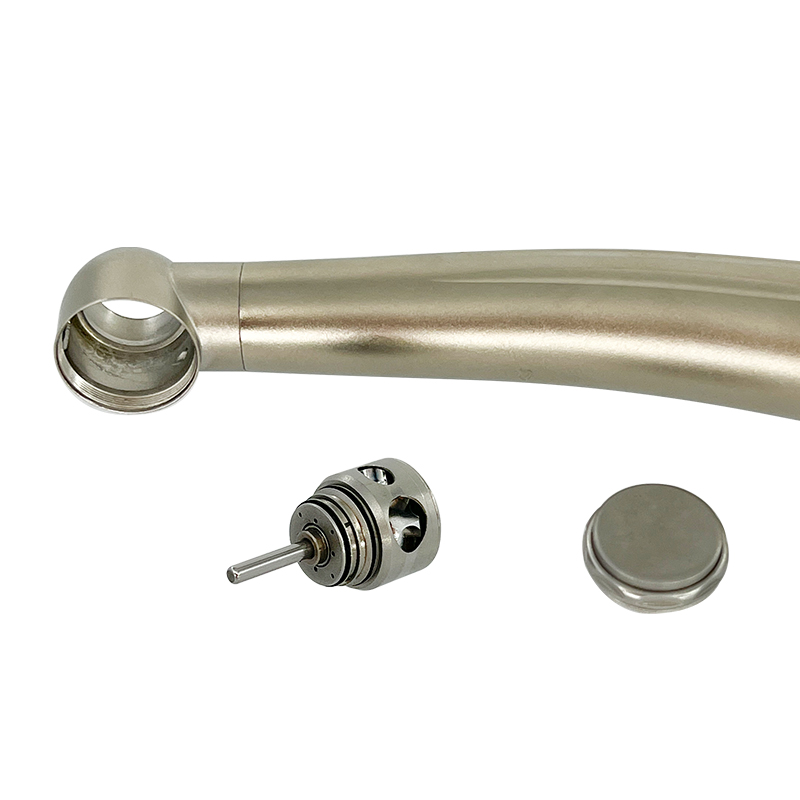
- Replaceable cartridge turbine for extended service life and simplified maintenance
- Push-button bur release for fast, one-handed bur changes
- Available in 2-hole and 4-hole connection interfaces
- Compatible with autoclave sterilization at 135°C
Description
The MAX3 High-Speed Handpiece represents the most comprehensively specified model in the MAX series, combining a full titanium-coated body, 4-point water spray cooling, 4-point anti-suckback infection control, and a replaceable cartridge turbine design in a single premium instrument. It is engineered for clinical environments where infection control standards, cooling performance, and long-term cost of ownership are equally important considerations.
The 4-point water spray system delivers simultaneous water coverage from four nozzle positions around the head, ensuring uniform heat dissipation across the entire cutting zone regardless of bur orientation — a meaningful upgrade over the single-jet MAX2 for demanding, high-volume cutting scenarios. The 4-point anti-suckback system, shared with the MAX2, prevents retrograde aspiration of oral fluids into the handpiece water and air channels when the turbine decelerates, providing active cross-contamination protection at every use cycle. The replaceable cartridge turbine — clearly visible in the exploded head view — allows the core rotating assembly to be serviced or replaced independently of the handpiece body, extending instrument service life and reducing total cost of ownership compared to handpieces that must be fully replaced when turbine components wear. The titanium-coated body delivers outstanding corrosion resistance and a premium finish that maintains its integrity across hundreds of sterilization cycles. Operating at 320,000–350,000 RPM at 0.22–0.25 MPa, the MAX3 delivers the cutting performance its clinical specification demands.
Feature
- The 4-point water spray cooling system delivers simultaneous water coverage from four nozzle positions distributed around the head, providing comprehensive and orientation-independent heat dissipation across the full cutting zone — particularly effective during extended or directionally varied cutting sequences where single or triple-jet systems leave portions of the bur-tooth contact area inadequately cooled.
- The 4-point anti-suckback system uses four check valves that seal instantaneously when forward air pressure ceases, preventing negative pressure-driven aspiration of oral fluids, blood, and microbial contaminants back into the handpiece water and air channels — providing active cross-contamination protection at every turbine deceleration event throughout the clinical day.
- The replaceable cartridge turbine design allows the entire rotating assembly — rotor, bearings, and chuck mechanism — to be removed and replaced as a single unit without retiring the handpiece body, substantially extending overall instrument service life and reducing the cost of maintaining a high-performance handpiece fleet.
- The titanium-coated body provides superior corrosion resistance, surface hardness, and chemical stability compared to standard metal handpieces, maintaining finish integrity and dimensional stability across repeated high-temperature autoclave sterilization cycles.
- The double arc-line surface pattern delivers a secure, non-slip grip under all clinical conditions, providing the tactile control required for both precision restorative work and demanding high-torque preparations.
- Compatible with both 2-hole and 4-hole connection standards for broad compatibility with mainstream dental unit interfaces.
MAX3 High-Speed Handpiece — Specifications
| Parameter | Specification |
|---|---|
| Model | MAX3 |
| Body Pattern | Double Arc-Line |
| Connection | 2-Hole / 4-Hole |
| Body Material | Titanium-Coated |
| Cooling System | 4-Point Water Spray |
| Anti-Suckback | 4-Point Anti-Suckback System |
| Turbine | Replaceable Cartridge |
| Bur Chuck | Push-Button Release |
| Working Air Pressure | 0.22 – 0.25 MPa |
| Speed | 320,000 – 350,000 RPM |
| Noise Level | ≤ 60 dB |
| Bur Shank Diameter | Φ 1.595 – 1.600 mm |
| Sterilization | 135°C High-Temperature Autoclave |
Working Principle
The MAX3 High-Speed Handpiece operates on a pneumatic turbine principle. Compressed air enters through the connection interface at 0.22–0.25 MPa, driving the replaceable cartridge turbine rotor to achieve rotational speeds of 320,000–350,000 RPM. The cartridge design encapsulates the rotor, bearings, and chuck as a self-contained, precision-balanced unit that can be extracted from the handpiece body and replaced independently when components reach end of service life — eliminating the need to retire the entire instrument when only the rotating assembly requires renewal.
The 4-point water spray system distributes water simultaneously from four nozzle outlets positioned around the head, creating a comprehensive cooling envelope that covers the bur-tooth contact zone from all quadrants. This 360-degree coverage approach ensures that cutting direction changes during preparation do not reduce cooling efficacy, as at least two or more active spray points remain directed toward the contact zone at any cutting angle. The 4-point anti-suckback system operates in parallel: when the air supply is cut and the turbine decelerates, four check valves close simultaneously to prevent the development of negative pressure within the head and water channel, blocking any retrograde fluid movement from the oral cavity into the handpiece internal passages.
Clinical Practice of the MAX3 High-Speed Handpiece
1. Pre-Operative Setup
- Inspect the handpiece packaging and confirm the titanium-coated body and head show no visible damage before use.
- Connect via the 2-hole or 4-hole interface and confirm air pressure is within 0.22–0.25 MPa.
- If a cartridge replacement was recently performed, run the handpiece unloaded for 30 seconds to confirm correct cartridge seating, smooth rotation, and balanced spray output from all four nozzles before intraoral use.
- Install the appropriate bur using the push-button release and confirm secure chuck engagement.
- Run the handpiece unloaded for 5–10 seconds to verify turbine function, 4-point spray distribution, and anti-suckback valve readiness.
2. Intraoperative Management
- Take full advantage of the 4-point spray coverage when varying bur approach angles during complex preparations — unlike single or triple-jet systems, cooling coverage is maintained regardless of cutting direction, making the MAX3 particularly well-suited for preparations requiring multiple approach angles in a single session.
- Maintain active infection control awareness: the 4-point anti-suckback system protects at every deceleration event, but best practice still requires complete turbine stop before bur changes and post-patient line flushing.
- Apply light, intermittent contact pressure throughout cutting; sustained heavy pressure can stress the cartridge bearings and reduce anti-suckback valve effectiveness by creating abnormal internal pressure gradients.
- Monitor all four spray streams for consistent, symmetric output; any asymmetry indicates partial nozzle blockage requiring post-procedure attention.
- Confirm operating noise remains ≤60 dB. Bearing noise from the cartridge — typically a higher-pitched, rougher sound than normal turbine hum — indicates cartridge replacement is needed.
3. Post-Operative Maintenance
- Remove the bur immediately after the procedure using the push-button release.
- Run the handpiece for 20–30 seconds after each patient to flush water and air lines.
- Inspect all four spray nozzles for mineral scale or debris accumulation; flush with clean water if any nozzle output appears reduced.
- Lubricate the cartridge per the manufacturer’s protocol before every sterilization cycle. Cartridge lubrication is particularly important as the replaceable unit contains its own bearing assembly that must be maintained independently.
- Sterilize in a Class B autoclave at 135°C. The titanium-coated body and cartridge assembly are rated for repeated high-temperature sterilization.
- When cartridge performance degrades — indicated by increased noise, vibration, or reduced concentricity — replace the cartridge unit rather than retiring the entire handpiece body.
The Function of the MAX3 High-Speed Handpiece
The MAX3 represents the convergence of four performance pillars — comprehensive cooling, active infection control, premium material durability, and maintainable service life — in a single instrument. Each feature addresses a distinct clinical or operational challenge that standard handpieces leave unresolved.
The 4-point cooling system resolves the directional limitation of all sub-four-point spray configurations. With four nozzles active simultaneously, no cutting angle leaves the bur-tooth contact zone without active water coverage — a meaningful clinical advantage during full crown preparations, wide proximal box cuts, and any procedure requiring frequent bur reorientation. Compared to the MAX2’s single-jet system, the MAX3’s 4-point spray provides substantially more uniform pulp thermal protection across the full range of cutting geometries encountered in routine restorative practice.
The replaceable cartridge turbine addresses the economic reality of handpiece ownership: bearings and chuck components wear, and in a conventional handpiece, bearing failure means full instrument replacement. The MAX3’s cartridge architecture decouples the service life of the body — which can last many years — from the service life of the rotating assembly, which is subject to wear. Clinicians and practice managers can maintain a MAX3 at a fraction of the cost of replacing entire handpieces, making it an economically rational choice for practices that prioritize both clinical performance and operational cost control.
The 4-point anti-suckback system, shared with the MAX2, ensures that the MAX3’s infection control performance matches its clinical specification: an instrument designed for demanding use should not become a cross-contamination vector between those uses.
Important Notes for Using the MAX3 High-Speed Handpiece
- Always confirm air supply pressure is within 0.22–0.25 MPa. Both the 4-point spray nozzle output and the 4-point anti-suckback valve response are calibrated for this pressure range; operation significantly outside it affects both systems simultaneously.
- Use only burs with a shank diameter of Φ1.595–1.600 mm. Out-of-tolerance burs compromise chuck sealing at the bur entry point, which can undermine the anti-suckback system’s sealed-head integrity.
- Inspect all four spray nozzles before each clinical session. Partial blockage of any nozzle breaks the symmetrical cooling envelope and creates localized thermal risk; clear all four nozzles before use.
- Monitor cartridge performance regularly. Signs requiring cartridge replacement include: operating noise above ≤60 dB, increased vibration, visible bur wobble, or reduced cutting efficiency that does not resolve with lubrication. Replace the cartridge promptly — a worn cartridge also compromises chuck sealing and anti-suckback system integrity.
- Lubricate the cartridge before every sterilization cycle without exception. The cartridge bearing assembly requires lubrication to function correctly and resist corrosion through repeated autoclave cycles; inadequately lubricated cartridges fail prematurely and may seize during sterilization.
- Run the handpiece for 20–30 seconds after each patient use to flush lines. The anti-suckback system prevents oral fluid aspiration into the handpiece, but upstream dental unit waterline flushing remains required per standard infection control protocols.
- Do not activate the handpiece without a bur installed. An open chuck compromises the sealed head environment that the anti-suckback system depends on.
- Sterilize at 135°C autoclave only. Chemical sterilization agents are incompatible with the titanium coating, cartridge seals, and anti-suckback valve components; chemical exposure degrades all three systems simultaneously.
- Inspect the titanium-coated body, head, and cartridge cap after each sterilization cycle. Surface pitting, coating delamination, or cartridge cap loosening are grounds for servicing or retirement as applicable.
评价
目前还没有评价