
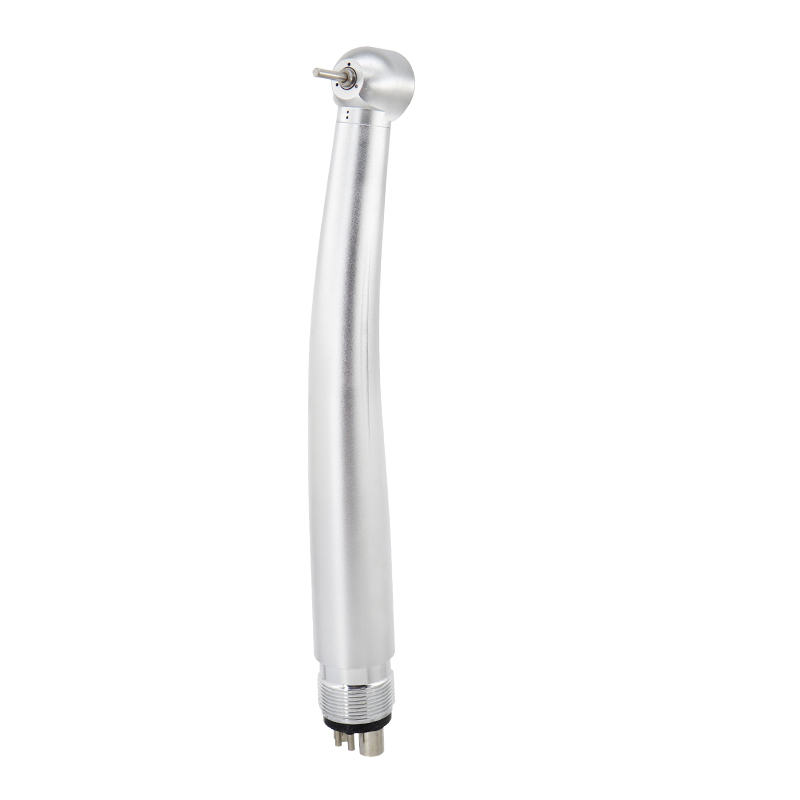
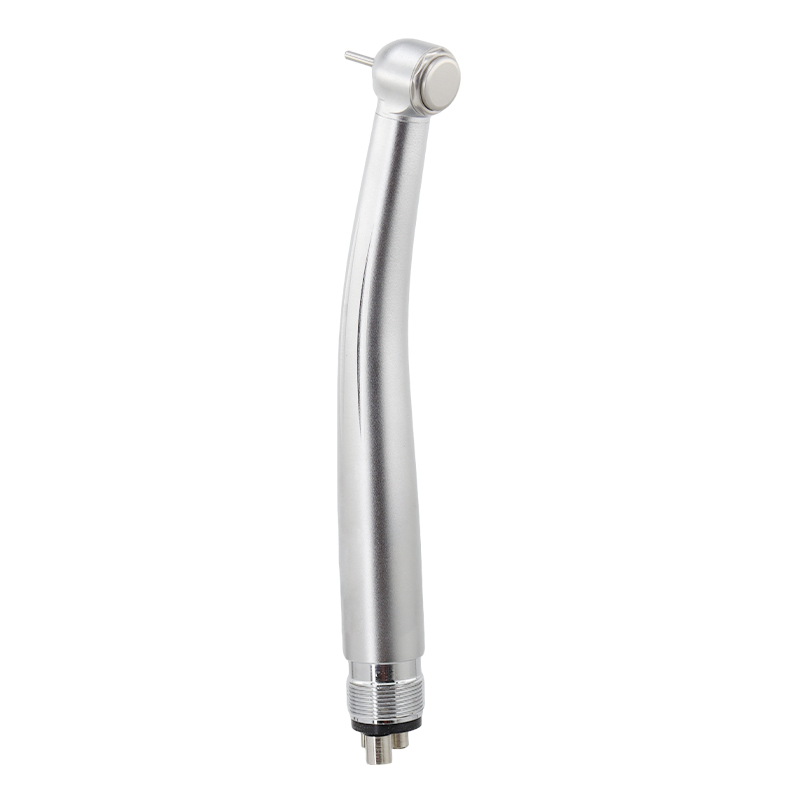
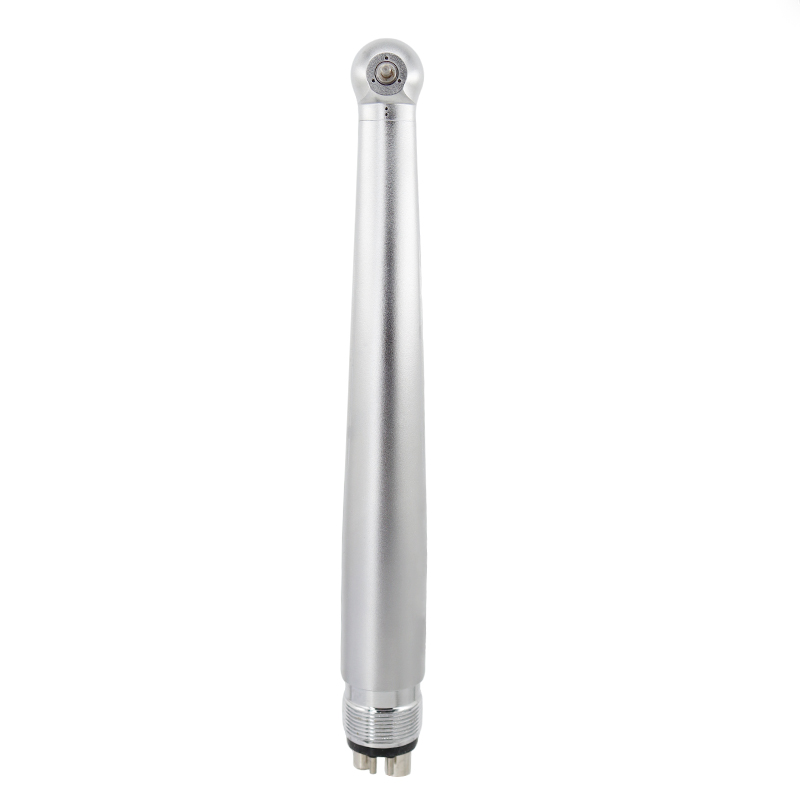
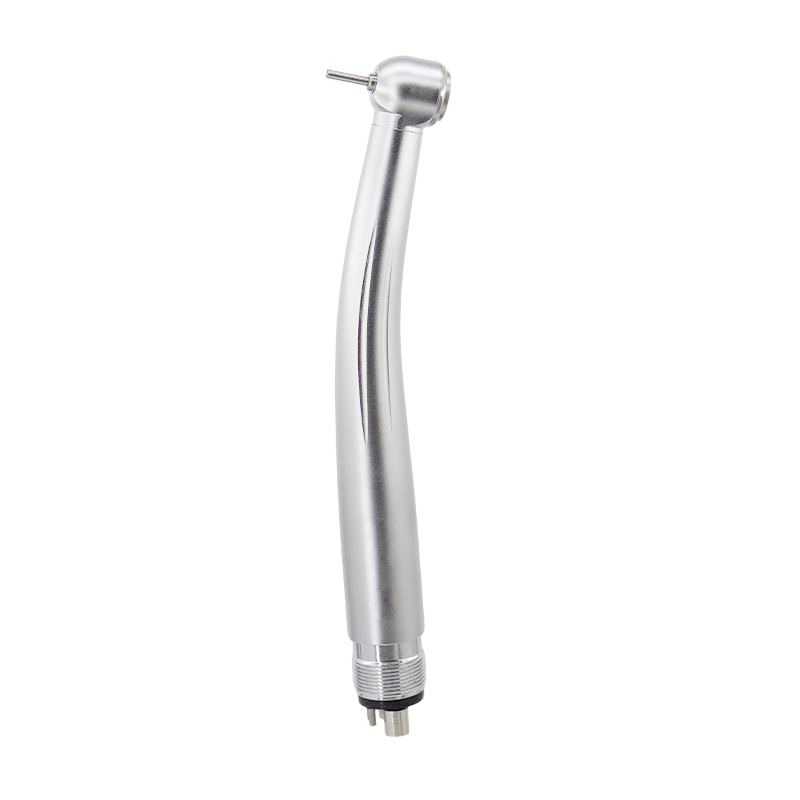
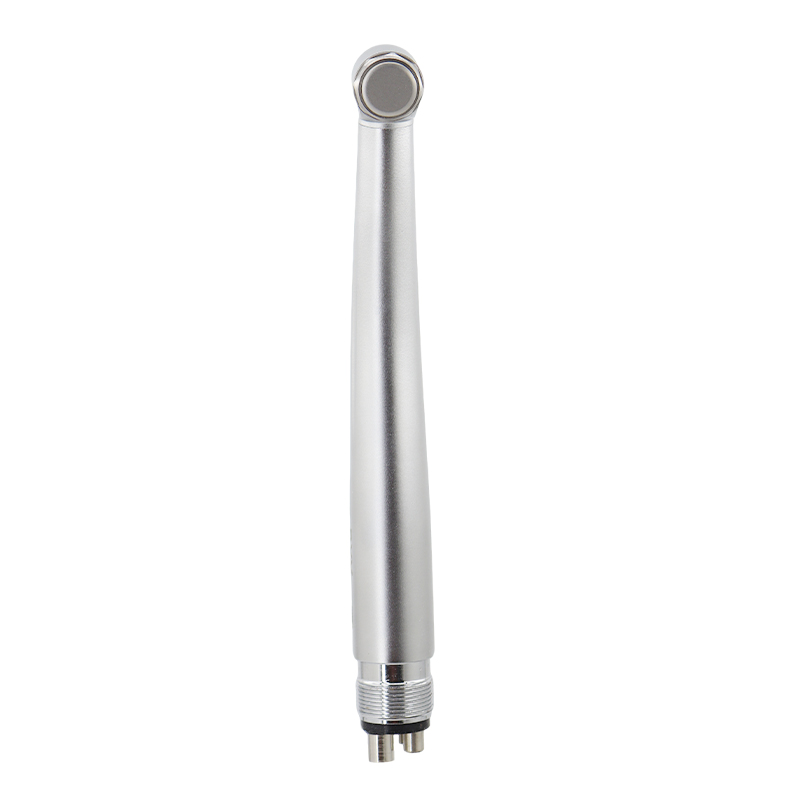
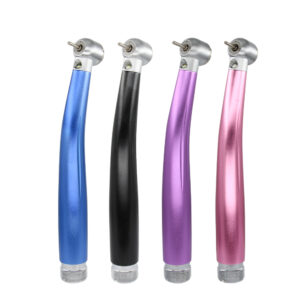
MAX Large Head High-Speed Handpiece
描述
MAX Large Head High-Speed Handpiece
- Twin-line grip pattern for secure, reliable ergonomic control
- Large head design for increased torque and sustained cutting power on demanding preparations
- Full metal body construction for durability and long-term reliability
- 3-point anti-suckback system for effective infection control and cross-contamination prevention
- Single-jet water cooling with precision-directed spray
- Push-button bur release for fast, one-handed bur changes
- Available in 2-hole and 4-hole connection interfaces
- Compatible with autoclave sterilization at 135°C
Description
The MAX Large Head High-Speed Handpiece is a high-torque dental instrument that combines the cutting power advantage of a large head turbine with the infection control protection of a 3-point anti-suckback system, delivering both clinical performance and patient safety in a full metal body finished with a clean twin-line surface pattern.
The large head design accommodates a bigger turbine rotor with greater rotational inertia, providing more sustained cutting force and improved resistance to turbine stall during high-resistance preparations such as full crown reduction, heavy restorative removal, and dense dentin cutting — scenarios where standard-head handpieces are more prone to speed loss under load. The 3-point anti-suckback system uses three strategically positioned check valves to prevent the retrograde aspiration of oral fluids into the handpiece water and air channels when the turbine decelerates, providing active cross-contamination protection at every use cycle. The single-jet water spray delivers targeted, precise cooling at the bur-tooth contact zone. Operating at 320,000–350,000 RPM at 0.22–0.25 MPa, the MAX Large Head delivers dependable high-torque performance with meaningful infection control built in.
Feature
- The large head design houses a turbine rotor with greater diameter and rotational mass, delivering higher cutting torque and superior resistance to speed reduction under load — making it the handpiece of choice for high-resistance preparations where consistent cutting force is required throughout extended contact with hard tooth structure or restorative materials.
- The 3-point anti-suckback system deploys three check valves that close instantly when forward air pressure ceases, preventing negative pressure from drawing oral fluids, blood, and microbial contaminants back into the handpiece water and air channels at every turbine deceleration event throughout the clinical day.
- Single-jet water spray delivers focused, targeted cooling at the bur-tooth interface, providing effective heat dissipation at the cutting zone with controlled water volume that avoids excessive field flooding during precision restorative work.
- The full metal body provides exceptional structural rigidity and resistance to deformation, ensuring consistent performance and dimensional stability across hundreds of high-temperature autoclave sterilization cycles.
- The twin-line surface pattern delivers a clean, professional aesthetic alongside reliable grip security under all clinical conditions, including gloved and moisture-heavy operative environments.
- Compatible with both 2-hole and 4-hole connection standards for broad compatibility with mainstream dental unit interfaces.
MAX Large Head High-Speed Handpiece — Specifications
| Parameter | Specification |
|---|---|
| Model | MAX Large Head |
| Head Size | Large Head |
| Body Pattern | Twin-Line |
| Connection | 2-Hole / 4-Hole |
| Body Material | Metal |
| Cooling System | Single-Jet Water Spray |
| Anti-Suckback | 3-Point Anti-Suckback System |
| Bur Chuck | Push-Button Release |
| Working Air Pressure | 0.22 – 0.25 MPa |
| Speed | 320,000 – 350,000 RPM |
| Noise Level | ≤ 60 dB |
| Bur Shank Diameter | Φ 1.595 – 1.600 mm |
| Sterilization | 135°C High-Temperature Autoclave |
Working Principle
The MAX Large Head High-Speed Handpiece operates on a pneumatic turbine principle. Compressed air enters through the connection interface at 0.22–0.25 MPa, driving the large head turbine rotor to achieve rotational speeds of 320,000–350,000 RPM. The large rotor mass generates significantly higher angular momentum than a standard-head turbine at equivalent RPM, providing the additional rotational inertia needed to sustain cutting speed when the bur encounters high-resistance tooth structure or restorative materials — reducing stall frequency and maintaining preparation quality during demanding extended cutting sequences.
The 3-point anti-suckback system operates at the moment the foot pedal is released and the air supply ceases. Three check valves positioned within the handpiece head close simultaneously in response to the pressure differential, preventing the development of negative pressure within the head cavity and water channel. This eliminates the retrograde suction force that would otherwise draw oral fluids, saliva, blood, and associated microorganisms back through the bur chuck into the internal handpiece passages. The single-jet water spray delivers a precise, focused stream of cooling water to the bur-tooth contact zone, managing thermal buildup at the operative site throughout the cutting cycle.
Clinical Practice of the MAX Large Head High-Speed Handpiece
1. Pre-Operative Setup
- Inspect the handpiece packaging and confirm the metal body and large head show no visible damage or corrosion before use.
- Connect via the 2-hole or 4-hole interface and confirm air pressure is within 0.22–0.25 MPa. Consistent pressure within this range is particularly important for large head turbines, which develop their torque advantage most effectively at specified operating pressure.
- Install the appropriate bur using the push-button release and confirm secure chuck engagement before activation.
- Run the handpiece unloaded for 5–10 seconds to verify turbine rotation, single-jet cooling spray output, and anti-suckback valve readiness before intraoral use.
2. Intraoperative Management
- Deploy the large head’s torque advantage in high-resistance clinical scenarios — full crown preparations, heavy amalgam or composite removal, bridge preparation, and dense dentin cutting — where standard-head handpieces lose speed and require more repeated passes to achieve the same preparation outcome.
- Maintain active infection control awareness: although the 3-point anti-suckback system provides protection at every deceleration event, best practice still requires complete turbine stop before bur changes and post-patient waterline flushing.
- Apply controlled, intermittent contact pressure throughout cutting — the large head’s additional torque reserve means sustained heavy pressure is less clinically necessary and still carries risk of turbine overload at extreme resistance levels.
- Monitor the single-jet cooling spray throughout the procedure to ensure it remains aimed at the cutting site; repositioning may be needed when approach angle changes significantly.
- Confirm operating noise remains ≤60 dB throughout. Increased vibration or pitch change in the large head indicates bearing stress or bur wear requiring immediate attention.
3. Post-Operative Maintenance
- Remove the bur immediately after the procedure using the push-button release.
- Run the handpiece for 20–30 seconds after each patient use to flush the water and air lines; the anti-suckback system prevents oral fluid aspiration into the handpiece, but upstream dental unit waterline flushing remains required per infection control protocols.
- Inspect the single-jet spray nozzle for mineral scale or debris blockage; flush with clean water if output appears reduced or misdirected.
- Lubricate the handpiece internally per the manufacturer’s protocol before every sterilization cycle.
- Sterilize in a Class B autoclave at 135°C. Store in a clean, dry environment after sterilization is complete.
The Function of the MAX Large Head High-Speed Handpiece
The MAX Large Head High-Speed Handpiece occupies a specific and well-defined clinical position: it is the high-torque variant within the MAX anti-suckback series, designed for practitioners who require both greater cutting power and active cross-contamination protection in the same instrument.
The large head turbine’s performance advantage over standard-head configurations is most apparent under load. A standard turbine rotor, when it encounters significant cutting resistance, decelerates more readily because its lower rotational mass carries less angular momentum. The large rotor’s additional mass acts as a flywheel, maintaining rotational speed through the resistance event and delivering more consistent cutting force across the full duration of contact with hard tissue or restorative material. In high-volume restorative practices where full crown preparations, large restorations, and multi-unit cases are routine, this torque reserve translates directly into faster preparation times, reduced bur wear, and more predictable preparation geometry.
The 3-point anti-suckback system positions the MAX Large Head appropriately for clinical environments that maintain active infection control standards. Unlike the 4-point system of the MAX2 and MAX3, the 3-point configuration provides effective protection for routine clinical use while maintaining the mechanical simplicity appropriate for a high-torque instrument where internal head volume is partially occupied by the larger rotor assembly. The result is a handpiece that is purpose-built for demanding restorative work without compromising on the infection control standards that modern dental practice requires.
Important Notes for Using the MAX Large Head High-Speed Handpiece
- Always confirm air supply pressure is within 0.22–0.25 MPa before operation. The large head turbine and the 3-point anti-suckback check valves are both calibrated for this pressure range; operation significantly outside it affects cutting performance and valve response simultaneously.
- Use only burs with a shank diameter of Φ1.595–1.600 mm. Out-of-tolerance burs generate excessive vibration that is amplified by the larger rotor mass, accelerate bearing wear, and can compromise the bur-chuck seal integrity that the anti-suckback system depends on.
- Run the handpiece for 20–30 seconds after each patient to flush water and air lines. The 3-point anti-suckback system prevents backflow into the handpiece, but upstream dental unit waterline contamination remains a separate infection control responsibility.
- Do not activate the handpiece without a bur properly installed. An open chuck in a large head handpiece compromises head sealing and allows oral contamination to bypass the anti-suckback protection at the bur entry point.
- Operate the push-button bur release only after the turbine has fully stopped. The large rotor takes slightly longer to reach a complete stop than standard rotors; wait for full deceleration before operating the chuck to prevent damage and avoid creating pressure differentials that stress the anti-suckback valves.
- Lubricate before every sterilization cycle without exception. The large head bearing assembly has more rotational mass to support and requires adequate lubrication to maintain performance and resist corrosion through repeated autoclave cycles.
- Sterilize at 135°C autoclave only. Chemical sterilization agents are incompatible with the metal body and internal seals and will degrade the anti-suckback valve components over time.
- Inspect the large head, neck joint, and body after each sterilization cycle for corrosion, surface pitting, or structural compromise. The larger head mass concentrates greater mechanical stress at the head-neck junction during high-load cutting; any visible cracking or loosening requires immediate handpiece retirement.
评价
目前还没有评价