
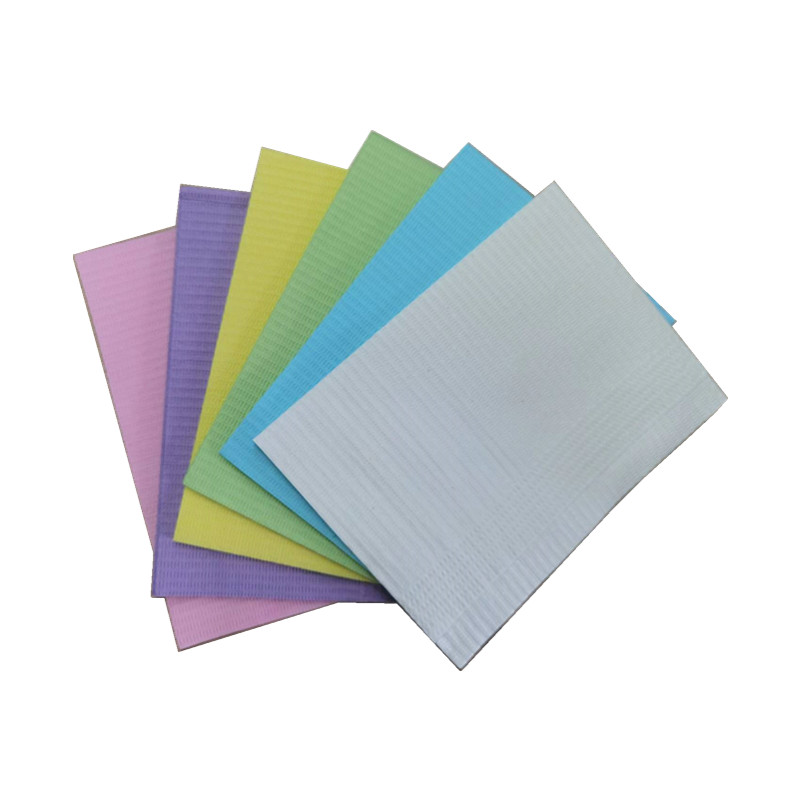
Disposable Dental Bib — Patient Neck Napkin for Dental Procedures
描述
Disposable Dental Bib — Patient Neck Napkin for Dental Procedures
- Non-sterile, single-use barrier device designed to protect patient clothing during dental examinations and treatment
- Three-layer construction: absorbent tissue inner layer with waterproof outer poly film backing
- High absorbency tissue layer captures oral fluids, saliva, and water spray at the source
- Waterproof poly backing prevents bleed-through to patient clothing under sustained fluid exposure
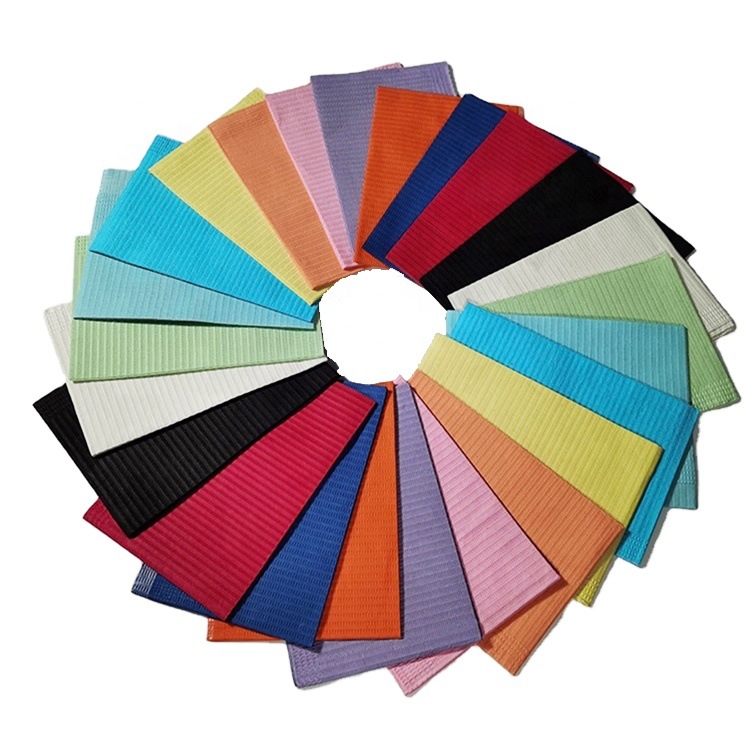
- Available in a wide range of colors to suit clinic branding and procedure differentiation
- Suitable for use with standard bib clips for secure neck fastening
- Also functions as a clean tray liner or instrument surface cover in clinical setups
- Single-use design eliminates cross-contamination risk between patients
Description
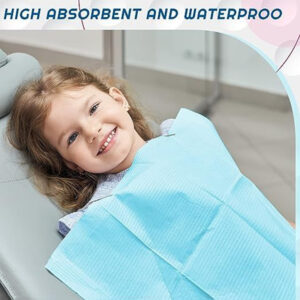
The Disposable Dental Bib is a non-sterile, single-use patient protection device intended to be placed over the chest and upper body during dental examinations, cleanings, restorative procedures, and other intraoral treatments. The bib functions as a fluid barrier between the operative field and the patient’s clothing, preventing soiling from oral fluids, water spray, and dental material splatter throughout the duration of the procedure.
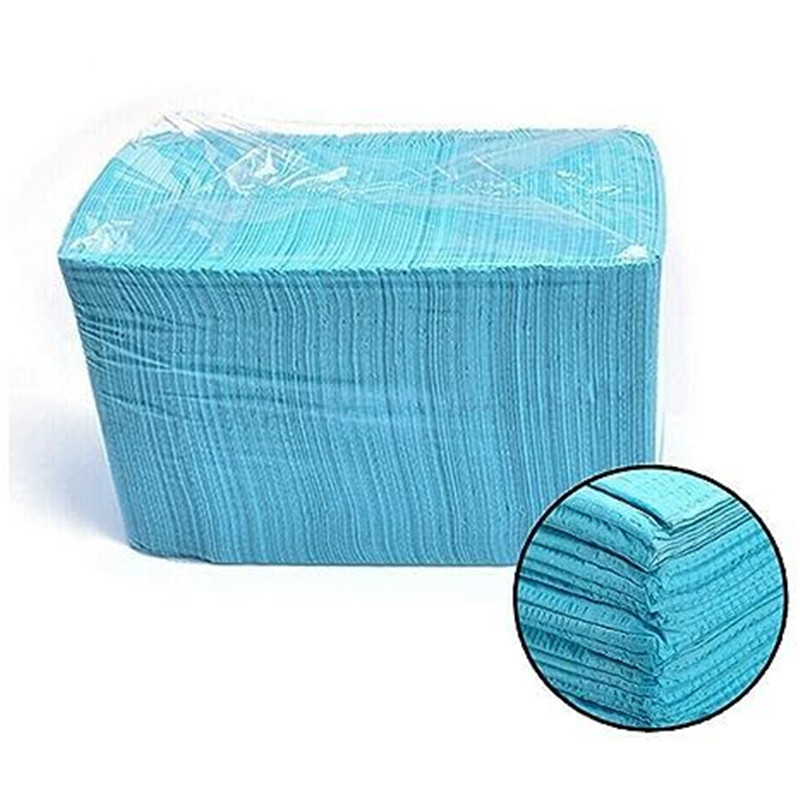
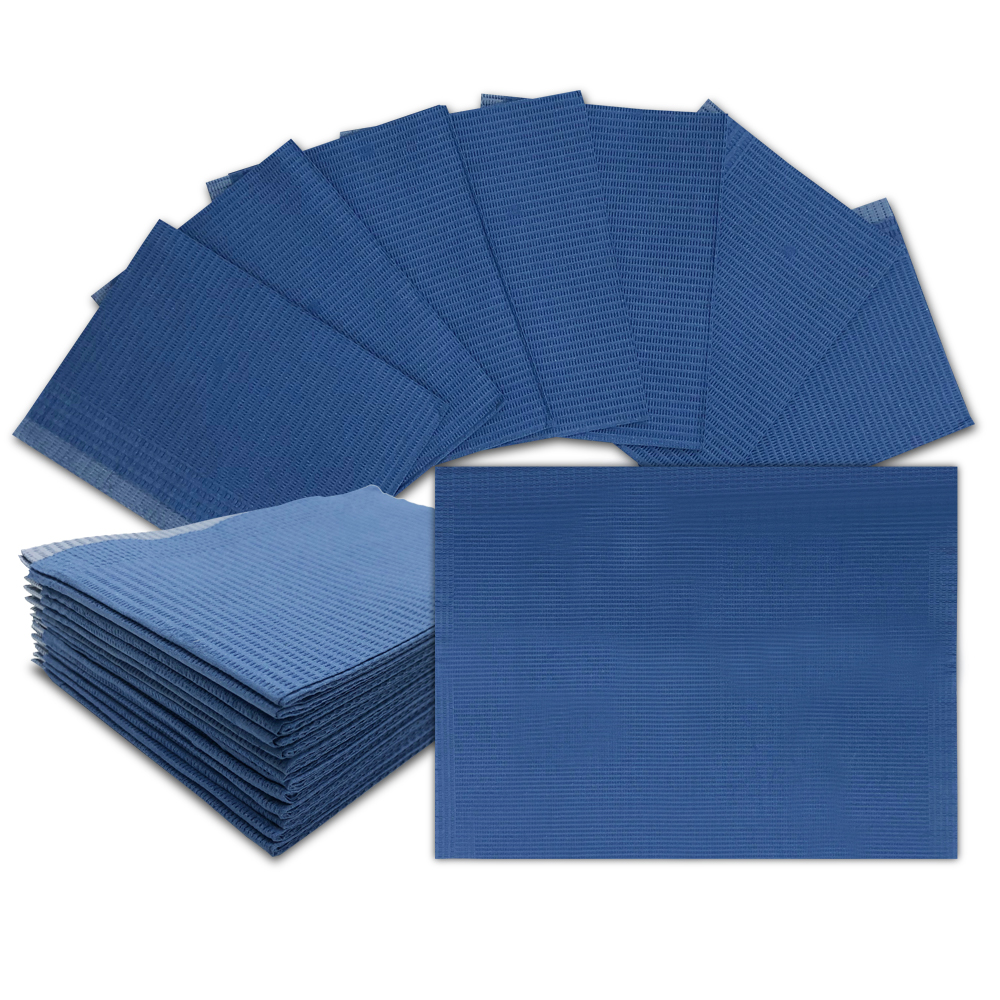
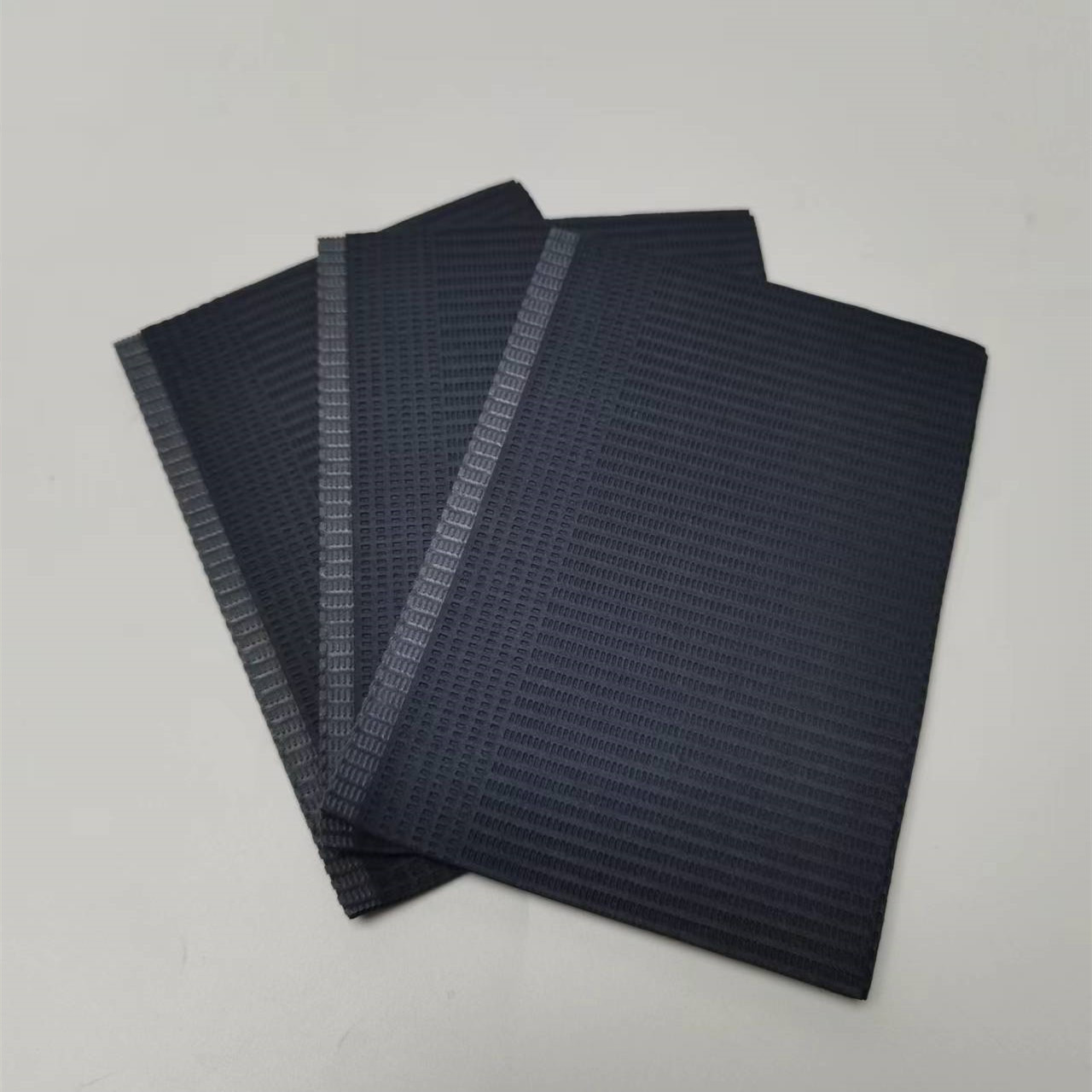
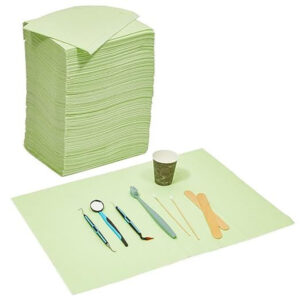
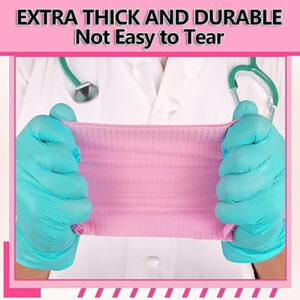
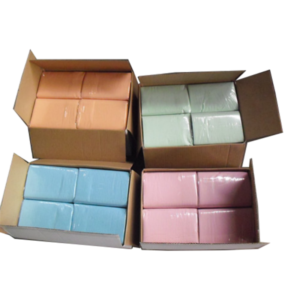
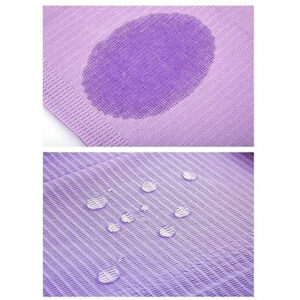
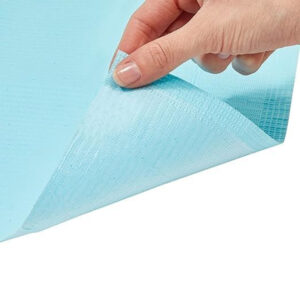
The bib is constructed from a three-layer laminate: an absorbent crepe tissue inner layer that faces the patient and captures fluid at contact, a poly film outer layer that blocks liquid bleed-through to the underlying clothing, and a tissue or poly middle layer that provides structural integrity and tear resistance across the full surface. As visible in the product images, the outer surface carries a consistent fine-grid embossed texture that contributes to surface integrity and prevents the bib from sliding during patient movement. The product is supplied in bulk packs and is available across an extensive color range — including blue, green, pink, purple, yellow, black, white, red, orange, and more — supporting color-coded procedure management and clinic aesthetic preferences.
Feature
- The three-layer laminate construction — absorbent tissue inner layer, structural mid-layer, and waterproof poly film outer layer — provides simultaneous fluid capture at the patient-facing surface and complete bleed-through protection at the clothing-facing surface, eliminating the need for supplementary protective covers during standard dental procedures.
- The absorbent tissue inner layer is constructed from crepe-textured paper that rapidly wicks oral fluids, water spray, and saliva away from the surface contact point, preventing pooling at the bib edge and maintaining a dry contact surface across the patient’s chest throughout multi-step procedures.
- The waterproof poly film outer layer forms a continuous liquid barrier across the full back surface of the bib, preventing fluid that has saturated the absorbent layer from reaching the patient’s clothing — providing reliable clothing protection even during high-fluid procedures such as prophylaxis, irrigation-intensive restorations, and impressioning.
- The fine-grid embossed surface texture across the outer face of the bib increases surface friction against the patient’s clothing, reducing bib shift and displacement during patient movement, repositioning, and procedure transitions without requiring adhesive attachment.
- Available in an extensive color range including white, blue, green, pink, purple, yellow, black, red, orange, and additional custom colors, enabling clinics to establish color-coded bib protocols by procedure type, provider, or patient category, and to match bib color to overall clinic branding standards.
- Compatible with standard bib clips for secure neck attachment; the bib dimensions accommodate full upper-body coverage from the neck to the mid-torso across both adult and pediatric patient sizes.
- The single-use design eliminates laundering, sterilization, and cross-contamination risk between patients — each bib is discarded immediately after the procedure, removing the reprocessing step from the clinical workflow entirely.
Dental Bib — Specifications
| Parameter | Specification |
|---|---|
| Product Name | Disposable Dental Bib |
| Sterility | Non-Sterile |
| Use | Single-Use |
| Construction | 3-Layer (Tissue / Poly / Tissue or Poly Film) |
| Inner Layer | Absorbent Crepe Tissue |
| Outer Layer | Waterproof Poly Film |
| Surface Finish | Fine-Grid Embossed Texture |
| Available Colors | White, Blue, Green, Pink, Purple, Yellow, Black, Red, Orange, and more |
| Attachment Method | Compatible with Standard Bib Clips |
| Application | Dental Examination, Cleaning, Restorative, Surgical, and General Dental Procedures |
| Storage | Cool, dry place; away from heat and direct sunlight |
Working Principle
The Dental Bib operates as a passive fluid barrier through the functional separation of its three-layer construction. The absorbent tissue inner layer — positioned against the patient’s chest — draws oral fluid, water, and material splatter away from the surface by capillary action through the crepe fiber matrix, rapidly distributing and retaining fluid within the layer structure rather than allowing it to accumulate and run. The poly film outer layer forms a continuous hydrophobic barrier on the clothing-facing side of the bib, preventing any fluid that has penetrated the absorbent layer from transmitting through to the patient’s clothing regardless of the volume or duration of fluid exposure.
The embossed grid texture on the outer surface creates a mechanical friction interface between the bib and the patient’s clothing or bib clip contact points, resisting lateral displacement during patient movement without requiring adhesive or mechanical fixation across the full surface. The bib is applied flat against the patient’s chest and fastened at the neck with a standard bib clip, which holds the upper edge in position and maintains full-surface contact throughout the procedure.
Clinical Practice of the Disposable Dental Bib
1. Pre-Procedure Setup
- Select bib color appropriate to the procedure type or clinic color-coding protocol before seating the patient.
- Confirm the bib is undamaged and the poly film layer is intact before use; do not use bibs with visible tears, punctures, or delamination at the layer edges.
- Position the bib flat against the patient’s chest with the embossed texture side facing outward and the absorbent tissue side facing the patient.
- Attach bib clips to both upper corners of the bib and fasten securely around the patient’s neck; confirm the clip is comfortable and does not apply pressure to the neck before beginning the procedure.
- For pediatric patients, confirm that the bib dimensions provide adequate coverage of the upper body from the neck to the mid-torso before beginning intraoral work.
2. Intraoperative Management
- Monitor bib position during the procedure; reposition the bib if patient movement has displaced it from full-coverage position before resuming fluid-intensive procedure steps.
- For high-fluid procedures — including prophylaxis, power scaling, cavity irrigation, and impression material placement — confirm that the bib remains properly positioned throughout; the three-layer construction is designed to manage sustained fluid exposure, but displacement of the bib during peak fluid output will reduce clothing protection effectiveness.
- Do not use the bib as a sterile field; the bib is non-sterile and is intended for patient clothing protection only, not as an instrument or material contact surface in sterile procedural contexts.
- The bib surface may be used as a clean, non-sterile work surface for instrument staging or material placement during non-sterile procedure steps, as shown in the product images.
3. Post-Procedure Disposal
- Remove bib clips from the bib before removing the bib from the patient; do not pull the bib away from the patient with the clips still attached.
- Fold the bib inward from both sides before removal to contain any accumulated fluid, saliva, or material debris within the folded bib surface, minimizing spillage during disposal.
- Discard immediately after each patient use; do not reuse, re-sterilize, or re-disinfect. The bib is designed for single-use only and structural integrity cannot be assured after reprocessing.
- Dispose of used bibs in accordance with local clinical waste management regulations for non-sterile single-use patient contact materials.
The Function of the Disposable Dental Bib
The Disposable Dental Bib addresses the fundamental patient protection requirement present in every dental procedure: preventing oral fluid, water spray, and material splatter from soiling the patient’s clothing during treatment. This requirement exists in every clinical setting regardless of procedure complexity — from a routine examination to a full-arch restorative session — and the bib resolves it through a passive, single-use barrier that requires no reprocessing, no sterilization management, and no post-use laundering.
The three-layer construction is the functional core of the product. Single-layer tissue bibs absorb fluid effectively but permit bleed-through to clothing under sustained fluid exposure; single-layer poly bibs prevent bleed-through but do not absorb surface fluid, resulting in fluid accumulation and runoff at the bib edges. The three-layer laminate combines both functions in a single product — absorbing fluid at the patient-facing surface while blocking transmission through the clothing-facing surface — providing complete clothing protection across the full range of fluid loads encountered in general dental practice.
The availability of an extensive color range extends the clinical utility of the bib beyond its basic protection function: color-coded bib protocols allow clinics to visually differentiate procedure types, patient categories, or treatment providers without additional labeling, and consistent bib color selection contributes to a professional, organized clinical environment that directly influences patient perception of care quality.
Important Notes for Using the Disposable Dental Bib
- Inspect each bib for structural integrity before use. Bibs with visible delamination at the layer edges, punctures in the poly film layer, or tears in the tissue surface should be discarded without use — damaged bibs may not provide complete fluid barrier protection at the compromised area.
- Confirm the poly film layer orientation before applying the bib. The waterproof poly film must face outward (away from the patient’s body) to function as a clothing barrier; applying the bib in reverse orientation places the non-absorbent surface against the patient and eliminates bleed-through protection.
- Use standard bib clips only for neck attachment. Do not use pins, staples, or adhesive tape as substitutes for bib clips — improvised fastening methods may damage the bib structure at the fastening point and reduce coverage security during the procedure.
- Do not apply the bib over skin that has open wounds, active rashes, or known contact sensitivities to paper or poly materials. If skin sensitivity to bib materials is a concern, place a clean cloth layer between the bib and the patient’s skin and document accordingly.
- Single-use only. Do not re-use, re-sterilize, or re-disinfect used bibs under any circumstances. The absorbent layer retains oral fluid and microbial content from the previous use; re-use of a spent bib creates a direct cross-contamination pathway between patients.
- Store in original packaging in a cool, dry location away from heat sources and direct sunlight. Thermal or UV exposure degrades the poly film layer over time and may reduce waterproof barrier effectiveness before the product reaches clinical use.
- Do not use bibs beyond the marked shelf life. The structural integrity of the laminate layer bond and the performance of the poly film layer cannot be assured after the shelf life period has elapsed.
- Dispose of used bibs in compliance with local clinical waste regulations. Used dental bibs are non-sterile single-use patient contact materials and should be managed accordingly within the clinic’s waste disposal protocol.
评价
目前还没有评价