
Dental Barrier Film — Disposable PE Protective Film Roll for Dental Equipment (BF1018)
描述
Dental Barrier Film — Disposable PE Protective Film Roll for Dental Equipment (BF1018)
- Single-use PE barrier film designed to protect dental equipment and apparatus surfaces from cross-contamination during clinical procedures
- Size: 4″ × 6″ per sheet, supplied on a continuous roll with user-friendly easy-tear perforation lines between sheets
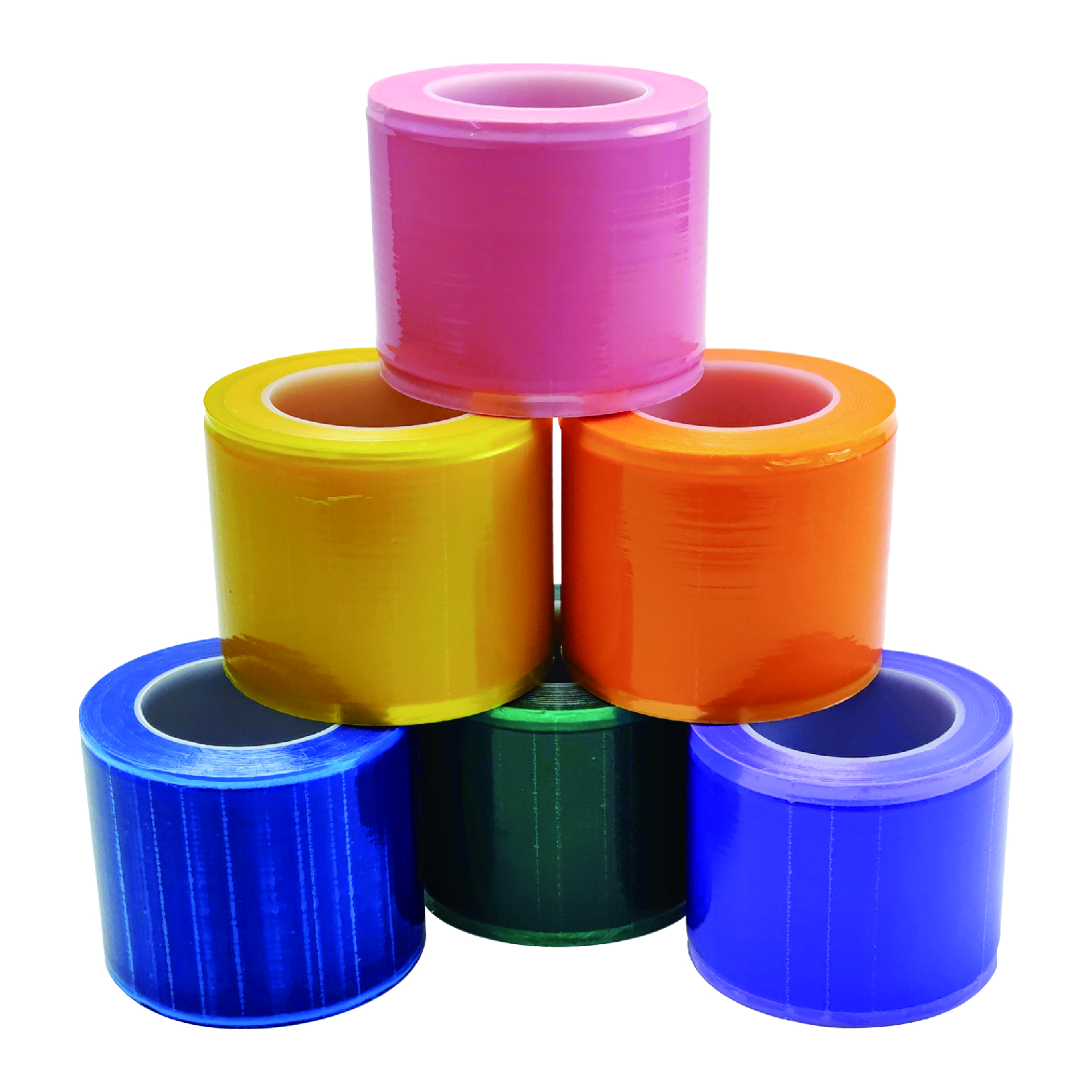
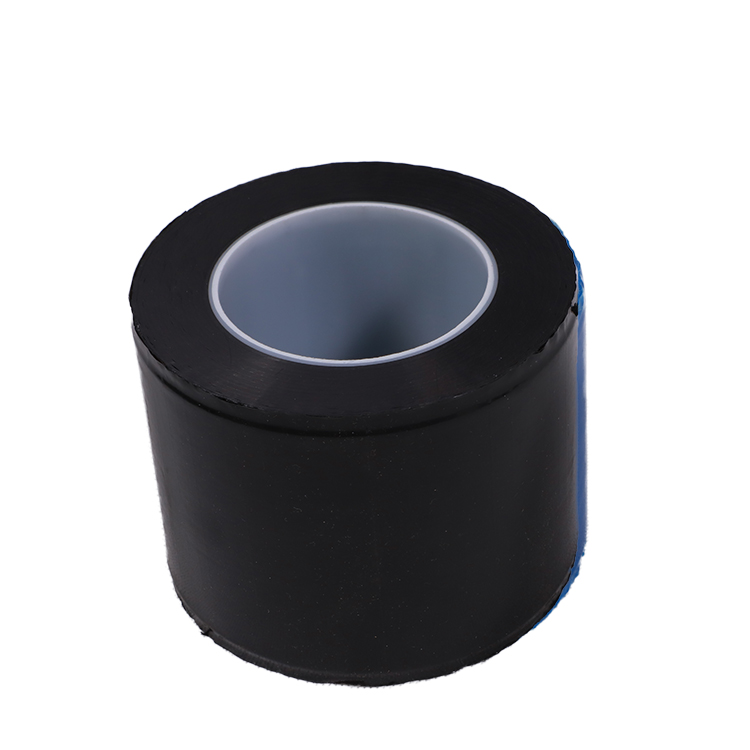
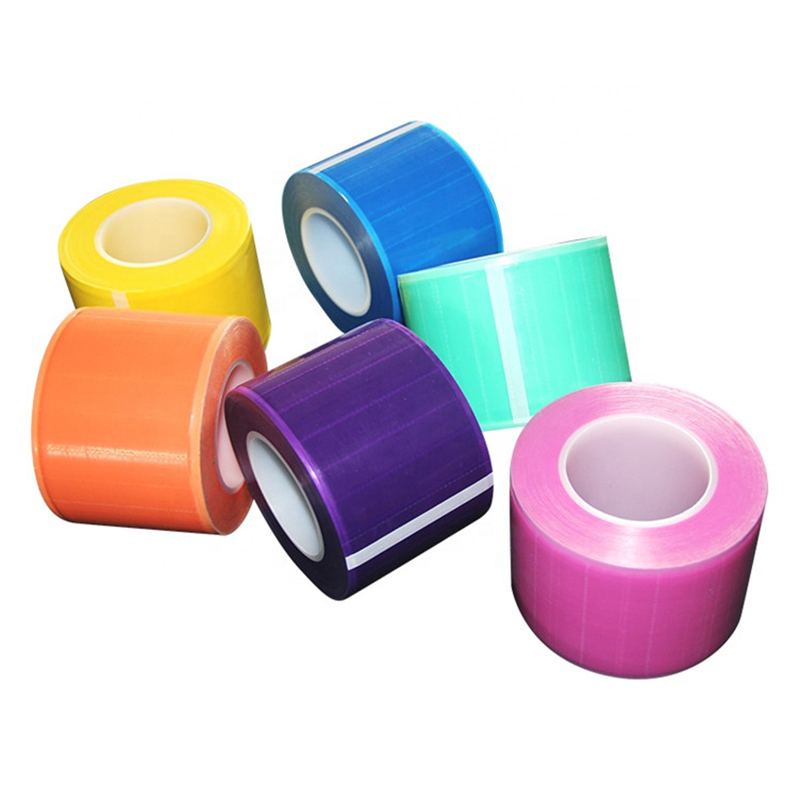
- Available in transparent and a wide range of solid colors including blue, clear, pink, yellow, orange, green, teal, purple, and black
- Lightly adhesive backing holds the film securely in place on smooth equipment surfaces without leaving adhesive residue upon removal
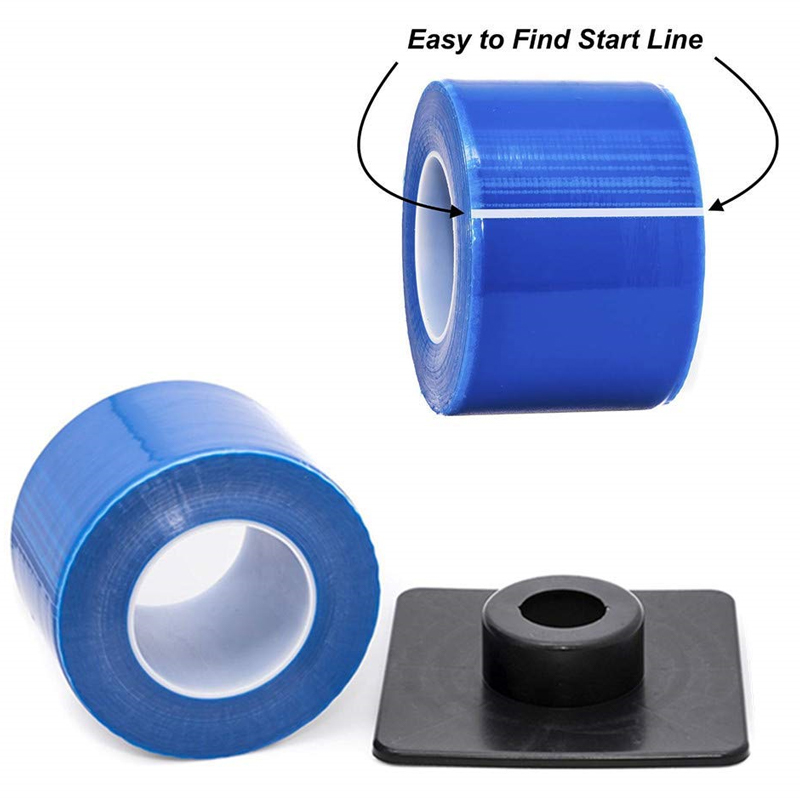
- Easy-to-find start line on the roll for fast, one-handed film dispensing between patients
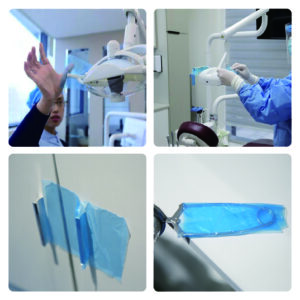
- Compatible with dental operating lights, light handles, unit control panels, chair switches, monitor surfaces, X-ray heads, and other high-touch equipment surfaces
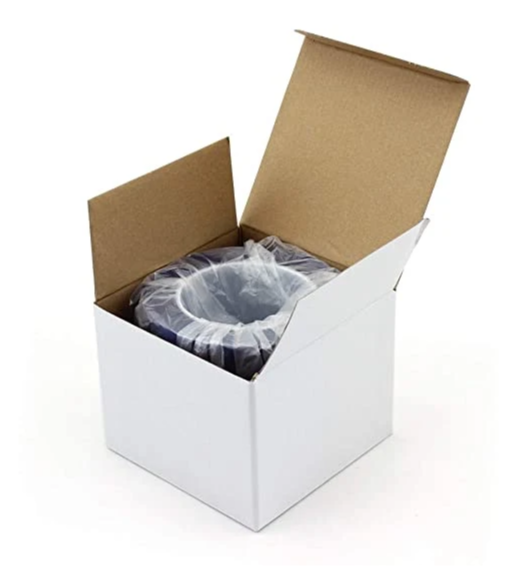
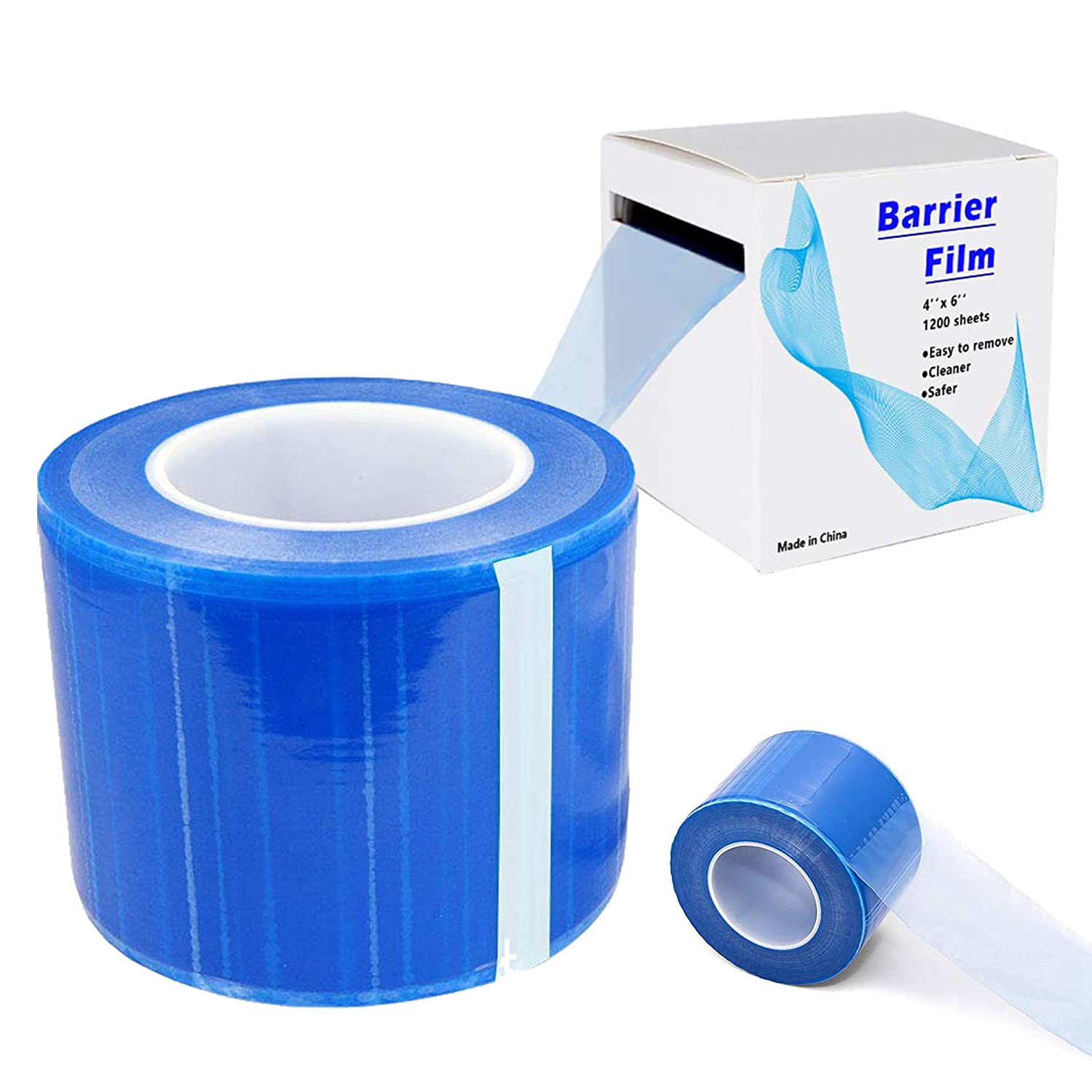
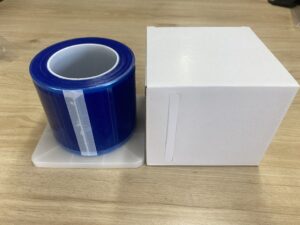
- Supplied on roll in dispensing box with slot opening for controlled single-sheet tear-off; optional roll stand included in select configurations
- Shelf life: 3 years
 Description
The Dental Barrier Film (Model BF1018) is a single-use, lightly adhesive PE (polyethylene) protective film designed for application to dental equipment surfaces before each patient procedure to prevent cross-contamination of high-touch surfaces that cannot be sterilized between patients. The film is supplied on a continuous roll with pre-perforated easy-tear lines at 4″ × 6″ sheet intervals, allowing the clinician or assistant to dispense individual sheets rapidly from the roll without scissors, tools, or measuring — pulling to the perforation and tearing cleanly in a single motion.
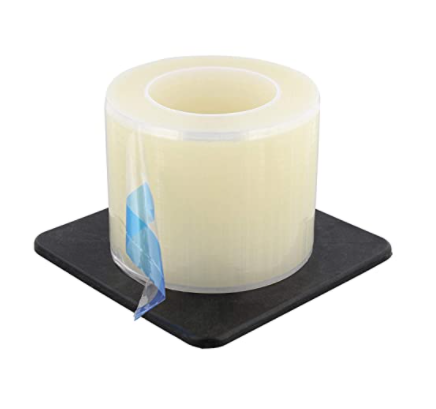
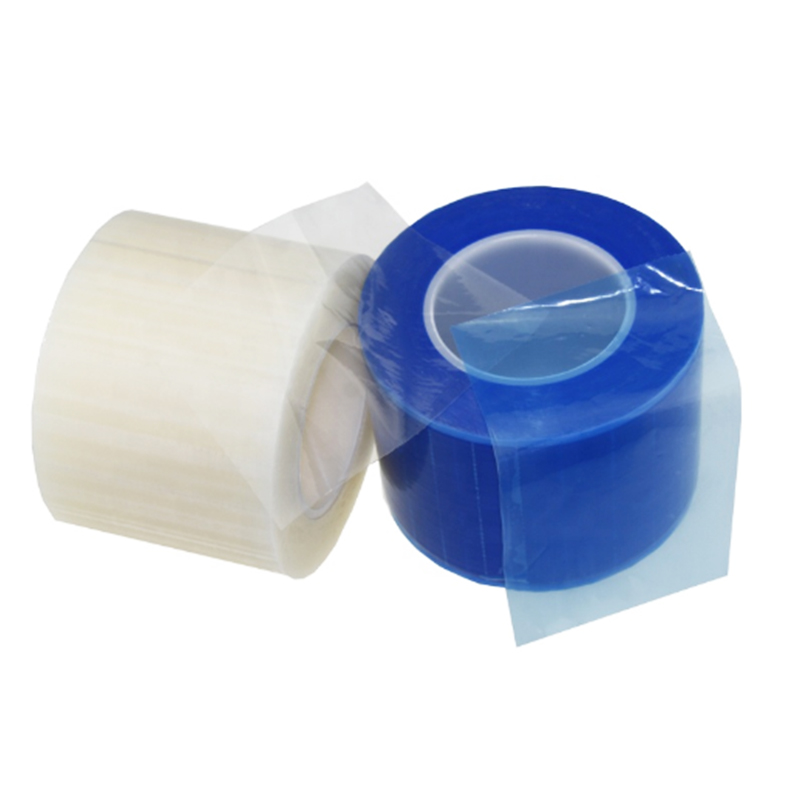
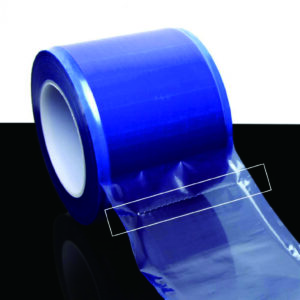
As visible across the product images, the film is available in both transparent (clear) and a broad range of solid colors — including blue, pink, yellow, orange, green, teal, purple, black, and others — enabling color-coded surface coverage protocols by equipment type, treatment zone, or provider. The lightly adhesive backing adheres to smooth equipment surfaces including dental operating light handles, unit control panels, chair adjustment switches, X-ray positioning handles, curing light bodies, and monitor surfaces, conforming to curved and angled surfaces without lifting at the edges during the procedure. After the procedure, the film is removed cleanly by peeling from one corner, leaving no adhesive residue on the equipment surface and eliminating the need for chemical disinfection of the covered surface for that patient cycle. The product is supplied in a dispensing box with a slot opening that allows the roll to dispense cleanly through the box top, as shown in the product images.
Feature
- The pre-perforated easy-tear lines at 4″ × 6″ sheet intervals allow each sheet to be dispensed from the roll and separated cleanly with one hand in a single pull-and-tear motion — eliminating the need for scissors or cutting tools during between-patient surface preparation and reducing the time required to cover all designated equipment surfaces before seating the next patient.
- The easy-to-find start line printed on the outer wrap of the roll, as highlighted in the product images, allows the clinician to locate the free edge of the film immediately after removing the previous sheet — eliminating the time lost searching for the roll start that occurs with unmarked adhesive film rolls.
- The lightly adhesive PE film backing adheres to smooth equipment surfaces without requiring pressure application across the full sheet surface — the film lies flat and holds position on operating light handles, control panels, and curved equipment surfaces under normal procedure conditions without lifting, sliding, or bunching during instrument manipulation and patient positioning adjustments.
- The film is removable without leaving adhesive residue on the underlying equipment surface, eliminating the need for solvent-based adhesive removal between patients and protecting the surface finish of dental equipment from the degradation associated with repeated chemical disinfectant application.
- Available in transparent and multiple solid colors — including blue, clear, pink, yellow, orange, green, teal, purple, and black — enabling clinics to implement color-coded barrier protocols by equipment zone, treatment room, provider, or procedure type, and to visually confirm at a glance that all designated surfaces have been covered before seating each patient.
- The dispensing box with slot opening allows the roll to be placed at a fixed location on the work surface or bracket table and dispensed cleanly through the box top with one hand, keeping the remaining roll clean and protected between sheet dispensing events.
- Compatible with the full range of high-touch dental equipment surfaces including operating light handles and bodies, chair adjustment switches, unit control panel surfaces, X-ray positioning handles, curing light bodies, intraoral camera handles, and monitor bezels.
Dental Barrier Film — Specifications
| Parameter | Specification |
|---|---|
| Product Name | Dental Barrier Film |
| Model | BF1018 |
| Material | PE (Polyethylene) |
| Sheet Size | 4″ × 6″ (approximately 10 cm × 15 cm) |
| Perforation | Pre-perforated Easy-Tear Lines |
| Adhesive | Light Adhesive Backing |
| Residue | Residue-Free Removal |
| Available Colors | Transparent, Blue, Pink, Yellow, Orange, Green, Teal, Purple, Black |
| Packaging | Continuous Roll in Dispensing Box with Slot Opening |
| Use | Single-Use |
| Application | Dental Equipment Surface Barrier Protection |
| Storage | Cool, dry place; away from heat and direct sunlight |
| Shelf Life | 3 Years |
Working Principle
The Dental Barrier Film functions as a physical contact barrier between a potentially contaminated clinical environment and the underlying dental equipment surface. During a dental procedure, high-touch equipment surfaces — operating light handles, unit controls, chair switches — are contacted repeatedly by gloved hands that have been in contact with the patient’s oral cavity, blood, saliva, and aerosol. These surfaces cannot be sterilized in an autoclave between patients and require either chemical disinfection or physical barrier coverage to interrupt the cross-contamination pathway between successive patients.
The barrier film interrupts this pathway by placing a clean, intact PE film surface over the equipment contact area before the procedure begins. The light adhesive backing holds the film in position throughout the procedure without requiring tape, clips, or secondary fixation. After the procedure, the gloved clinician removes the film by peeling from one corner — the adhesive releases cleanly from the equipment surface, and the contaminated outer surface of the film is folded inward during removal to contain any surface contamination within the discarded film. The underlying equipment surface, protected throughout the procedure, requires only visual inspection before the next patient — eliminating the chemical disinfection step for that surface entirely when barrier coverage has been complete and intact.
The pre-perforated easy-tear roll format and the dispensing box with slot opening are designed to minimize the time and hand contact required to prepare replacement sheets between patients. A visual start line on the outer roll surface ensures the free edge of the film is immediately locatable after each sheet is removed, allowing the between-patient surface coverage workflow to proceed without interruption.
Clinical Practice of the Dental Barrier Film
1. Pre-Procedure Setup
- Identify all high-touch equipment surfaces that will be contacted during the upcoming procedure — operating light handle, unit control panel, chair adjustment switches, curing light body, X-ray positioning handle, and any other surface that will be touched by gloved hands during the procedure.
- Dispense individual film sheets from the dispensing box by pulling the free roll edge through the slot and tearing at the pre-perforated line; confirm each sheet tears cleanly at the perforation without tearing across the sheet surface.
- Apply each sheet to its designated equipment surface by pressing the adhesive side against the surface and smoothing outward from the center to eliminate air pockets; confirm the film lies flat against the surface with no lifted edges before beginning the procedure.
- For curved or contoured surfaces such as operating light handles, press the film around the contour and confirm the edges adhere without lifting at the curve transition points; apply additional sheets in overlapping strips if the contact surface is larger than a single 4″ × 6″ sheet.
- Confirm all designated surfaces are covered before seating the patient and donning gloves.
2. Intraoperative Management
- Do not adjust or reposition barrier film sheets during the procedure with ungloved hands; if a sheet lifts or displaces during the procedure, reposition it with a gloved hand or replace it with a fresh sheet during a natural procedure break.
- Do not use barrier film as a substitute for sterilization of sterilizable instruments or for disinfection of surfaces that have been directly contaminated with blood or body fluids without barrier coverage — barrier film is a surface protection device for intact, pre-covered surfaces only.
- Monitor film adhesion during the procedure on heavily manipulated surfaces such as light handles; if a sheet begins to lift at the edges due to repeated repositioning of the light during the procedure, press the lifted edge back into contact before continuing.
3. Post-Procedure Removal and Disposal
- Remove all barrier film sheets immediately after the procedure is complete and before removing gloves; do not leave used barrier film on equipment surfaces between patients.
- Remove each sheet by grasping one corner of the film with gloved fingers and peeling the sheet away from the surface in a single continuous motion; fold the sheet inward toward the adhesive side as it is removed to contain the contaminated outer surface.
- Confirm no adhesive residue remains on the equipment surface after film removal; if residue is present, remove with a damp cloth before applying new barrier film for the next patient.
- Discard used barrier film immediately in clinical waste; single-use only. Do not reuse, reapply, or re-cover any surface with a used film sheet.
- Apply fresh barrier film to all designated surfaces before seating the next patient.
The Function of the Dental Barrier Film
The Dental Barrier Film addresses the cross-contamination management requirement for high-touch dental equipment surfaces — a category of surface that is contacted repeatedly during every patient procedure but cannot be sterilized between patients using autoclave or chemical vapor methods. The barrier film resolves this challenge by converting the between-patient decontamination requirement for covered surfaces from a chemical disinfection step into a physical film replacement step, reducing both the time and the chemical exposure required to prepare the operatory for the next patient.
The practical efficiency advantage of the barrier film over chemical disinfection for covered surfaces is significant in high-volume clinical settings. Chemical disinfection of operating light handles, control panels, and similar surfaces requires application of a disinfectant, a defined contact time, and removal — a sequence that must be completed for each surface, for each patient cycle, throughout the clinical day. Barrier film replacement requires only peeling the used sheet and pressing a new sheet in its place — a process that takes seconds per surface and eliminates the contact time wait that chemical disinfection requires. Over the course of a full clinical day, the time savings from barrier film use on consistently covered high-touch surfaces are substantial.
The broad color range — from transparent to nine or more solid colors — extends the clinical utility of the film beyond its basic protection function. Color-coded barrier film protocols allow clinic staff to visually confirm at a glance that all designated surfaces in a treatment room have been covered before patient seating, and to identify any missed surface immediately without physically touching each surface to check for coverage. This visual confirmation step reduces the risk of a covered surface being overlooked in the between-patient preparation workflow, particularly in busy multi-operatory clinical environments where preparation time is constrained.
Important Notes for Using the Dental Barrier Film
- Single-use only. Destroy after use. Do not reuse, reapply, or re-cover any equipment surface with a used barrier film sheet. A used sheet carries contamination from the previous patient on its outer surface; reuse creates a direct cross-contamination pathway to the next patient contact.
- Do not use barrier film as a substitute for sterilization of autoclavable instruments or for required chemical disinfection of surfaces that have been contaminated without barrier coverage. Barrier film is a preventive surface protection device, not a decontamination tool.
- Confirm the film is undamaged before applying it to equipment surfaces. Do not use sheets with visible tears, punctures, or areas where the adhesive backing has folded back on itself — a damaged sheet may not provide complete surface coverage at the compromised area.
- Do not apply barrier film over surfaces that are already contaminated. Barrier film protects clean surfaces from contamination during the procedure; it does not decontaminate surfaces that were contaminated before film application. Disinfect any contaminated surface before applying barrier film for the next patient.
- Ensure complete surface coverage when applying film to high-touch areas. Gaps between film sheets or lifted edges that expose the underlying surface during the procedure reduce the effectiveness of the barrier and require the exposed surface to be treated as unprotected for that patient cycle.
- Store in a cool, dry location away from heat sources and direct sunlight. Thermal exposure can affect the adhesive properties of the film backing over time, reducing adhesion performance before the product reaches clinical use; UV exposure may affect film material integrity.
- Do not use barrier film beyond the marked 3-year shelf life. Material and adhesive properties cannot be assured after the shelf life period has elapsed.
- Do not use if the packaging is damaged. Damaged packaging may indicate storage conditions that have affected film material integrity or adhesive performance before the product is opened for use.
评价
目前还没有评价