
Disposable Dental Polishing Cup & Brush — Prophy Cup for Handpiece Prophylaxis (PB1357)
描述
Disposable Dental Polishing Cup & Brush — Prophy Cup for Handpiece Prophylaxis (PB1357)
- Single-use rubber polishing cup and brush designed for tooth surface cleaning, polishing, and restoration finishing with low-speed straight or contra-angle handpieces
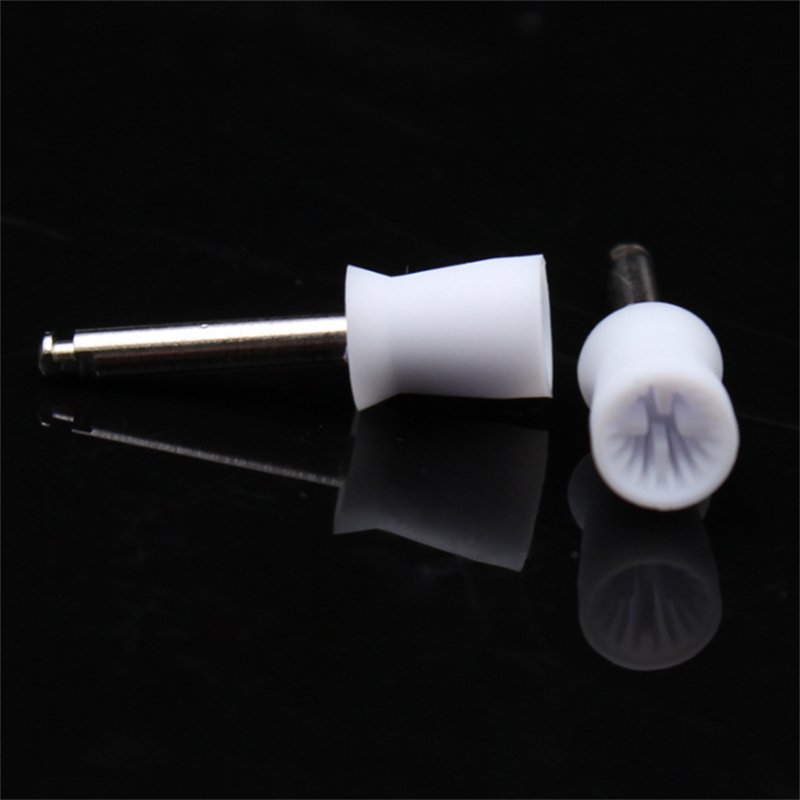
- Flexible rubber cup body with internal ribbed fin pattern for effective prophy paste retention and controlled paste release during polishing strokes
- Snap-on latch-type stainless steel shank for secure, tool-free attachment to standard low-speed handpiece latch-type contra-angle
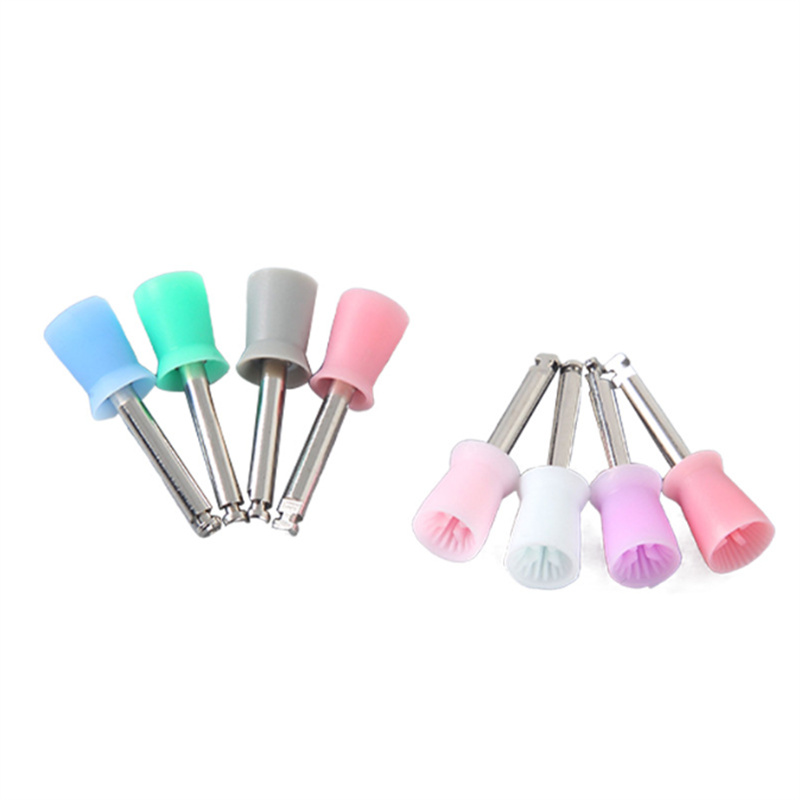
- Available in multiple cup profiles: flat-top cup, tapered cup, pointed brush tip, and waisted/hourglass cup for targeted application across different tooth surface zones
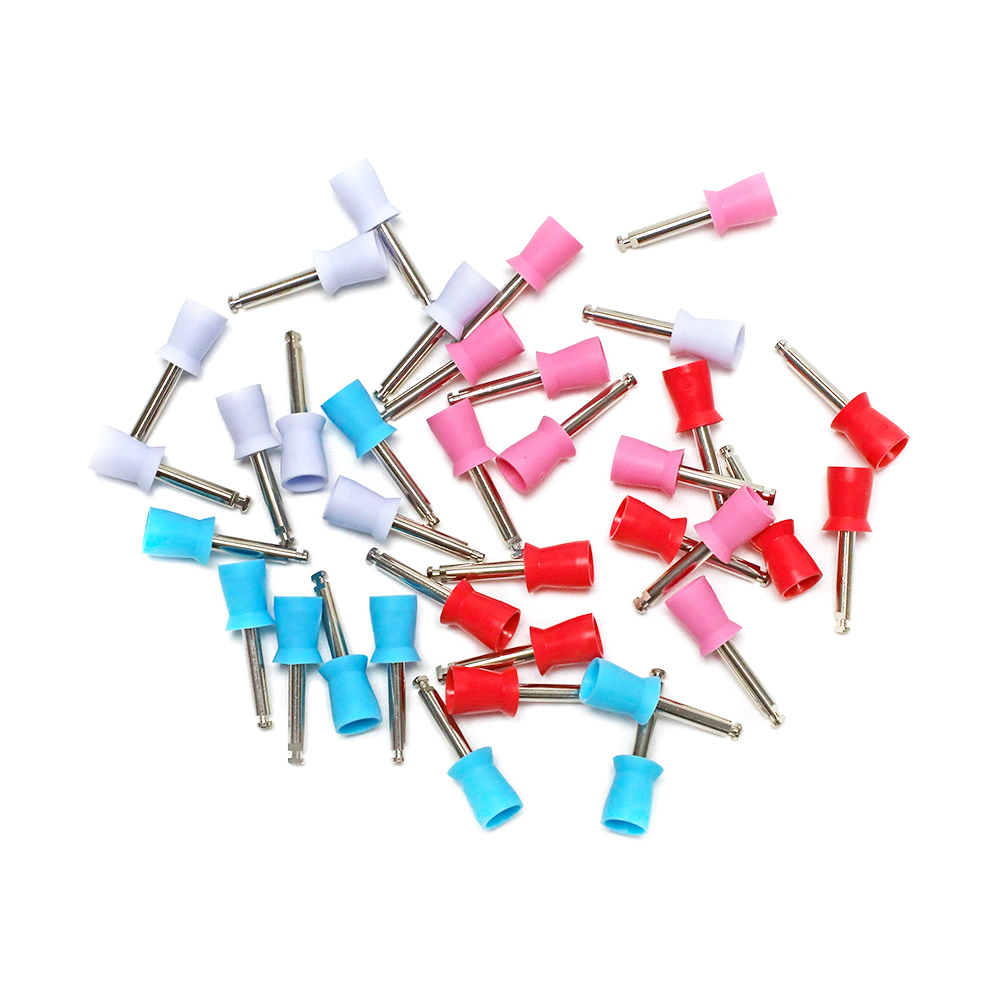
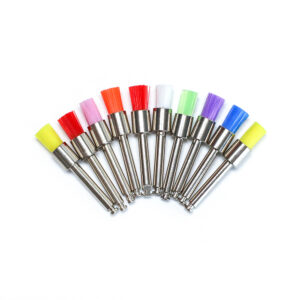
- Available in multiple colors including white, pink, blue, teal, gray, red, purple, yellow, orange, and green for procedure and size differentiation
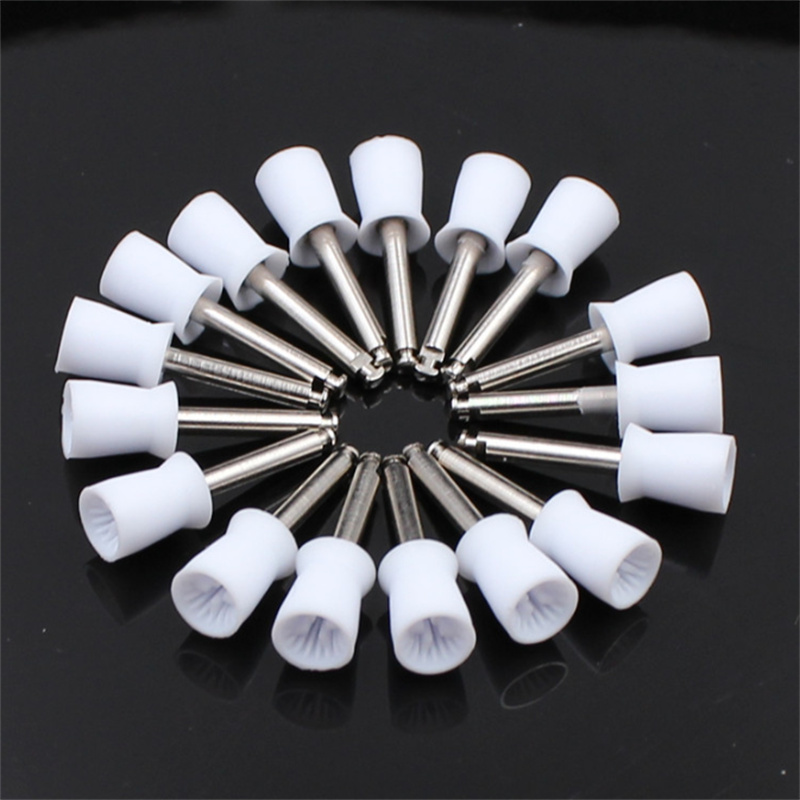
- Supplied in bulk boxes, compartmentalized assortment cases, and clear plastic storage boxes for organized chairside access
- Single-use design eliminates cross-contamination risk between patients
- Shelf life: 3 years
Description
The Disposable Dental Polishing Cup and Brush (Model PB1357) is a single-use rubber prophylaxis attachment designed for use with low-speed latch-type contra-angle handpieces during routine dental cleaning, tooth surface polishing, restoration surface finishing, stain removal, and implant surface maintenance. The product is available in two primary formats — polishing cup and polishing brush — each suited to specific clinical surface geometries and polishing objectives.
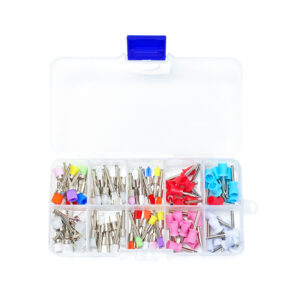
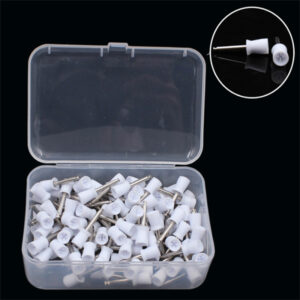
The polishing cup is a flexible rubber cup with a latch-type stainless steel shank, available in flat-top, tapered, and waisted (hourglass) profiles as visible across the product images. The internal surface of the cup features a radial ribbed fin pattern that retains prophy paste within the cup cavity during rotation and releases it progressively onto the tooth surface as the cup flexes under contact pressure during the polishing stroke. The polishing brush format uses a fine bristle cluster in place of the rubber cup body, providing access to interproximal surfaces, fissure anatomy, and implant surface textures that the solid cup rim cannot reach. Both formats are available in a broad color range and are supplied in multiple packaging configurations including bulk clear plastic boxes, compartmentalized ten-section assortment cases containing mixed profiles and colors, and individual bulk bags — enabling clinics to stock the format and quantity that best matches their daily patient volume and procedure mix.
Feature
- The flexible rubber cup body deforms under contact pressure during the polishing stroke, allowing the cup rim to conform to the curved labial, buccal, and lingual surfaces of anterior and posterior teeth — maintaining full rim contact with the tooth surface throughout the stroke arc rather than making point contact at the center of the cup only, as a rigid cup would.
- The internal ribbed fin pattern on the cup face retains prophy paste within the cup cavity when the handpiece is running and the cup is held away from the tooth surface between strokes — preventing paste from being flung from the cup by centrifugal force during repositioning and maintaining a consistent paste charge in the cup throughout the polishing sequence for each surface.
- The latch-type stainless steel shank engages the latch mechanism of standard low-speed contra-angle handpieces with a single axial insertion and click — no tools required for attachment or removal, enabling fast cup changes between patients and between surface zones during the procedure without interrupting the workflow.
- Available in multiple cup profile geometries — flat-top cup for broad occlusal and buccal surface coverage; tapered/pointed cup for anterior tooth access and fissure polishing; waisted hourglass cup for posterior large-surface applications; bristle brush for interproximal, fissure anatomy, and implant surface polishing — providing a complete profile set for all tooth surface zones within a single product line.
- The rubber cup material is sufficiently flexible to adapt to restoration surface margins and implant surface textures without generating the abrasive groove risk associated with stiffer polishing tools, while maintaining enough structural rigidity to transmit rotational polishing force from the handpiece to the tooth surface throughout the stroke.
- Available in a broad color range including white, pink, blue, teal, gray, red, purple, yellow, orange, and green, enabling color-coded cup selection by profile type, abrasive level of paired prophy paste, tooth surface zone, or provider preference across the clinical workflow.
- Supplied in compartmentalized assortment cases containing multiple profiles and colors in organized sections, allowing the clinician to select the appropriate cup profile directly from the case without searching through bulk packaging during the procedure.
Polishing Cup & Brush — Specifications
| Parameter | Specification |
|---|---|
| Product Name | Disposable Dental Polishing Cup / Brush |
| Model | PB1357 |
| Cup Material | Flexible Rubber |
| Shank Type | Latch-Type Stainless Steel |
| Shank Compatibility | Standard Low-Speed Latch-Type Contra-Angle Handpiece |
| Cup Profiles | Flat-Top Cup, Tapered Cup, Waisted/Hourglass Cup, Pointed Brush |
| Internal Surface | Radial Ribbed Fin Pattern (Paste Retention) |
| Available Colors | White, Pink, Blue, Teal, Gray, Red, Purple, Yellow, Orange, Green |
| Packaging | Bulk Box, Compartmentalized Assortment Case, Clear Plastic Storage Box |
| Use | Single-Use |
| Storage | Well-ventilated; moisture-proof; indoor temperature ≤ 45°C |
| Shelf Life | 3 Years |
Working Principle
The Dental Polishing Cup operates by transmitting the rotational force of the low-speed handpiece through the stainless steel latch shank to the rubber cup body, creating a rotating abrasive contact surface at the tooth interface. When the rotating cup is loaded with prophy paste and brought into contact with the tooth surface under light pressure, the abrasive particles in the paste are carried across the tooth surface by the rotational motion of the cup, removing extrinsic stain deposits, plaque biofilm, and surface debris through controlled mechanical abrasion.
The flexibility of the rubber cup body is central to its clinical function. As the cup contacts the tooth surface, the rubber rim deforms outward and flattens against the surface contour, increasing the contact area between the cup face and the tooth compared to a rigid instrument at the same applied pressure. This increased contact area distributes the polishing action across a broader surface zone per stroke, reducing the number of strokes required to achieve complete coverage and reducing the pressure per unit area at any individual point on the tooth surface — limiting the risk of enamel abrasion from over-polishing at a single contact point.
The internal ribbed fin pattern functions as a paste reservoir within the rotating cup cavity. At operating speed, centrifugal force acts on the paste within the cup; the radial fins create compartments that resist uniform outward displacement of the paste, retaining the working paste charge within the cup between tooth surface contacts. As the cup contacts the tooth surface, the fins flex outward under contact pressure, releasing paste from between the fins onto the tooth surface at the contact zone — providing a progressive, controlled paste release rather than a single-stroke discharge of the full cup charge.
Clinical Practice of the Dental Polishing Cup and Brush
1. Pre-Procedure Setup
- Select the appropriate cup profile for the procedure: flat-top or waisted cup for buccal, lingual, and occlusal surface polishing on posterior teeth; tapered cup for anterior labial and lingual surfaces and narrow access zones; pointed brush for interproximal surfaces, deep fissure anatomy, and implant surface polishing.
- Insert the latch shank into the latch-type contra-angle handpiece by aligning the shank with the latch opening and pressing axially until the latch engages with an audible click; confirm secure engagement by applying light lateral force to the cup before introducing the handpiece intraorally.
- Confirm the handpiece is operating normally at low speed before loading the cup with prophy paste; run the handpiece unloaded briefly to confirm smooth rotation and absence of vibration at the selected cup before intraoral use.
- Load the cup with the appropriate prophy paste by pressing the cup face against the paste surface in the dappen dish and applying light rotational motion; load sufficient paste to cover the cup face without overloading the cup beyond its retention capacity.
2. Intraoperative Management
- Apply the loaded cup to the tooth surface with light, intermittent contact pressure — the cup should flex slightly at the rim on contact, indicating full rim-to-surface engagement. Avoid sustained heavy contact pressure, which increases abrasion risk at the enamel surface and accelerates cup wear.
- Use slow, controlled strokes across the tooth surface, moving the cup from the gingival margin toward the incisal or occlusal surface in overlapping strokes; avoid keeping the cup stationary against the tooth surface while the handpiece is running, as static contact concentrates abrasive action at a single point.
- For posterior large surfaces, use the flat-top or waisted cup profile with broad sweeping strokes across the full buccal and occlusal surface; for anterior teeth, transition to the tapered cup profile for access to the narrower labial and lingual surface geometry.
- Reload the cup with prophy paste between teeth or surface zones as needed; the ribbed fin pattern retains paste through multiple strokes, but paste volume should be verified visually before beginning each new tooth surface.
- If any patient is known to be allergic to rubber or any component of the polishing cup material, the product should not be used; document the allergy in the patient record and select an alternative polishing instrument.
- Monitor the cup for deformation, tearing, or shank loosening during use; stop using any cup that shows visible structural damage and replace immediately.
3. Post-Procedure Disposal
- Remove the polishing cup from the handpiece latch by pressing the latch release and withdrawing the shank axially; do not pull the cup off the shank by the rubber body, as this may leave the shank engaged in the latch.
- Discard the cup immediately after each patient use; single-use only. Do not reuse, re-sterilize, or re-disinfect.
- Clean the contra-angle handpiece latch mechanism after cup removal according to the handpiece manufacturer’s maintenance protocol before reuse or sterilization.
- Dispose of used cups in accordance with local clinical waste regulations.
The Function of the Dental Polishing Cup and Brush
The Dental Polishing Cup and Brush addresses the tooth surface finishing and cleaning requirement that is present at the end of every prophylaxis appointment and at the completion of restorative procedures involving surface-adjacent finishing steps. The cup removes extrinsic stain, plaque biofilm, and surface debris from enamel, restoration surfaces, and implant components through controlled rotary abrasion with prophy paste, producing a smooth, clean surface that supports oral hygiene maintenance and enhances the final appearance of both natural and restored dentition.
The availability of multiple cup profiles within a single product line — flat-top, tapered, waisted, and brush — is the key clinical advantage of the PB1357 range. No single cup profile optimally serves all tooth surfaces and access requirements encountered across a full prophylaxis appointment. The posterior occlusal surface of a mandibular molar, the labial surface of a maxillary central incisor, the interproximal contact area of a premolar, and the surface of a screw-retained implant crown all require different cup geometries to achieve complete coverage with appropriate contact pressure and without risking soft tissue trauma at the gingival margin. By supplying all required profiles within a single product line at a consistent shank standard, the PB1357 range allows the clinician to complete the full surface polishing workflow using a single handpiece setup and a single product source, switching profiles between surface zones without changing handpiece attachment standards or sourcing additional product formats.
Important Notes for Using the Dental Polishing Cup and Brush
- For use with straight handpieces or contra-angle handpieces that meet technical and hygienic standards and are regularly maintained and cleaned. Do not use polishing cups with handpieces that show signs of latch wear, irregular rotation, or vibration — damaged handpiece drive systems increase the risk of cup detachment during intraoral use.
- Confirm the handpiece drive is operating normally before intraoral use. The handpiece must rotate smoothly at the selected speed without vibration; irregular rotation or excessive handpiece noise during cup use indicates a handpiece maintenance requirement that should be addressed before continuing.
- Insert and secure the latch shank correctly before intraoral use. Confirm latch engagement by applying light lateral force to the cup before introducing it into the patient’s mouth — a cup that is not fully latched may detach during rotation and become an intraoral foreign body risk.
- Apply only light turning force during polishing. Excessive contact pressure increases enamel abrasion beyond the intended clinical effect and accelerates cup deformation and structural failure. The rubber cup is designed to function effectively under light, controlled contact — heavy pressure does not improve polishing outcome and increases patient discomfort.
- Avoid sustained static contact between the rotating cup and the tooth surface. Static contact concentrates abrasive action at a single surface point, increasing localized enamel removal risk. Use intermittent strokes with brief cup-to-surface contact per stroke.
- Stop using any cup that shows visible deformation, tearing at the rubber body, or loosening of the rubber cup from the stainless steel shank during use. Structural failure of the cup during rotation creates a foreign body risk and reduces polishing effectiveness. Replace the cup immediately.
- Do not use external force or physical interference to hold the cup against the tooth surface beyond the light contact pressure of the polishing stroke — human interference or external force increases the risk of cup breakage and soft tissue injury.
- Use appropriate personal protective equipment during polishing procedures: goggles and respiratory protection for the clinician and assistant are required to avoid inhalation of abrasive debris generated during rotary polishing; ensure effective debris management throughout the polishing procedure.
- If the patient is known to be allergic to any component of the polishing cup — including rubber, the shank metal alloy, or any material in the prophy paste used in conjunction with the cup — the product should not be used. Verify patient allergy history before beginning polishing procedures.
- Single-use only. Destroy after use. Do not reuse, re-sterilize, or re-disinfect. Store unused cups in a well-ventilated, moisture-proof environment at indoor temperature not exceeding 45°C.
评价
目前还没有评价