
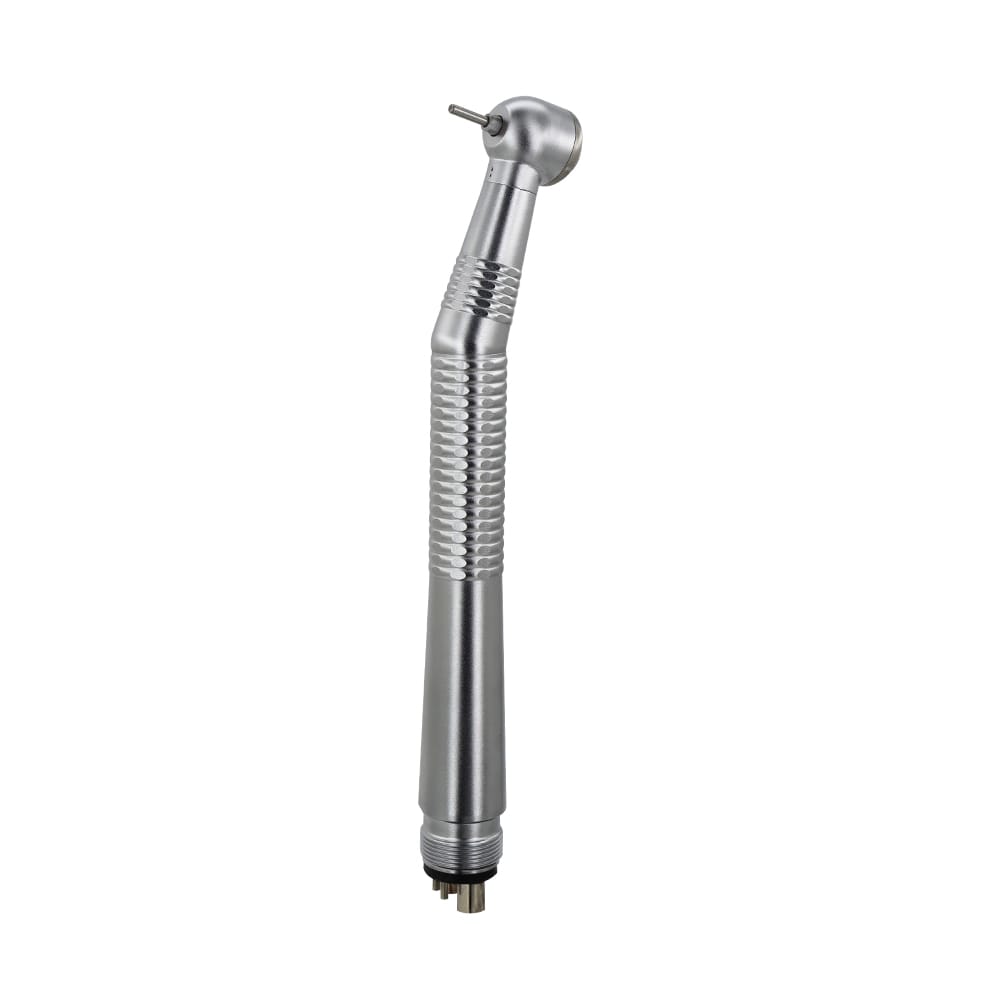
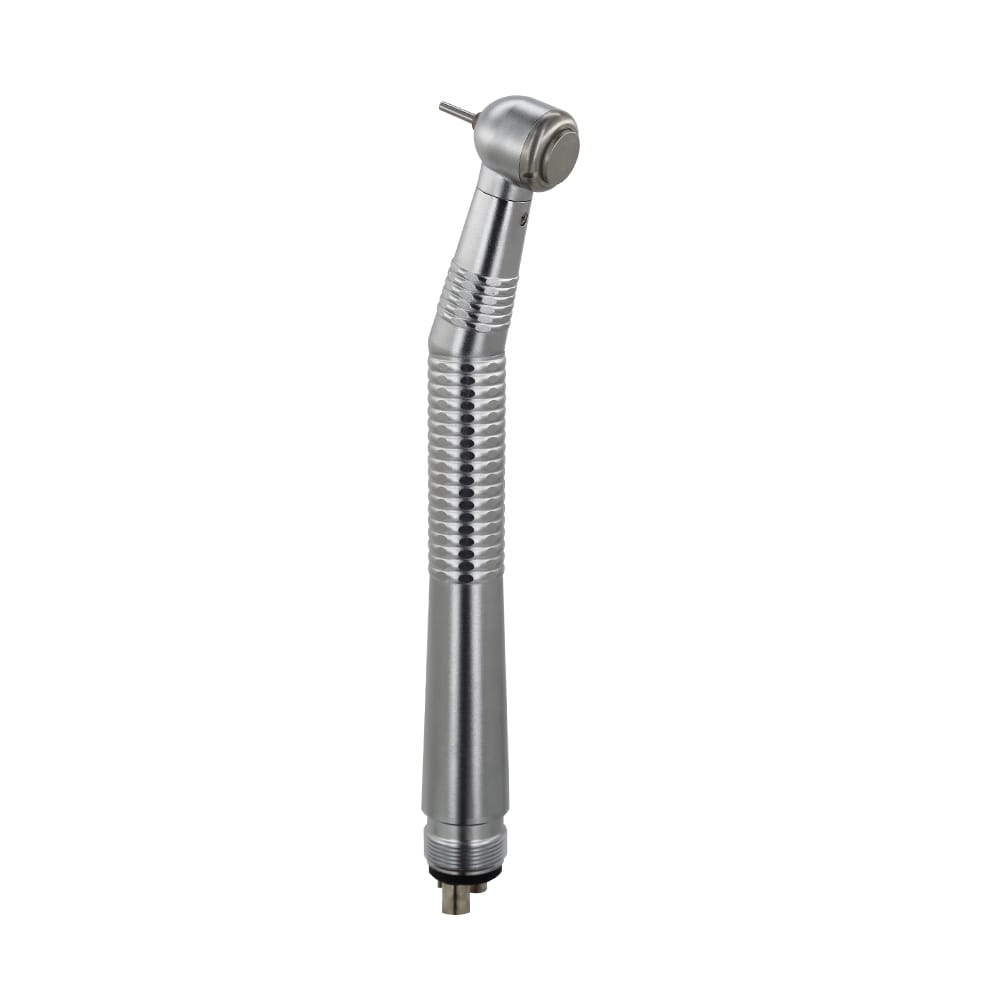
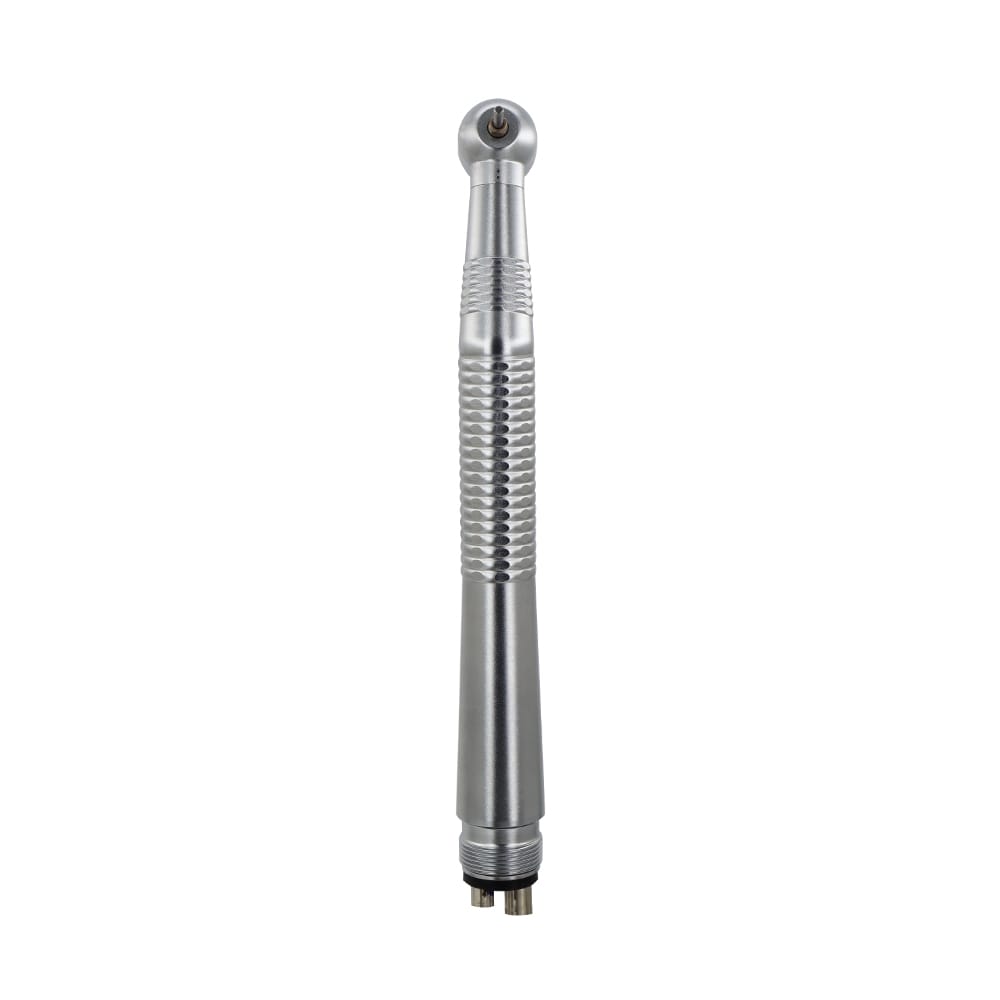
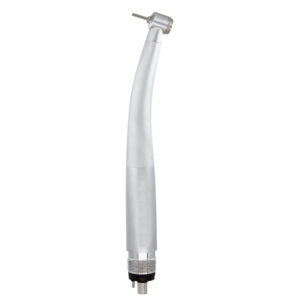
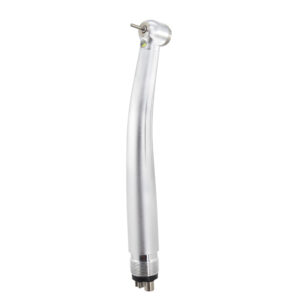
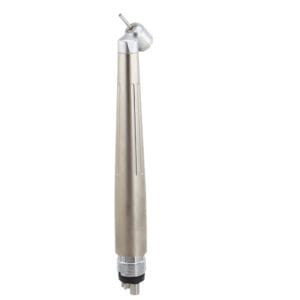
114 Large Head Push-Button High-Speed Handpiece
描述
114 Large Head Push-Button High-Speed Handpiece
- Large head design for increased torque and cutting power on demanding preparations
- Threaded grip pattern for maximum anti-slip control
- Full metal body construction for durability and long-term reliability
- Three-point water spray cooling for comprehensive heat dissipation
- Push-button bur release for fast, one-handed bur changes
- Available in 2-hole and 4-hole connection interfaces
- Compatible with autoclave sterilization at 135°C
Description
The 114 Large Head Push-Button High-Speed Handpiece is a high-torque dental instrument engineered for procedures that demand greater cutting power, enhanced turbine stability, and robust performance under load. The large head design accommodates a bigger turbine rotor, delivering increased rotational inertia and more sustained cutting force compared to standard-head configurations — making it the preferred choice for high-resistance preparations such as full crown reduction, bridge preparation, heavy amalgam removal, and dense dentin cutting.
Built with a full metal body and finished with a deeply textured threaded grip pattern, the handpiece provides exceptional structural rigidity and slip-resistant control throughout demanding clinical procedures. The three-point water spray cooling system ensures comprehensive, triangulated heat dissipation across the cutting zone, protecting pulp vitality even during extended, high-load cutting sequences. Operating at 320,000–350,000 RPM with a working pressure of 0.22–0.25 MPa, the 114 Large Head delivers the power and reliability required for the most demanding restorative workloads.
Feature
- The large head design houses a bigger turbine rotor with greater rotational mass, delivering higher cutting torque and improved resistance to stall under load — a critical advantage during high-resistance preparations where standard-head handpieces are more prone to speed loss and turbine stall.
- The three-point water spray cooling system delivers simultaneous water coverage from three nozzle positions distributed around the large head, ensuring comprehensive and uniform heat dissipation across the expanded cutting zone even during sustained high-load cutting.
- The threaded grip pattern covers the full working length of the handpiece body, providing a deeply textured anti-slip surface that maintains secure clinician control in moisture-heavy clinical environments where smooth-bodied handpieces are prone to slippage.
- The push-button bur release mechanism allows fast, reliable, one-handed bur installation and removal without supplementary tools, maintaining procedural efficiency even in high-throughput clinical settings.
- The full metal body provides exceptional structural rigidity and resistance to deformation, ensuring consistent performance and dimensional stability across hundreds of high-temperature autoclave sterilization cycles.
- Compatible with both 2-hole and 4-hole connection standards for broad compatibility with mainstream dental unit interfaces.
114 Large Head Push-Button High-Speed Handpiece — Specifications
| Parameter | Specification |
|---|---|
| Model | 114 |
| Head Size | Large Head |
| Body Pattern | Threaded |
| Connection | 2-Hole / 4-Hole |
| Body Material | Metal |
| Cooling System | Three-Point Water Spray |
| Bur Chuck | Push-Button Release |
| Working Air Pressure | 0.22 – 0.25 MPa |
| Speed | 320,000 – 350,000 RPM |
| Noise Level | ≤ 60 dB |
| Bur Shank Diameter | Φ 1.595 – 1.600 mm |
| Sterilization | 135°C High-Temperature Autoclave |
Working Principle
The 114 Large Head Push-Button High-Speed Handpiece operates on a pneumatic turbine principle. Compressed air enters through the connection interface at 0.22–0.25 MPa, driving the internal turbine rotor to achieve rotational speeds of 320,000–350,000 RPM. The large head configuration houses a turbine rotor with greater diameter and rotational mass than standard-head designs, generating higher rotational inertia that translates directly into more sustained cutting torque and improved resistance to speed reduction when the bur engages high-resistance tooth structure or restorative materials.
The three-point water spray system distributes water simultaneously from three nozzle positions around the large head, providing triangulated cooling coverage that is proportionally scaled to the larger cutting zone of the big-head turbine. This ensures that heat generated across the wider bur-tooth contact area is managed uniformly, reducing the risk of localized thermal hotspots that can arise when a single jet attempts to cool a large cutting zone from one direction. The push-button chuck mechanism provides secure bur retention through the full cutting cycle while allowing tool-free release at the end of the procedure.
Clinical Practice of the 114 Large Head Push-Button High-Speed Handpiece
1. Pre-Operative Setup
- Inspect the handpiece packaging and confirm the metal body and large head show no visible damage or corrosion before use.
- Connect via the 2-hole or 4-hole interface and confirm air pressure is within 0.22–0.25 MPa. Note that the large head turbine may require the air pressure to be verified more carefully, as the larger rotor mass benefits most from consistent pressure within the specified range.
- Install the appropriate bur using the push-button release and confirm secure chuck engagement before activation.
- Run the handpiece unloaded for 5–10 seconds to verify smooth turbine rotation, three-point cooling water output, and overall function.
2. Intraoperative Management
- Deploy the large head’s torque advantage in high-resistance cutting scenarios — full crown reduction, heavy restorative removal, dense dentin preparation, and similar demanding applications where standard-head handpieces lose speed under load.
- Monitor the three-point spray distribution; all three nozzle streams should be consistent throughout the procedure. Asymmetric output from any nozzle warrants post-procedure nozzle inspection and cleaning.
- Apply controlled, intermittent contact pressure even when cutting hard materials; the large head’s additional torque reserve means sustained pressure is less necessary and still risks turbine overload at extreme resistance.
- Keep operating noise within ≤60 dB; increased vibration or audible change in turbine pitch during high-load cutting indicates bearing stress or bur wear requiring immediate attention.
3. Post-Operative Maintenance
- Remove the bur immediately after the procedure using the push-button release.
- Inspect all three spray nozzles on the large head for debris or mineral scale accumulation, which is more common when the head is used at the higher water volumes required for sustained cutting; flush with clean water if needed.
- Lubricate the handpiece internally per the manufacturer’s protocol before every sterilization cycle.
- Sterilize in a Class B autoclave at 135°C high-temperature high-pressure cycle.
- Store in a clean, dry environment after sterilization.
The Function of the 114 Large Head Push-Button High-Speed Handpiece
The 114 Large Head Push-Button High-Speed Handpiece occupies a distinct performance tier above standard-head configurations. The fundamental advantage of a large head in a high-speed handpiece is rotor inertia: a larger turbine rotor, spinning at the same rotational speed, carries more angular momentum and is therefore more resistant to deceleration when it encounters resistance at the bur tip. In practical clinical terms, this means the large head maintains cutting speed more consistently during heavy preparations, reduces the frequency of turbine stall events, and delivers a more continuous cutting force that improves surface quality and preparation efficiency compared to a standard head under equivalent load.
This performance difference is most apparent in cases that push standard-head handpieces to their limits: full arch crown preparations in a single session, removal of large metal restorations, preparation of sclerotic or heavily calcified dentin, or any scenario where the bur must sustain contact with high-resistance material for extended periods. For clinical teams that routinely encounter these demands, the 114 Large Head is a purpose-built solution rather than a general-purpose compromise.
The threaded grip pattern and three-point cooling system are equally important in this high-torque context. Greater cutting power generates more heat and requires more precise tactile control — the three-point cooling handles the thermal management, while the threaded grip ensures the clinician can maintain the controlled, deliberate contact pressure that high-resistance cutting demands.
Important Notes for Using the 114 Large Head Push-Button High-Speed Handpiece
- Always confirm air supply pressure is within 0.22–0.25 MPa before operation. The large head turbine is designed to operate within this pressure range; exceeding it does not proportionally increase cutting power but significantly accelerates bearing wear and reduces service life.
- Use only burs with a shank diameter of Φ1.595–1.600 mm. The large head chuck mechanism maintains the same bur tolerance requirements as standard heads; out-of-tolerance burs generate excessive vibration that is amplified by the larger rotor mass.
- Inspect all three spray nozzles before each clinical session. In high-torque cutting applications, adequate cooling is more critical than in light-duty use; partial nozzle blockage during heavy preparations increases thermal injury risk.
- Do not activate the handpiece without a bur properly installed. Unloaded high-speed operation of a large rotor generates more bearing stress than a standard rotor at equivalent RPM.
- Operate the push-button bur release only when the turbine has fully stopped. The larger rotor takes slightly longer to decelerate to a full stop than standard-head rotors; wait until all rotation has ceased before operating the chuck.
- Lubricate before every sterilization cycle. The larger turbine assembly has more internal bearing surfaces that require adequate lubrication to maintain performance and resist corrosion during autoclaving.
- Sterilize at 135°C autoclave only. Chemical sterilization agents are incompatible with the metal body and internal seals and will compromise both structural integrity and infection control performance.
- Inspect the large head, neck joint, and body after each sterilization cycle for corrosion, pitting, or structural compromise. The larger head mass concentrates more mechanical stress at the head-neck junction during use; any visible cracking or joint loosening requires immediate handpiece retirement.
评价
目前还没有评价