
Disposable Flat-Top Dental Polishing Brush — Nylon Bristle Prophy Brush for Broad Surface Prophylaxis
描述
Disposable Flat-Top Dental Polishing Brush — Nylon Bristle Prophy Brush for Broad Surface Prophylaxis
- Single-use flat-top nylon bristle polishing brush with a level cylindrical bristle surface designed for efficient, broad-coverage cleaning and polishing of posterior occlusal, buccal, and lingual tooth surfaces
- Wide cylindrical bristle bundle with a flat, even tip surface — maximizing bristle contact area per stroke across flat and moderately curved tooth surfaces
- Available in two ferrule formats: standard flared ferrule (cup-mount style) and straight cylindrical ferrule, both with latch-type stainless steel shank for use with low-speed latch-type contra-angle handpieces
- Fine nylon bristles securely retained in the stainless steel ferrule for consistent bristle geometry and reliable bristle retention throughout the polishing sequence
- Available in multiple bristle colors including yellow, red, blue, green, orange, pink, purple, white, and lime green for procedure and provider differentiation
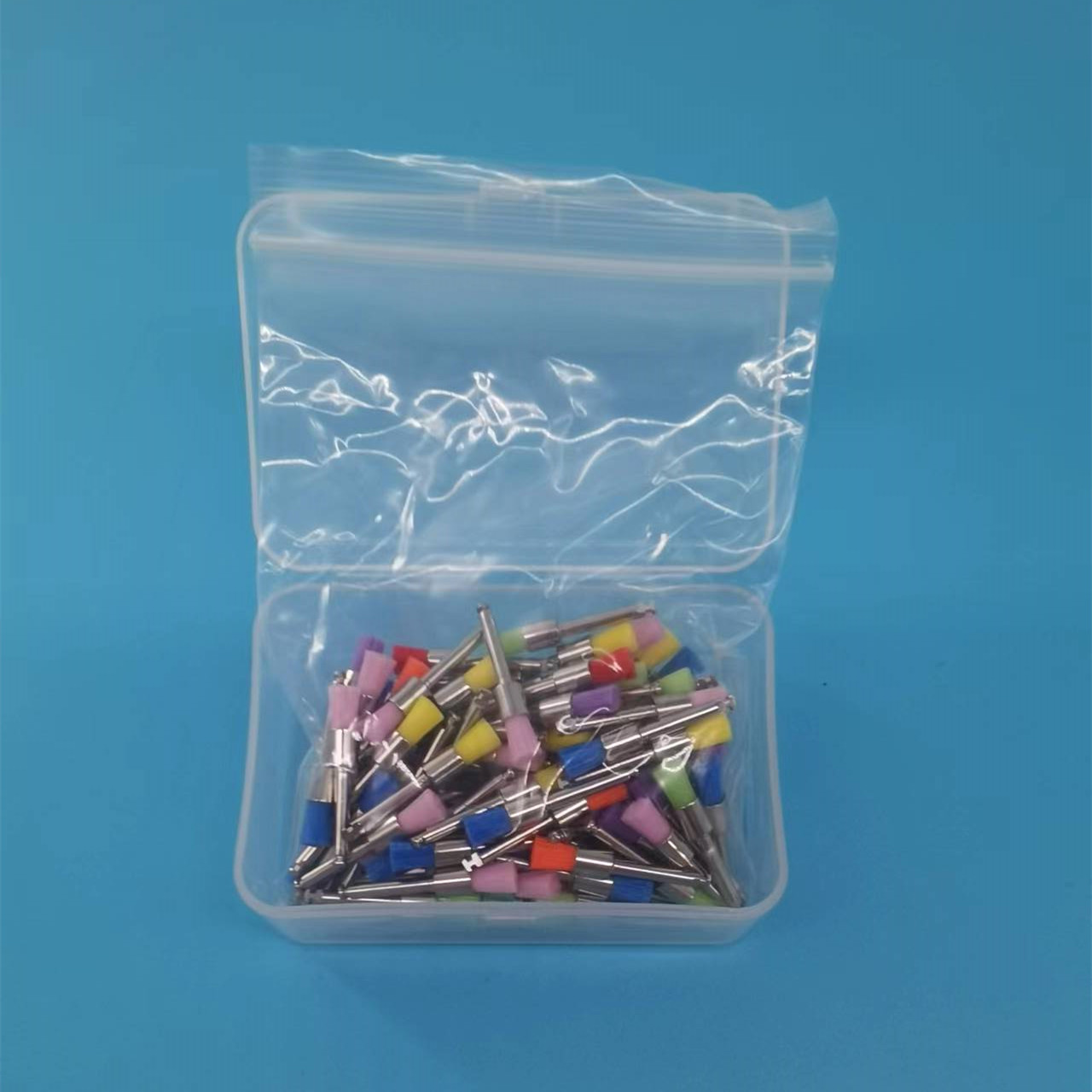
- Supplied in resealable clear polybag-in-box format for clean, organized chairside access
- Single-use design eliminates cross-contamination risk between patients
- Shelf life: 3 years
Description
The Disposable Flat-Top Dental Polishing Brush is a single-use nylon bristle prophylaxis attachment with a flat, level cylindrical bristle tip geometry, designed for efficient broad-coverage polishing of posterior occlusal surfaces, buccal and lingual flat zones, and large restoration surfaces during routine prophylaxis appointments. It is used with low-speed latch-type contra-angle handpieces and is supplied as a dedicated flat-top format for clinics requiring high-volume flat-top brush stock for standard posterior surface prophylaxis workflows where broad contact area and efficient paste coverage per stroke are the primary clinical requirements.
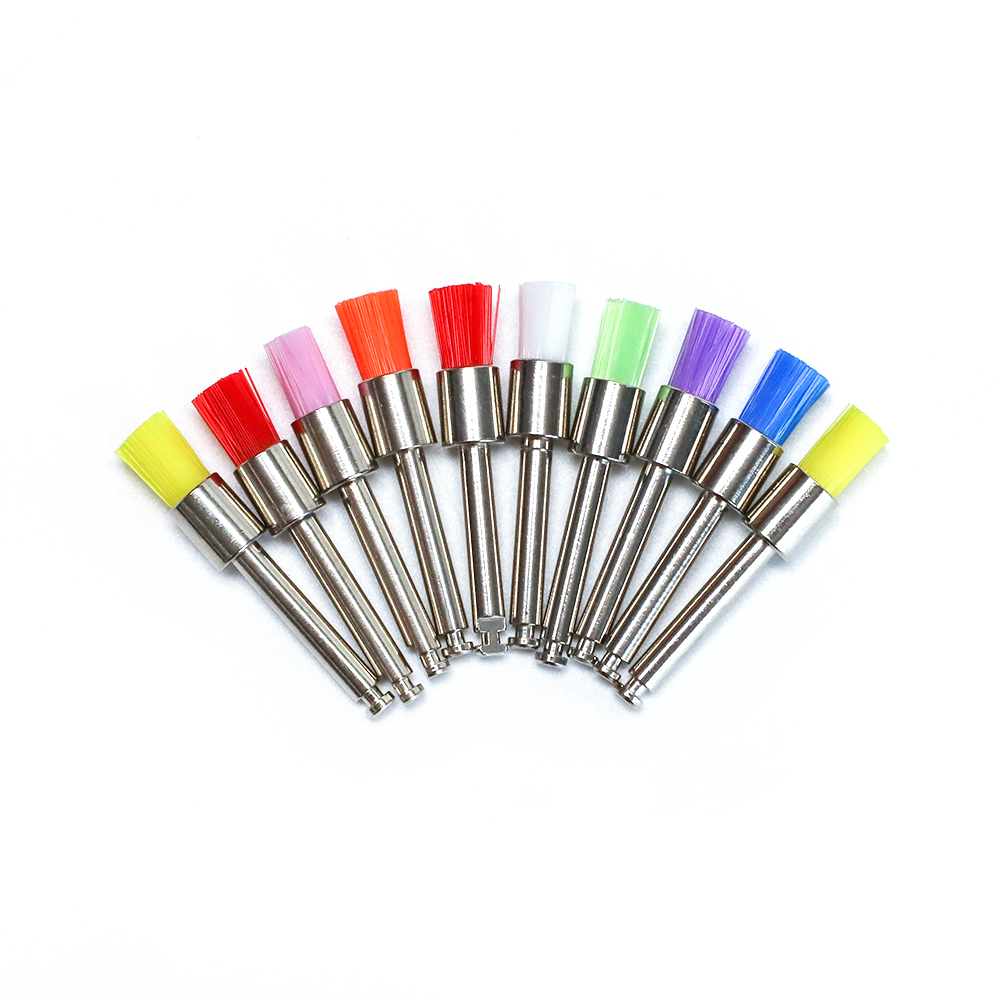
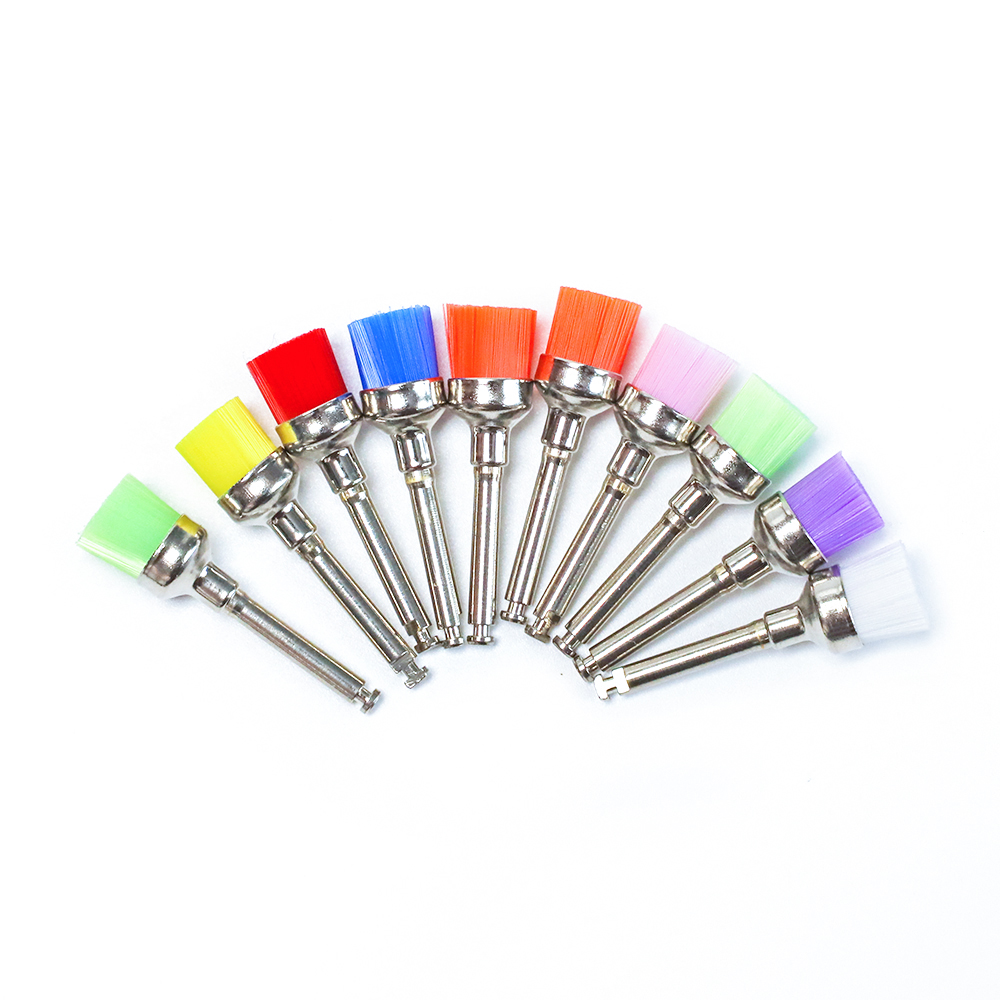
As visible in the product images, the flat-top polishing brush is available in two distinct ferrule configurations. The first uses a flared cup-mount ferrule — a wider stainless steel cup that holds a large-diameter flat-top bristle bundle, providing a generous working surface area suitable for sweeping coverage of large posterior occlusal tables and broad buccal surfaces. The second uses a straight cylindrical ferrule — a narrower format that holds a smaller-diameter flat-top bristle bundle, providing more focused coverage suited to targeted polishing of specific surface zones, restoration margins, and smaller tooth surface areas while maintaining the flat-top bristle geometry. Both configurations use the same latch-type stainless steel shank. The product is available in a broad color range and is supplied in resealable polybag-in-clear-box format.
Feature
- The flat, level cylindrical tip surface of the bristle bundle maximizes the number of bristle tips simultaneously in contact with a flat or moderately convex tooth surface during each rotational pass — delivering more abrasive particle contact per stroke than a pointed or tapered brush profile on the same surface area, reducing the number of strokes required to achieve complete stain removal and biofilm disruption across large posterior tooth surfaces in routine prophylaxis.
- The nylon bristles of the flat-top bundle flex individually under contact pressure, allowing the bristle tips to follow the moderate surface curvature of buccal and lingual zones and adapt to the irregular topography of composite and ceramic restoration surfaces without the rigid contact geometry of a rubber polishing cup rim — providing more complete bristle tip coverage across moderately contoured surfaces than the cup format in areas where the cup rim loses contact at surface concavities.
- The flared cup-mount ferrule format, visible in the product images as the larger-diameter brush variant, provides the widest flat bristle contact surface in the range — suited to sweeping coverage of maxillary and mandibular posterior occlusal tables where the broad working surface allows a single rotational pass to address the full occlusal width of a molar tooth with adequate paste coverage.
- The straight cylindrical ferrule format provides a narrower flat-top contact area suited to targeted polishing of premolar occlusal surfaces, specific buccal or lingual zones requiring isolated stain removal, and restoration surface finishing where a narrower working diameter reduces the risk of inadvertent contact with the adjacent gingival margin during polishing strokes on smaller surface targets.
- The latch-type stainless steel shank engages the latch mechanism of standard low-speed contra-angle handpieces with a single axial insertion and positive click engagement, enabling fast single-handed brush changes between patients and between surface zones without tools or workflow interruption.
- Available in multiple bristle colors — including yellow, red, blue, green, orange, pink, purple, white, and lime green — enabling color-coded brush protocols by surface zone, abrasive paste type, patient category, or provider assignment across the full clinical day.
- Supplied in a resealable clear polybag inside a clear hinged-lid storage box, allowing individual brushes to be dispensed cleanly with the box open, and the remaining brushes to be protected from operatory aerosol and surface contamination by resealing the polybag between uses.
Flat-Top Polishing Brush — Specifications
| Parameter | Specification |
|---|---|
| Product Name | Disposable Flat-Top Dental Polishing Brush |
| Bristle Profile | Flat-Top Cylindrical |
| Bristle Material | Nylon |
| Ferrule Format | Flared Cup-Mount Ferrule (large diameter); Straight Cylindrical Ferrule (narrow diameter) |
| Ferrule Material | Stainless Steel |
| Shank Type | Latch-Type Stainless Steel |
| Shank Compatibility | Standard Low-Speed Latch-Type Contra-Angle Handpiece |
| Available Colors | Yellow, Red, Blue, Green, Orange, Pink, Purple, White, Lime Green |
| Packaging | Resealable Polybag in Clear Hinged-Lid Storage Box |
| Use | Single-Use |
| Primary Application | Posterior occlusal, buccal, and lingual surface polishing; restoration surface finishing; broad-coverage stain removal |
| Storage | Well-ventilated; moisture-proof; indoor temperature ≤ 45°C |
| Shelf Life | 3 Years |
Working Principle
The Flat-Top Polishing Brush transmits rotational force from the low-speed handpiece through the stainless steel latch shank and ferrule to the cylindrical nylon bristle bundle, rotating the flat bristle tip surface against the tooth or restoration surface at low speed. The flat, level tip geometry ensures that when the rotating brush is brought into contact with a flat or near-flat tooth surface, the full working diameter of the bristle bundle contacts the surface simultaneously — distributing rotational polishing force across the maximum available contact area rather than concentrating it at a convergent tip point or a cup rim perimeter.
When the flat rotating tip contacts the tooth surface under light pressure, the outermost bristle tips make first contact and deflect slightly, followed by the inner bristles as the brush is pressed progressively against the surface. This sequential bristle engagement distributes the contact load progressively across the full tip surface rather than generating a sharp pressure concentration at any single zone, producing a uniform polishing action across the full contact diameter. The nylon bristles carry prophy paste to the tooth surface through the inter-bristle spaces, releasing abrasive particles at the contact interface through both the sweeping motion of the bristle tips and the paste expressed from the inter-bristle volume under the contact pressure of the polishing stroke.
The difference in working diameter between the flared cup-mount ferrule format and the straight cylindrical ferrule format directly determines the contact area per stroke and the precision of the polishing zone boundary. The large-diameter flared format maximizes contact area for efficient coverage of large occlusal surfaces; the narrower cylindrical format reduces contact area for targeted polishing of smaller surface zones with more controlled margins between polished and adjacent unpolished areas.
Clinical Practice of the Disposable Flat-Top Polishing Brush
1. Pre-Procedure Setup
- Select the appropriate ferrule format: flared cup-mount for large posterior molar occlusal surface polishing and broad buccal/lingual surface stain removal; straight cylindrical for premolar surfaces, targeted buccal zone polishing, and restoration surface finishing where a narrower working diameter is preferred.
- Select bristle color in accordance with the clinic’s color-coding protocol.
- Insert the latch shank into the contra-angle handpiece and confirm positive latch engagement; verify by applying light lateral force to the brush head before activation.
- Run the handpiece unloaded at low speed briefly before intraoral use; confirm that the flat tip surface rotates smoothly and concentrically without visible wobble at the bristle tip level.
- Load the brush by briefly pressing the flat bristle surface against the prophy paste in the dappen dish with light rotational contact; the flat tip surface holds paste across its full working diameter, providing a well-distributed paste charge for the first polishing strokes.
2. Intraoperative Management
- Apply the loaded brush to the posterior occlusal surface with light, even contact pressure across the full flat tip surface; the brush should contact the surface uniformly across the working diameter from the first stroke — confirm full-surface contact before beginning sweeping strokes across the occlusal table.
- Use overlapping sweeping strokes from the mesial to the distal aspect of the occlusal surface and across the full buccal-lingual width, ensuring complete coverage of the entire occlusal table including the marginal ridge zones; reload with prophy paste after completing one to two teeth or when paste coverage becomes visibly depleted.
- For buccal surface polishing, position the flat tip against the buccal surface with light pressure and use vertical strokes from the gingival margin toward the incisal or occlusal edge; monitor the gingival margin carefully to avoid sustained bristle contact with the marginal gingiva under heavy pressure.
- For restoration surface finishing, use the narrow cylindrical format with a paste compatible with the restoration material; apply light pressure and confirm that the flat tip contacts the restoration surface rather than catching on the margin step between restoration and adjacent enamel.
- Reload the brush with prophy paste between posterior teeth as needed; the flat tip surface distributes paste efficiently per stroke but covers a large contact area that depletes the paste charge more rapidly than narrower brush formats on each surface zone.
- Monitor bristle condition during extended use; if the flat tip profile begins to show uneven bristle wear or bristle displacement from the ferrule, replace the brush.
3. Post-Procedure Disposal
- Remove the brush from the handpiece latch by pressing the latch release and withdrawing the shank axially.
- Discard immediately after each patient use; single-use only. Do not reuse, re-sterilize, or re-disinfect.
- Reseal the polybag inside the storage box after removing the used brush to protect remaining brushes.
- Dispose of used brushes in accordance with local clinical waste regulations.
The Function of the Disposable Flat-Top Polishing Brush
The Flat-Top Polishing Brush provides the broad-coverage rotary polishing capability required for efficient completion of the posterior surface polishing component of routine prophylaxis — a surface zone that comprises the majority of the total tooth surface area to be polished in a standard adult dentition prophylaxis appointment and that benefits most from an instrument with a large working contact area per stroke.
The flat-top bristle geometry is the optimum configuration for this application. The rubber polishing cup is the standard instrument for posterior surface polishing in most prophylaxis workflows, and it performs this function effectively on buccal and lingual surfaces where its flexible rim conforms to moderate surface curvature. On flat posterior occlusal surfaces, however, the rubber cup contacts the surface primarily through its rim perimeter and the central area of the cup face, leaving the mid-zone between the rim and center as a region of lower contact pressure and reduced paste delivery. The flat-top brush addresses this by presenting an even bristle tip surface across the full working diameter, ensuring that paste is delivered and polishing contact is maintained uniformly across the entire contact area including the central zone of the working surface, without the reduced-contact mid-zone that characterizes the rubber cup on flat surfaces.
The two ferrule format options — large-diameter flared and narrow-diameter cylindrical — extend the utility of the flat-top brush across the full range of posterior surface sizes and clinical contexts. The large flared format is the efficient choice for high-volume molar prophylaxis in general practice settings where speed of coverage per tooth is a scheduling priority; the narrow cylindrical format provides the precision margin control required for restoration surface finishing and targeted stain removal in zones adjacent to gingival margins or restoration edges where a large working diameter would create inadvertent contact risk.
Important Notes for Using the Disposable Flat-Top Polishing Brush
- For use with latch-type contra-angle handpieces meeting technical and hygienic standards only. Confirm latch engagement before every intraoral use; verify by applying light lateral force to the brush head after insertion.
- Apply only light, even contact pressure across the full flat tip surface. Uneven pressure — concentrating force on one side of the flat tip — creates asymmetric bristle deflection that reduces effective contact area on the opposite side and may produce uneven polishing coverage across the working zone. Maintain even pressure across the full tip surface throughout each stroke.
- Do not use the flat-top brush as a substitute for the pointed brush in fissure or interproximal polishing applications. The flat tip geometry is designed for broad flat surface coverage; it does not enter fissure anatomy or interproximal embrasures effectively and will not provide the cleaning access in these zones that the application requires. Use the appropriate pointed brush for fissure and embrasure polishing.
- Monitor the gingival margin carefully during buccal and lingual surface polishing. The flat tip surface, particularly in the large-diameter flared format, has a wide working perimeter that approaches the marginal gingiva during strokes extending toward the gingival margin zone; limit stroke extension at the gingival boundary to avoid sustained bristle contact with the gingival tissue under contact pressure.
- Confirm prophy paste compatibility with the restoration surface material before use on composite or ceramic restoration surfaces. Standard abrasive prophy paste may affect the surface gloss of ceramic restorations under sustained polishing contact; use a paste with abrasivity appropriate to the restoration material being polished.
- Stop using immediately if bristle loss, ferrule deformation, or shank loosening is observed during use. Bristle loss from the flat-top bundle creates a foreign body risk at the polishing site; ferrule or shank failure during rotation creates a detachment risk.
- Single-use only. Destroy after use. Do not reuse, re-sterilize, or re-disinfect. Store in a well-ventilated, moisture-proof environment at indoor temperature not exceeding 45°C.
评价
目前还没有评价