
Disposable French-Style Dental Aspirator Tip — High-Volume Evacuation Tube for Oral Surgery and Dental Treatment
描述
Disposable French-Style Dental Aspirator Tip — High-Volume Evacuation Tube for Oral Surgery and Dental Treatment
- Single-use high-volume evacuation tube designed for connection to the suction line of standard dental treatment units via a screw-threaded or push-fit white plastic connector
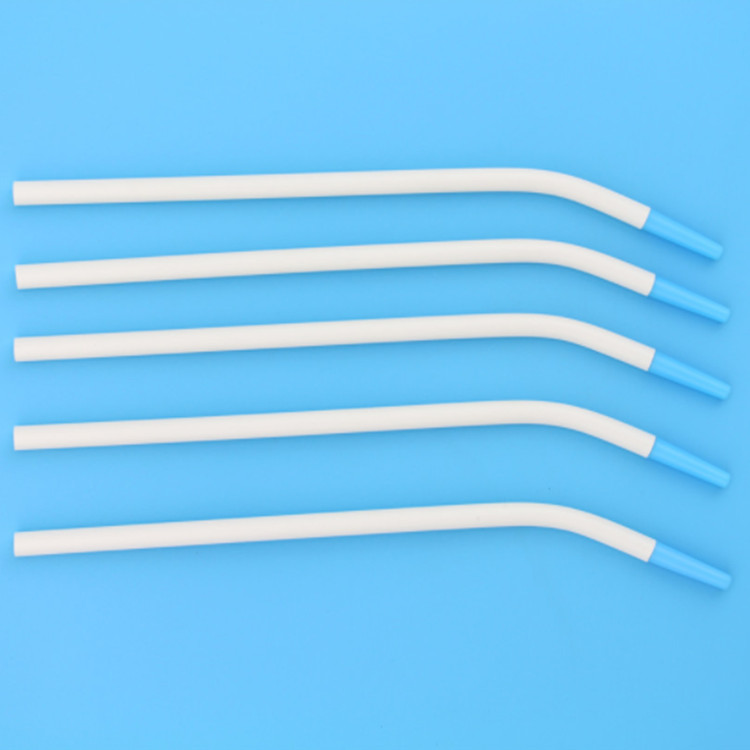
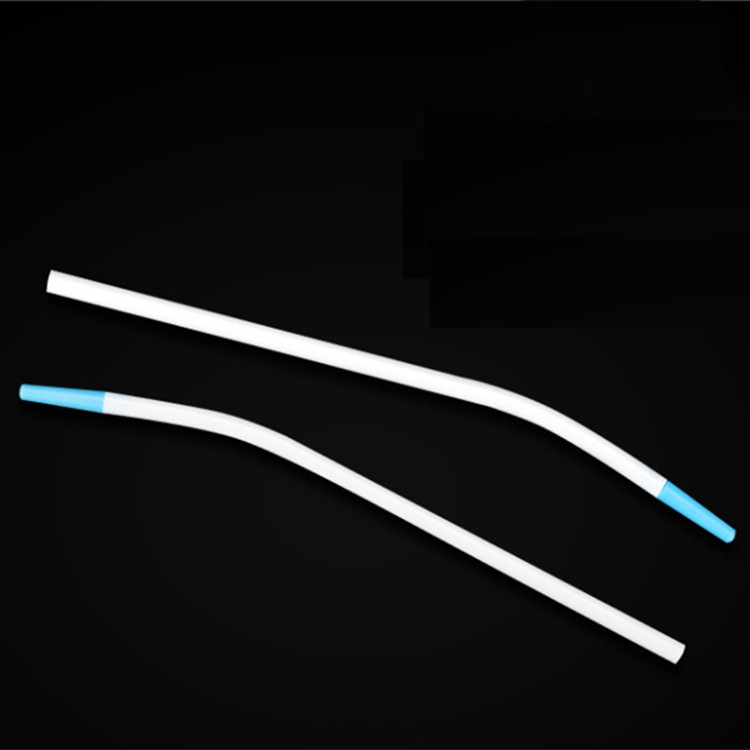
- Large-bore rigid body with gentle pre-angled distal curve for directed, high-volume fluid and debris evacuation from the oral cavity during surgical and restorative procedures
- Blue color-coded distal tip end for immediate visual identification and connector orientation at chairside
- Large internal bore diameter enables high-volume evacuation of blood, irrigant, surgical debris, and saliva accumulation — significantly greater fluid volume per unit time than standard low-volume saliva ejectors
- Smooth rounded distal opening for atraumatic soft tissue contact during intraoral positioning and repositioning
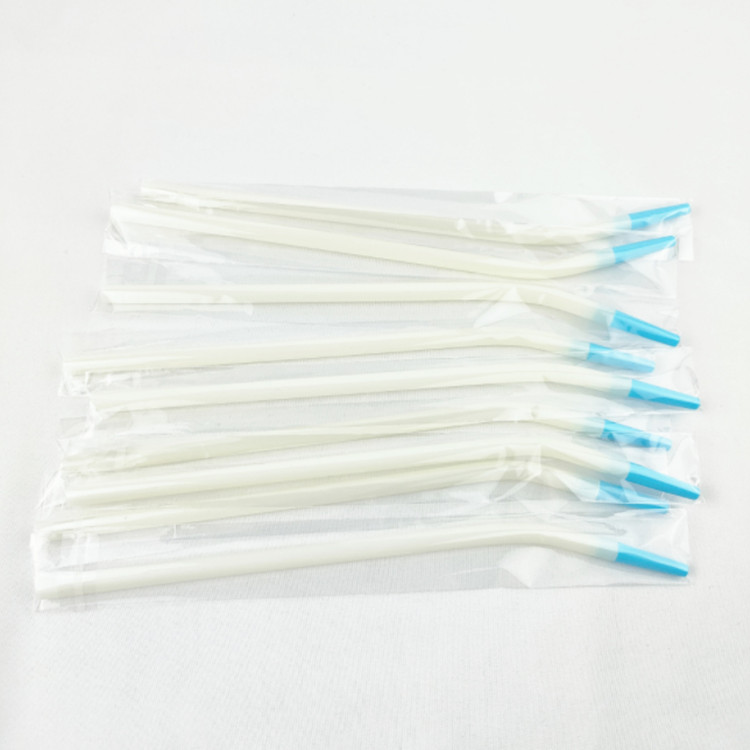
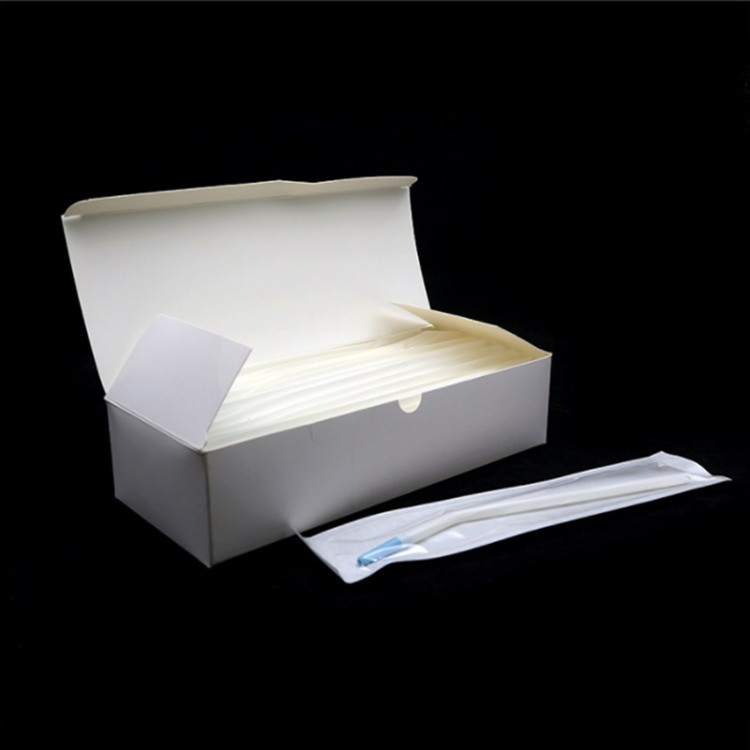
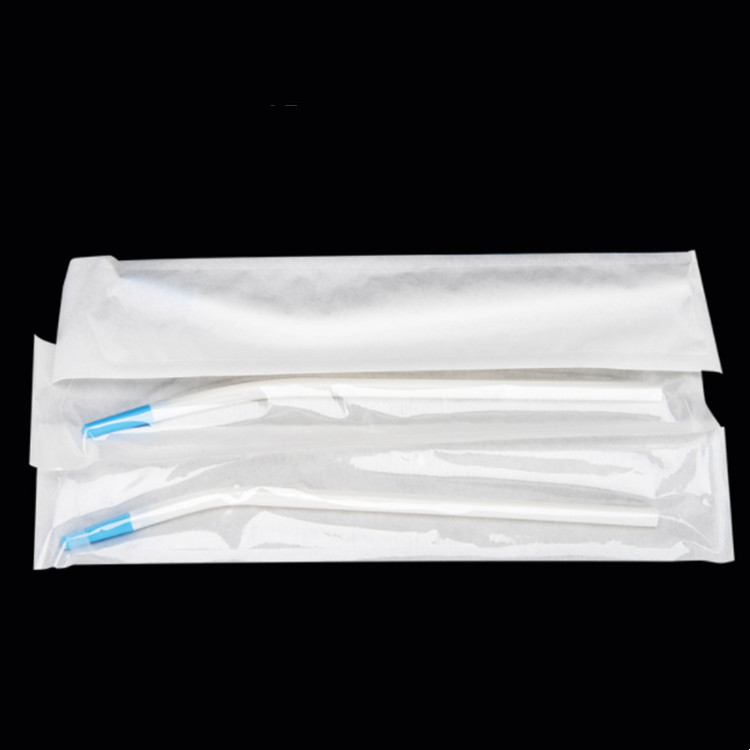
- Individually wrapped in sealed peel-open pouches; also supplied in bulk box format for high-volume clinical settings
- Compatible with standard dental unit high-volume suction line connectors via the white threaded/ribbed plastic adapter
- Single-use design eliminates cross-contamination risk between patients
- Shelf life: 5 years
Description
The Disposable French-Style Dental Aspirator Tip is a large-bore, single-use high-volume evacuation tube designed for use with the high-volume suction line of a standard dental treatment unit. It is used during oral surgical procedures, extractions, implant placements, periodontal surgeries, and other procedures generating significant volumes of blood, irrigant, bone debris, and oral fluid that exceed the evacuation capacity of standard low-volume saliva ejectors. The French-style aspirator tube is the preferred evacuation format for surgical dentistry due to its large internal bore, rigid body structure, and gentle pre-formed distal curve that allows the clinician or assistant to direct high-volume suction to the specific accumulation zone within the surgical field without requiring repeated repositioning throughout the procedure.
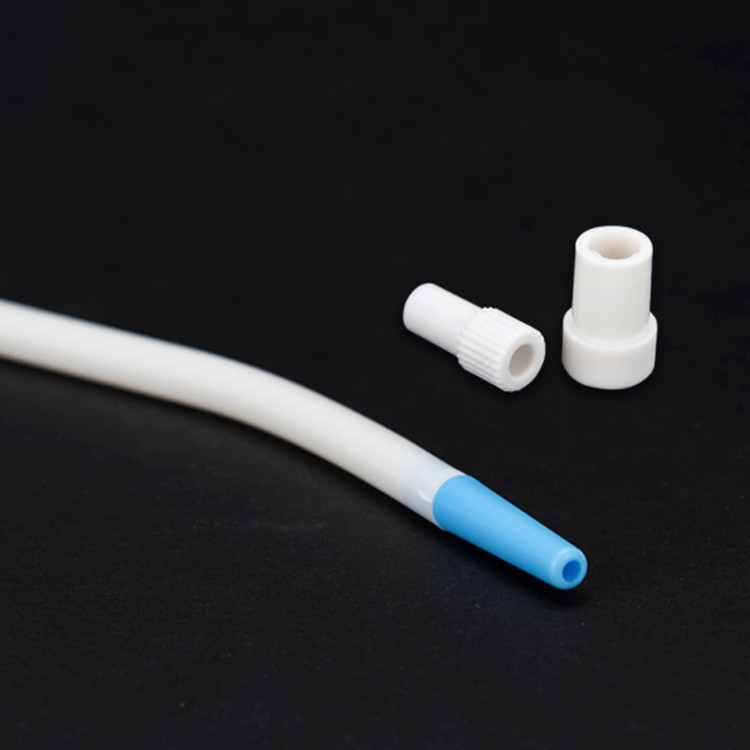
As visible across the product images, the tip consists of a long rigid white plastic body with a smooth, gentle pre-angled curve at the distal end, terminating in a rounded open tip with a blue color-coded distal section that identifies the patient contact end at a glance. The proximal end is fitted with a white plastic threaded or ribbed connector — shown in close-up detail in the product images — that attaches to the high-volume suction line of the dental treatment unit. The product is supplied both individually wrapped in sealed peel-open paper-plastic pouches for surgical sterility requirements, and in bulk white cardboard boxes for standard restorative and general dental use. The individually wrapped format is particularly suited to oral surgical settings where the aspirator is part of the sterile or clean field setup for each patient.
Feature
- The large internal bore diameter of the French-style aspirator tube enables high-volume evacuation of surgical blood, copious irrigant, bone chips, and accumulated oral fluid in a single pass — providing the suction capacity required to maintain a clear visual field during oral surgical procedures where fluid accumulation rate exceeds the capacity of standard saliva ejectors by a significant margin.
- The rigid plastic body maintains its shape under the negative pressure of the high-volume suction line without collapsing or kinking — unlike flexible tubing formats that can partially collapse under sustained high suction, reducing effective bore diameter and evacuation rate at the worst possible moment during a procedure with high fluid output.
- The gentle pre-formed distal curve directs the open tip toward the dependent areas of the surgical field — the floor of the mouth, the lingual pouch, or the extraction socket — without requiring the assistant to bend or redirect a straight tube against the tissue, and without the tube springing back out of position during the procedure.
- The smooth, rounded distal opening distributes suction pressure across a broader area of the tip opening rather than concentrating it at a single point, reducing the risk of soft tissue being drawn into and partially occluding the tip during sustained high-volume suction — a common cause of suction interruption that requires tip removal and repositioning.
- The blue color-coded distal tip section provides immediate visual identification of the patient contact end of the aspirator at chairside during setup, reducing the handling time required to orient the tube correctly before connecting it to the suction line — and providing a visual reference for the tip position within the oral cavity when only part of the tube is visible to the clinician during the procedure.
- The white threaded/ribbed plastic proximal connector, shown in detail in the product images, engages the dental unit high-volume suction line fitting securely without tools, providing a sealed connection that maintains full suction capacity through the tube without air leakage at the connection interface during use.
- Individually wrapped packaging in sealed peel-open pouches allows the aspirator to be presented to the sterile or clean field from its packaging without contaminating the tube body — enabling the assistant to open and present the tube to the surgical field in a manner consistent with clean-field procedural protocols for oral surgical procedures.
French-Style Aspirator Tip — Specifications
| Parameter | Specification |
|---|---|
| Product Name | Disposable French-Style Dental Aspirator Tip |
| Body Material | Rigid Plastic (PP / PE) |
| Body Color | White |
| Distal Tip Color | Blue |
| Body Format | Rigid, Pre-Angled Distal Curve |
| Bore Type | Large Internal Bore (High-Volume) |
| Distal Opening | Smooth, Rounded Open Tip |
| Connector Type | White Threaded / Ribbed Plastic Adapter |
| Connection | Standard Dental Unit High-Volume Suction Line |
| Packaging | Individually Sealed Peel-Open Pouches; Bulk White Cardboard Box |
| Use | Single-Use |
| Application | High-volume evacuation during oral surgery, extractions, implant placement, restorative procedures |
| Storage | Clean, dry place; well-ventilated |
| Shelf Life | 5 Years |
Working Principle
The French-Style Dental Aspirator Tip connects to the high-volume suction line of the dental treatment unit via its proximal plastic connector, which engages the suction line fitting and creates a sealed interface that transmits the full negative pressure of the dental unit vacuum system through the rigid tube body to the open distal tip. The large internal bore of the French-style tube — significantly larger than a standard saliva ejector tube — transmits a proportionally higher volume of fluid and debris per unit of suction pressure, enabling the evacuation of the fluid volumes generated during surgical procedures in real time without the clinician needing to pause the procedure to allow fluid to accumulate and then be removed in sequential evacuations.
The rigid plastic body of the tube transmits the negative pressure from the connector to the tip without deforming under suction — maintaining the full internal bore cross-section throughout the tube length regardless of the suction pressure applied. This structural rigidity is the defining functional advantage of the rigid aspirator format over flexible tubing in high-volume applications: flexible tubing can partially collapse under sustained high negative pressure, reducing the effective bore diameter and evacuation rate precisely when high fluid output from the surgical site demands maximum suction capacity.
The gentle pre-formed distal curve positions the open tip at an angle to the tube axis that corresponds to the natural approach geometry for directing suction to the dependent areas of the oral surgical field — the lingual floor of the mouth, the mesial aspect of an extraction socket, or the buccal pouch adjacent to a flap reflection — without requiring the assistant to hold the tube at an uncomfortable angle throughout a procedure that may last 30 minutes or more.
Clinical Practice of the Disposable French-Style Aspirator Tip
1. Pre-Procedure Setup
- Select the individually wrapped format for oral surgical procedures requiring clean-field protocol; select the bulk box format for standard restorative and general dental procedures.
- For individually wrapped tips, open the peel-open pouch by separating the paper and plastic layers from the proximal end, presenting the blue-tipped distal end of the tube to the assistant or placing it directly onto the bracket table without contaminating the tube body.
- Attach the proximal white plastic connector to the dental unit high-volume suction line fitting by pressing axially and engaging the thread or ribbing; confirm a secure connection by applying gentle traction before activating suction — the connector should not disengage under light withdrawal force.
- Confirm that suction is active through the aspirator before positioning it intraorally: hold the blue distal tip briefly near the back of the gloved hand; perceptible suction at the tip confirms full connectivity and function through the tube length.
- Orient the tube with the pre-angled distal curve directed toward the surgical quadrant before introducing the tube into the oral cavity.
2. Intraoperative Management
- Position the aspirator tip at the most dependent area of the surgical field — typically the floor of the mouth adjacent to the surgical site — where blood and irrigant accumulate by gravity during the procedure.
- Maintain the aspirator tip position throughout the procedure with the assistant holding the tube in the optimum evacuation position; coordinate with the clinician on tip repositioning when the surgical approach changes quadrant or access position.
- Monitor suction output continuously during the procedure; a reduction in suction flow audible at the tube or visible as fluid accumulation in the surgical field despite active suction may indicate partial tip occlusion by soft tissue. Briefly withdrawing the tip 1–2 mm and then repositioning typically restores full flow without requiring tip removal.
- During irrigation-intensive steps — such as bone cutting with copious saline irrigation, socket debridement, or implant osteotomy preparation — position the aspirator tip at the irrigation exit point of the surgical site to evacuate irrigant immediately as it enters the surgical field, preventing irrigation fluid accumulation from obscuring the operative view.
- Do not apply the aspirator tip directly to an open wound or extraction socket under full suction pressure for a sustained duration — brief contact for clot or debris removal is appropriate, but sustained direct socket suction can disrupt clot formation.
3. Post-Procedure Removal and Disposal
- Remove the aspirator from the suction line by pulling the proximal connector axially away from the suction line fitting after the procedure is complete and before removing gloves.
- Run the suction line briefly after aspirator removal to flush residual blood and irrigant from the suction line before the next patient connection.
- Discard the used aspirator immediately after each patient use; single-use only. Do not reuse, re-sterilize, or re-disinfect.
- Dispose of used aspirators in accordance with local clinical waste regulations for single-use patient contact materials with blood contact.
The Function of the Disposable French-Style Aspirator Tip
The French-Style Dental Aspirator Tip addresses the high-volume fluid management requirement specific to oral surgical procedures — a requirement that the standard low-volume saliva ejector cannot meet due to its smaller bore diameter and lower evacuation rate. During extractions, implant osteotomies, flap surgeries, and other procedures generating continuous blood output and copious saline irrigant, the operative field can accumulate fluid at a rate that exceeds the saliva ejector’s capacity, rapidly obscuring the surgical site and requiring the clinician to pause while the assistant repositions suction equipment to restore visibility. The large-bore French-style aspirator resolves this by providing a suction capacity matched to the fluid output of surgical procedures — maintaining a clear field continuously throughout the procedure rather than intermittently.
The rigid body format is specifically suited to the sustained-hold positioning requirement of oral surgical assistance. A dental assistant managing suction during a 20–45 minute surgical procedure must maintain the aspirator tip in a fixed position relative to the surgical field for extended periods while the clinician works. A flexible tube that bends under its own weight or changes position when the assistant’s grip shifts creates a consistently suboptimal suction position that reduces field visibility and requires repeated active repositioning. The rigid French-style tube holds its pre-formed shape under gravity, maintains its tip position without active support from the assistant once positioned against the tissue or retractor, and transmits repositioning movements from the proximal end to the distal tip precisely — enabling the assistant to manage the aspirator with minimal grip force while maintaining consistent evacuation of the surgical field throughout the procedure.
The individually wrapped packaging format ensures that the aspirator can be incorporated into clean-field surgical setups for each patient without the contamination risk associated with bulk-dispensed tubes that have been exposed to the operatory environment. This packaging format is a direct response to the infection control requirements of oral surgical practice, where the aspirator is part of the instrument setup for each procedure and must be presented to the clean field in a manner consistent with the sterility standards applied to the other instruments in the setup.
Important Notes for Using the Disposable French-Style Aspirator Tip
- For professional dental use only. This product is a clinical device intended for use by or under the direct supervision of licensed dental professionals with appropriate surgical credentials; the French-style aspirator is primarily indicated for oral surgical and high-volume evacuation applications.
- Confirm suction line connection security before intraoral use. A connector that is not fully engaged on the suction line fitting may disengage during high-volume suction activation — the negative pressure transmitted through a large-bore tube at high suction creates significant axial force at the connection interface. Verify engagement before each use.
- Do not apply sustained direct suction to an extraction socket, open wound, or active surgical site for extended duration. Brief tip contact for blood and debris removal is appropriate; sustained direct suction on a wound surface can disrupt clot formation and aspirate wound tissue, increasing post-operative bleeding risk.
- Monitor for suction reduction during use. A reduction in suction output during the procedure despite active dental unit suction indicates partial tip occlusion — typically from soft tissue contact with the tip opening. Brief tip withdrawal and repositioning restores flow; do not increase suction pressure beyond the dental unit’s standard operating range as a substitute for tip repositioning.
- Single-use only. Destroy after use. Do not reuse, re-sterilize, or re-disinfect. Used aspirator tips have direct blood and surgical tissue contact; reuse creates a direct cross-contamination pathway between patients and is strictly prohibited regardless of the reprocessing method applied.
- Dispose of used aspirators in compliance with local clinical waste regulations for single-use items with blood contact. Used French-style aspirators from surgical procedures carry blood and surgical tissue and must be managed as clinical waste rather than general waste.
- For individually wrapped units, inspect the pouch seal before opening. Do not use tubes from pouches with broken seals, visible moisture inside the pouch, or damaged packaging — compromised packaging may indicate contamination of the tube before opening.
- Store in a clean, dry, well-ventilated location away from heat and direct sunlight. Do not store opened bulk boxes in areas exposed to operatory aerosol, chemical disinfectant spray, or moisture — the open box exposes remaining tubes to the storage environment after the first tube is removed.
- Check the expiration date before use. Do not use aspirators beyond the 5-year shelf life; material properties of the rigid plastic body and connector cannot be assured after the shelf life period has elapsed.
评价
目前还没有评价